
Last updated July 11, 2026
Seasonal Air Duct Cleaning Care for Philadelphia: Year-Round Homeowner’s Guide
Here’s something most Philadelphia homeowners never consider: late September is the single most important moment for your duct system. Pollen season is ending, humidity is dropping, and your system is about to switch to heating — which will bake whatever accumulated over summer into the duct lining for the next five months. We’ve spent 14 years in Philadelphia attics and crawlspaces, and we’ve learned that treating duct maintenance as one annual event misses the seasonal inflection points where small actions prevent expensive problems. This guide breaks down exactly what’s happening inside your ducts each month of the year, when to intervene, and how to time cleanings so they actually last.
Quick Answer
Philadelphia homeowners should schedule professional air duct cleaning once in late spring (after tree pollen peaks in May) and again in early fall (before heating season begins), with quarterly filter changes and humidity monitoring in between. Spring cleaning removes pollen loads before summer humidity sets in; fall cleaning clears summer accumulation before heating bakes debris into duct walls. Dryer vent cleaning should happen annually, ideally in late summer before fall laundry loads increase.
Table of Contents
- Why Seasonal Timing Matters in Philadelphia
- Spring (March to May): Pollen Loading and the Critical Timing Window
- Summer (June to August): Humidity, Mold Risk, and Re-contamination
- Fall (September to November): The Pre-Heating Inspection Checklist
- Winter (December to February): Dry Particulate Concentration
- Duct Hygiene During Philadelphia Renovations
- Monthly Maintenance Checklist: Philadelphia Homes
- Common Mistakes to Avoid
- When to Call a Professional
- Frequently Asked Questions
- The Bottom Line
Why Seasonal Timing Matters in Philadelphia
Philadelphia’s climate isn’t moderate — it’s four distinct seasons with sharp transitions, and each one deposits something different into your ductwork. The city’s location in the humid subtropical zone means summer dew points regularly hit 70°F, while winter heating demands push dry air through systems for months at a stretch. Those seasonal swings create different contamination profiles that require different responses.
We’ve worked in rowhouses in Fishtown, twins in Mount Airy, and sprawling homes in Chestnut Hill, and the pattern holds: ducts cleaned at the wrong time of year re-contaminate faster. A spring cleaning done too early captures less pollen. A fall cleaning done too late means heating season starts with a loaded system. The homeowners who get 18–24 months of clean air between professional cleanings are the ones who time interventions to the city’s actual environmental calendar, not the one on their fridge magnet.
Here’s what the seasonal cycle looks like from inside the ducts:
- Spring: Tree pollen (oak, maple, birch) enters through intake vents and settles in duct runs; humidity begins rising in May
- Summer: High humidity creates condensation on cool metal duct surfaces, supporting microbial growth; AC runs constantly, circulating spores
- Fall: Ragweed pollen, leaf mold spores, and dust enter as windows open; heating system startup stirs settled debris
- Winter: Dry heated air concentrates particulate matter; static electricity binds dust to duct walls; minimal fresh air exchange
The key insight: each season’s problem becomes the next season’s baked-in contamination if you don’t interrupt the cycle at the right moment.
Spring (March to May): Pollen Loading and the Critical Timing Window
Philadelphia’s tree pollen season typically peaks between late April and mid-May, with oak, maple, and birch as the primary contributors. By the time you see yellow dust on your car, significant quantities have already entered your HVAC system. The mistake we see constantly: homeowners scheduling “spring cleaning” in March, before the peak, or in early June, after humidity has already set in and started binding pollen to duct walls.
The correct timing follows the Philadelphia pollen index, not the calendar. Here’s how to get it right:
- Monitor the count: Check the Philadelphia Department of Public Health’s daily pollen report or the National Allergy Bureau’s local station. Tree pollen typically spikes when cumulative growing degree days reach 300–400.
- Wait for the decline: Schedule cleaning for the week when tree pollen counts drop below 500 grains per cubic meter for three consecutive days — usually mid-to-late May in Philadelphia.
- Clean before humidity peaks: Philadelphia’s average relative humidity crosses 65% sustained in late May. You want the ducts cleaned and sealed before that threshold, because humidity activates pollen proteins and starts binding particles to metal surfaces.
In our experience in neighborhoods like Roxborough and East Falls, where mature tree canopy is dense, pollen loads can be 40–60% higher than in more built-up areas. We’ve pulled significant accumulation from ductwork in homes less than two years past their last cleaning. The Rotobrush brush-agitation system we use is specifically designed to dislodge this type of fine, electrostatically-bound debris from galvanized steel ducting — the material common in Philadelphia homes built between 1920 and 1960.
Spring is also when to inspect and replace filters with higher MERV ratings if allergy symptoms are a concern. We typically recommend MERV 11–13 for Philadelphia’s pollen load, provided your system can handle the static pressure.
Summer (June to August): Humidity, Mold Risk, and Re-contamination
Philadelphia’s summer humidity is the single biggest threat to duct cleanliness. When outdoor dew points climb above 65°F — common here from late June through August — condensation forms on the exterior of cool supply ducts in unconditioned spaces. More critically, humidity infiltrates the system itself, creating conditions where cleaned ducts can re-contaminate within weeks.
We’ve returned to homes in South Philadelphia and Kensington where a spring cleaning performed in April was essentially undone by August. The pattern is consistent: high humidity + cool metal surfaces + any remaining organic debris = microbial growth. The ducts don’t need to be “dirty” by visual standards; they just need moisture and a minimal nutrient base.
Summer humidity management practices that determine whether your duct cleaning holds:
- Maintain indoor relative humidity below 55%: Use a standalone dehumidifier if your AC doesn’t adequately remove moisture — common in older Philadelphia homes with oversized, short-cycling systems
- Inspect condensate drainage monthly: Clogged AC condensate lines back moisture into the air handler and adjacent ductwork
- Check duct insulation in unconditioned spaces: In Philadelphia’s many unfinished basements and crawlspaces, missing or degraded insulation on supply ducts creates cold surfaces that “sweat” and drip
- Run bathroom and kitchen exhaust fans during and after use: Summer cooking and showering loads add significant moisture; without exhaust, it circulates through the duct system
- Avoid “setback” thermostat strategies that let the house warm excessively: Large temperature swings increase condensation when the system cycles back on
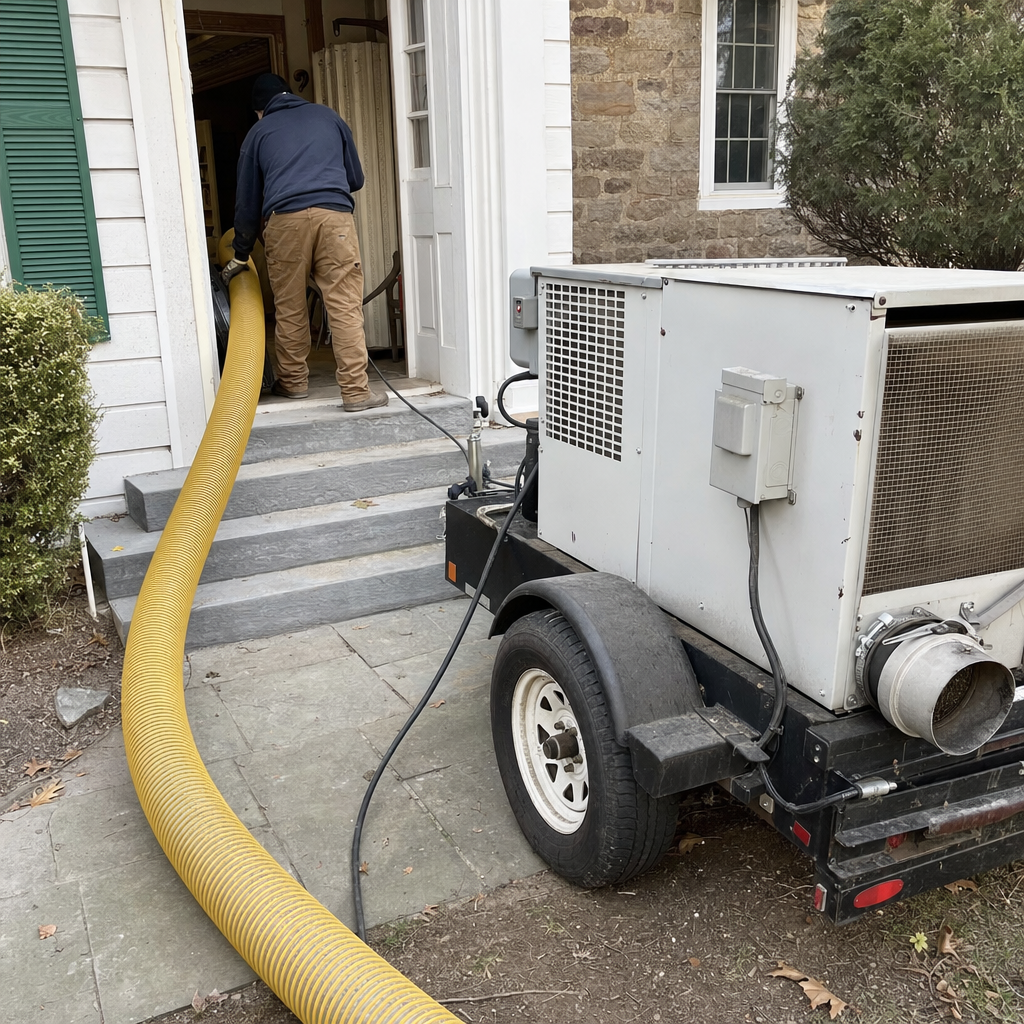
This is the season when our HVAC cleaning service sees highest demand — not because ducts are necessarily dirty, but because the air handler and coil have become microbial reservoirs that re-seed the ductwork. A full system cleaning, including the evaporator coil and blower assembly, interrupts this cycle. We use Nikro HEPA-rated vacuums and Abatement Technologies containment tools to prevent cross-contamination during the process.
If you’re considering air duct cleaning in Carnegie or any humid climate, summer timing should be reserved for problem remediation, not maintenance — unless you’re also addressing the humidity source.
Fall (September to November): The Pre-Heating Inspection Checklist
September 15 to October 15 is the critical window for Philadelphia duct systems. Here’s why: ragweed pollen drops off in late September, humidity typically falls below 60% sustained, and heating systems start cycling. Whatever is in your ducts when that first sustained heating period begins will be thermally bonded to the duct walls for the next five months. Heat doesn’t “burn off” debris — it bakes it in.
We developed this checklist specifically for Philadelphia’s housing stock, which includes significant percentages of homes with older cast-iron or galvanized duct systems:
- Visual inspection of accessible ductwork: Check basement and crawlspace runs for rust, separation at joints, and degraded tape or mastic seals. Philadelphia’s older galvanized ducts are prone to corrosion at seams.
- Filter replacement with correct sizing: A filter that doesn’t seat properly — common in retrofitted systems — allows bypass airflow that deposits debris directly on the coil and in ductwork.
- Register and grille removal for visual check: Look for accumulation on the back side of supply registers; significant buildup here indicates duct wall contamination upstream.
- Blower compartment inspection: The blower wheel and housing should be clean; heavy dust here indicates filter bypass or duct leakage drawing in unfiltered air.
- Carbon monoxide detector function test: Not directly duct-related, but heating season startup is when cracked heat exchangers reveal themselves; a clean duct system won’t help if combustion products are entering the airstream.
- Dryer vent inspection: Fall laundry loads increase with heavier clothing. We cover this in our dryer vent cleaning service, but homeowners should check exterior termination for lint accumulation and proper damper function.
In West Philadelphia and Germantown, where many homes have original gravity-conversion ductwork from the coal-oil-gas transition era, we regularly find disconnected runs and significant leakage. These systems were never designed for forced air and often have gaps that pull in basement air — including radon in some Philadelphia neighborhoods. Sealing these leaks before heating season is essential for both efficiency and air quality.
Jeffrey Morgan — owner and lead technician — handles the fall inspection personally for our Philadelphia clients, using video inspection to document conditions inside duct runs that homeowners can’t access. Over 1,100 verified customers have reviewed this work, and the consistent feedback is that this documentation helps them understand what they’re actually breathing.
Winter (December to February): Dry Particulate Concentration
Philadelphia winters are relatively mild compared to upstate Pennsylvania, but heating systems still run consistently from December through February. The combination of closed windows, low outdoor humidity, and heated indoor air creates a specific duct environment: extremely dry, with high static electricity and minimal dilution of indoor pollutants.
What we’ve observed in 14 years focused on one trade: winter is when homeowners notice symptoms. Dry eyes, irritated sinuses, more frequent colds, and static shocks are often attributed to “dry air,” but the underlying issue is frequently concentrated particulate matter circulating in a closed system. Without the fresh air exchange of open windows, everything in your ducts keeps circulating — skin cells, textile fibers, cooking particulates, and any residual debris from previous seasons.
Winter-specific maintenance:
- Change filters every 30–45 days: Heating season loads filters faster than cooling season due to increased runtime and higher particulate concentration
- Monitor indoor humidity: Target 30–40% relative humidity; below 25% increases static binding of dust to ducts and irritates respiratory membranes
- Inspect humidifier components if present: Whole-house humidifiers can become microbial reservoirs if not maintained; we see this frequently in Center City condos with integrated systems
- Note any changes in system airflow or noise: Restricted airflow in winter often indicates filter loading or duct blockage; reduced airflow also increases heating costs
Winter is generally not the season for aggressive duct cleaning — the system is under heating load, and opening ductwork can introduce cold air that stresses components. However, if you’re experiencing significant symptoms or have recently completed a renovation, winter cleaning is still preferable to living with contaminated air for months. We use portable heating and containment with Abatement Technologies equipment to minimize system disruption.
The key winter insight: this is the season to plan your spring cleaning. Schedule it now for May, after pollen peak, when our calendar opens up.
Duct Hygiene During Philadelphia Renovations
Philadelphia’s housing market has seen intense renovation activity, from gut rehabs in Point Breeze to historic restorations in Society Hill. One fact that contractors rarely mention: during active construction, your duct system becomes a contamination conduit. Drywall dust, sawdust, insulation particles, and volatile organic compounds enter through return air pathways and distribute throughout the home.
We’ve cleaned ducts in renovated Philadelphia homes where the visible debris was 70% construction material by volume. The homeowners had moved in, started the system, and within days were experiencing respiratory symptoms they attributed to “old house smell.” It wasn’t the house’s age — it was two months of construction dust baked into the duct lining.
Renovation-specific protocol:
- Seal registers before construction begins: Use plastic sheeting and tape, not just the vent closures — fine dust penetrates standard louvers
- Run the system on “fan only” during active construction: This pressurizes ducts and reduces infiltration, but only if returns are also protected
- Schedule post-construction cleaning before occupancy: Not after you’ve been living with it for months — the thermal cycling of daily use binds debris progressively tighter
- Consider duct sealing after cleaning: Renovation often disturbs old joints; our duct repair and sealing service addresses this with mastic and mechanical fastening appropriate for your duct material
In our experience, the worst contamination occurs in homes where the HVAC system was used for “dust control” during construction — contractors running the fan to clear airborne debris. This practice loads the entire system with fine particulate that standard filters can’t capture. We’ve pulled pounds of drywall compound from blower wheels and evaporator coils in these situations.
Cleaning is step one — we also repair, seal, and sanitize so the problem doesn’t come back. For post-renovation Philadelphia homes, we typically recommend our full service suite: cleaning, HVAC cleaning, and air sanitizing with appropriate products.
Monthly Maintenance Checklist: Philadelphia Homes
Between professional cleanings, these actions maintain system hygiene and extend cleaning intervals. We’ve refined this list based on what actually moves the needle in Philadelphia’s specific conditions:
| Month | Action | Why It Matters in Philadelphia |
|---|---|---|
| January | Replace filter; check humidifier pad | Heating load peaks; dry air increases static binding |
| February | Inspect supply registers for dust accumulation | Mid-winter concentration becomes visible |
| March | Replace filter; note any allergy symptom onset | Tree pollen begins; early filter loading |
| April | Monitor pollen index; avoid opening windows | Peak pollen month; protect cleaned system |
| May | Schedule professional cleaning (post-peak) | Optimal timing: pollen down, humidity not yet peak |
| June | Replace filter; check condensate drain | Humidity rises; moisture management critical |
| July | Inspect duct insulation in basement/crawlspace | Peak condensation risk on cool supply ducts |
| August | Replace filter; monitor indoor humidity | Sustained high dew points; re-contamination risk |
| September | Schedule pre-heating inspection/cleaning | Critical window: humidity down, heating not yet started |
| October | Replace filter; test carbon monoxide detectors | Heating season begins; safety systems must function |
| November | Inspect dryer vent exterior termination | Fall laundry loads increase; fire risk rises |
| December | Replace filter; note any airflow changes | Heating system under sustained load |
This schedule assumes standard residential usage. Homes with pets, smokers, or occupants with respiratory conditions may need more frequent filter changes and shorter professional cleaning intervals.
Common Mistakes to Avoid
- Cleaning in early March “because it’s spring”: You’re paying to remove winter debris right before the heaviest pollen loading of the year. Wait for the May decline.
- Ignoring humidity after a cleaning: We’ve seen ducts re-contaminate in six weeks when homeowners run AC without dehumidification in July. The cleaning was correct; the environment wasn’t managed.
- Using the cheapest filter that fits: In Philadelphia’s particulate load, MERV 6 and below are essentially cosmetic. They protect equipment marginally but do little for air quality.
- Assuming new construction means clean ducts: Construction debris in new Philadelphia condos and rehabs is often severe. We’ve found significant contamination in homes less than a year old.
- Neglecting the dryer vent: In Philadelphia’s older housing stock with longer vent runs and multiple elbows, lint accumulation is a real fire hazard. Annual cleaning is non-negotiable.
- Treating duct cleaning as a standalone event: Without addressing leaks, insulation gaps, and humidity sources, you’re treating symptoms. Our duct repair and sealing service exists because we’ve seen too many cleanings not last.
- Hiring based on price alone: The difference between a Rotobrush system with HEPA containment and a shop vac with a brush attachment is the difference between actual cleaning and moving debris around. We’ve been called to redo too many bargain cleanings.
When to Call a Professional
Call for professional assessment when you notice persistent allergy symptoms that worsen when the system runs, visible dust emission from registers, reduced airflow in specific rooms, musty or chemical odors from vents, or anytime you’ve completed renovation work. Jeffrey Morgan — owner and lead technician — handles your job personally, not through subcontractors or rotating crews. With 14 years focused exclusively on air ducts and vents, we’ve encountered Philadelphia’s full range of housing stock and contamination profiles. Bluepeak Air Duct & Vent Cleaning Pennsylvania offers free estimates in Philadelphia — call (844) 951-3591 to schedule. We’ll inspect your system with video documentation, explain what we find in plain terms, and recommend only the services that address your actual conditions.
Frequently Asked Questions
Most Philadelphia homes benefit from professional air duct cleaning every 18–24 months, with annual dryer vent cleaning and quarterly filter changes. Homes with allergies, pets, or recent renovations may need 12-month intervals. Call (844) 951-3591 for an exact recommendation based on your home’s conditions — estimates are free.
Professional air duct cleaning in Philadelphia typically ranges from $400–$800 for a standard single-system home, depending on duct accessibility, contamination level, and whether HVAC cleaning or sanitizing is included. Larger homes, multiple systems, or heavy contamination increase cost. We provide upfront pricing after inspection, not lowball estimates that balloon on arrival. Call (844) 951-3591 for a free, exact quote.
Homeowners can and should change filters regularly and vacuum register surfaces, but comprehensive duct cleaning requires professional equipment. The Rotobrush and Nikro systems we use generate sufficient agitation and suction to remove adhered debris from duct walls — shop vacs and household tools simply cannot achieve this. More importantly, disturbing duct contamination without proper containment can worsen indoor air quality. For Philadelphia’s older duct systems, there’s also risk of damaging fragile joints or dislodging asbestos-containing materials in pre-1980 homes.
Musty odors at AC startup typically indicate microbial growth on the evaporator coil, in the condensate pan, or on duct surfaces where moisture accumulates. Philadelphia’s summer humidity makes this common. The smell often diminishes after a few minutes as the system dries the coil, but the underlying growth continues. HVAC cleaning addresses the coil and pan; duct cleaning addresses contamination in the distribution system. Both may be needed for complete resolution.
Duct cleaning can significantly reduce allergen load for pollen-sensitive individuals, but timing matters. In Philadelphia, cleaning after the spring pollen peak (late May) removes accumulated tree pollen before summer humidity activates proteins. Cleaning before heating season (September–October) removes ragweed and mold spores that would otherwise circulate continuously in closed winter conditions. For maximum benefit, pair cleaning with MERV 11+ filtration and humidity control. We’ve had Philadelphia clients report measurable symptom reduction, though individual results vary with overall home environment and sensitivity level.
Request before-and-after video inspection from the contractor — we provide this as standard practice. Visually clean registers and immediate duct sections are not sufficient evidence; contamination typically concentrates in trunk lines and hard-to-access runs. Proper cleaning should also show debris in the collection system (we use clear canisters so homeowners can see what was removed). If a contractor won’t show you what they removed or provide video documentation of internal conditions, that’s a significant red flag.
The Bottom Line
Philadelphia’s four-season climate creates a dynamic contamination cycle in your ductwork — pollen in spring, humidity-driven microbial growth in summer, debris consolidation in fall, and dry particulate concentration in winter. Treating duct maintenance as a single annual event misses the inflection points where intervention matters most. The homeowners we see with the cleanest air and longest intervals between professional services are those who time cleanings to the city’s environmental calendar: late spring after pollen peak, early fall before heating season, with consistent humidity management and filter maintenance in between. Fourteen years in Philadelphia attics and mechanical rooms has taught us that expertise in timing matters as much as expertise in execution.
Written by Jeffrey Morgan, Owner & Lead Technician at Bluepeak Air Duct & Vent Cleaning Pennsylvania, serving Philadelphia since 2012.