
Duct Sealing Cost in Pennsylvania: What You’ll Actually Pay in 2024
How much does duct sealing cost in Pennsylvania? Typically, professional work runs $850–$2,400 for most homes, with mastic sealant application on accessible trunk lines starting around $850–$1,400 and aerosol-based whole-system sealing ranging $1,500–$2,400 depending on duct accessibility and total linear footage. Call (844) 951-3591 for a free in-home assessment — Jeffrey Morgan, our owner and lead technician, handles every estimate personally and can price your job same-day.
Pennsylvania basements run humid from June through September. If your supply ducts have unsealed seams in or near that basement, your HVAC system is essentially pumping that air — along with whatever’s growing in it — upstairs every time the fan runs. We’ve pulled return grilles in Squirrel Hill row homes and found black mold thriving on the backside, fed by years of basement moisture getting sucked through gaps the homeowner never knew existed. That smell you can’t locate? It’s often not the basement itself — it’s your ductwork acting as a delivery system.
This is why we approach duct sealing as an indoor-air-quality repair first, an energy-efficiency upgrade second. The cost matters, but what you’re really buying is stopping your HVAC from circulating unconditioned, potentially contaminated air from crawlspaces, basements, and wall cavities into every room where you sleep and breathe.
How Duct Sealing Methods Affect Your Price
Not all sealing is the same, and Pennsylvania’s housing stock — heavy on mid-century sheet metal, older flex duct in additions, and retrofit systems in Pittsburgh-area row homes — demands method-matching rather than a one-size-fits-all approach. We’ve learned this over 14 years of working inside these specific systems.
Mastic Sealant Application: The Hands-On Method
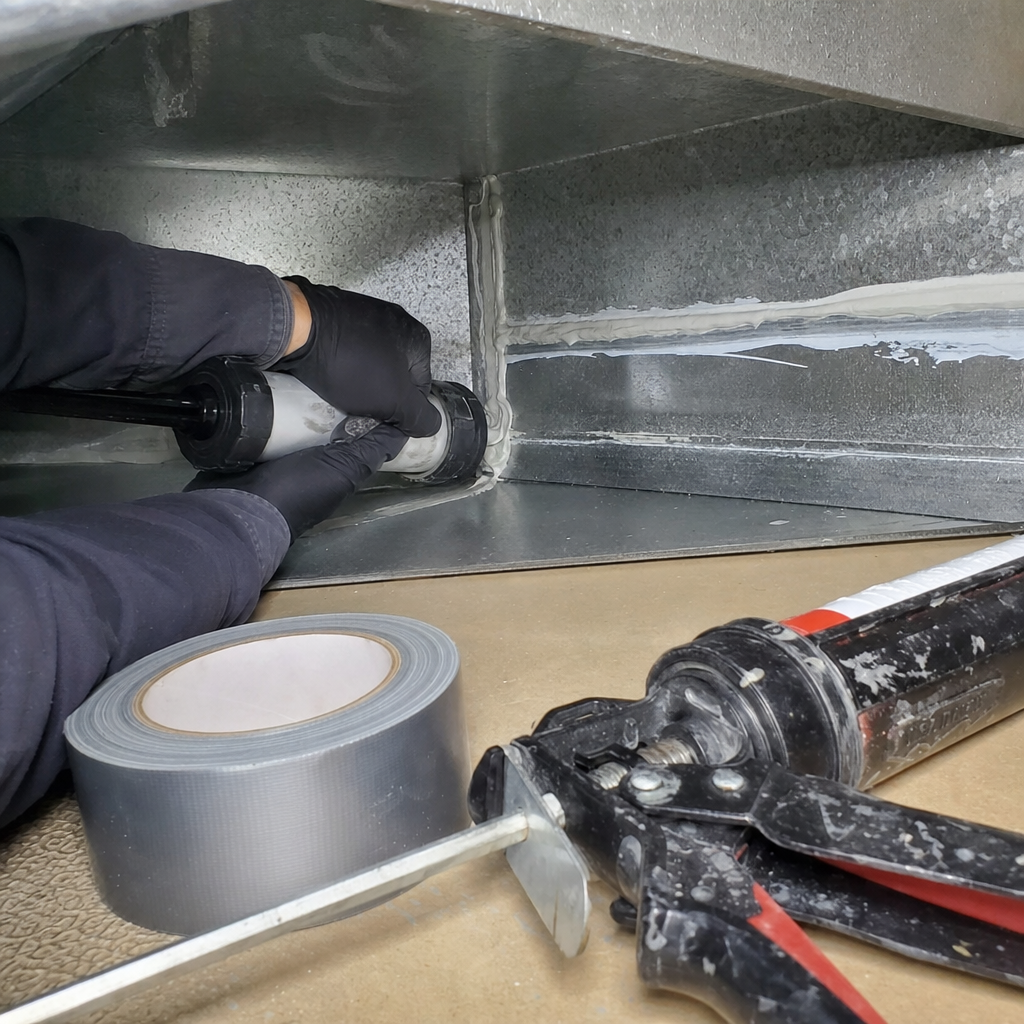
Mastic is a thick, water-based sealant brushed or troweled onto joints, seams, and connections. It’s labor-intensive — we’re talking hours on a ladder or in a crawlspace — but it’s permanent and works on every duct material. For accessible trunk lines in unfinished basements or attics, this is usually our recommendation. The sealant cures to a flexible, durable finish that outlasts any tape.
In Pennsylvania homes built 1950–1980 with galvanized sheet metal trunk lines, we regularly find original cloth-backed duct tape that’s degraded to a brittle, peeling mess. That tape was never designed for long-term sealing — it fails in 5–7 years, faster in humid basements. Mastic replaces it entirely.
Aerosol Duct Sealing: The Whole-System Approach
Aerosol sealing — sometimes called Aeroseal, though that’s one proprietary system — pressurizes your ductwork and blows microscopic sealant particles that accumulate at leak points from the inside. It’s less dependent on physical access and catches leaks in wall cavities, soffits, and finished spaces we’d never reach with a brush.
The tradeoff: higher equipment cost, and it requires temporary sealing of all vents and returns. For homes with extensive finished basement ceilings or ducts buried in walls, this method often makes sense despite the premium.
| Sealing Method | Typical Pennsylvania Cost Range | Best For |
|---|---|---|
| Mastic sealant — accessible trunk lines & major joints | $850 – $1,400 | Unfinished basements, attics, crawlspaces with reachable ductwork |
| Mastic sealant — full system (multiple zones, extensive joints) | $1,200 – $1,900 | Older homes with widespread tape failure or visible gaps |
| Aerosol whole-system sealing | $1,500 – $2,400 | Finished spaces, buried ducts, or when leakage testing shows 20%+ air loss |
| Combination: cleaning + mastic on accessible runs + aerosol touch-up | $1,800 – $2,800 | Comprehensive IAQ improvement; our most common recommendation |
These ranges reflect what we quote in Pennsylvania — they’re not national averages pulled from a database. A 1,200-square-foot ranch in McKeesport with an unfinished basement and straight trunk lines sits at the lower end. A 3,500-square-foot home in Fox Chapel with finished lower levels, multiple HVAC zones, and flex duct additions runs toward the upper range or beyond.
Why Pennsylvania’s Climate Makes Sealing an IAQ Decision
Here’s what generic cost pages miss entirely: Pennsylvania’s summer humidity and our particular basement culture create a unique infiltration problem.
From late June through early October, relative humidity in Pennsylvania basements routinely climbs past 60% — the threshold where mold colonizes organic material. Your ductwork, if unsealed, operates under negative pressure on the return side and positive pressure on the supply side. Both conditions pull that basement air into the system. We’ve measured return plenums in Bethel Park homes pulling 15–20% of their total airflow from the basement through unsealed seams, not from the intended living space.
The contaminants that come with that air:
- Mold spores from damp foundation walls, cardboard storage, or previous water intrusion
- Radon — Pennsylvania has significant radon potential, and basement duct leaks create direct pathways into living areas
- Fiberglass particulate from deteriorating duct liner in older systems
- General basement particulate — dust, pest debris, volatile compounds from stored chemicals
Cleaning removes what’s already inside your ducts. Sealing stops new contamination from entering. One without the other leaves you in a cycle where we clean in spring and you’re back to the same microbial load by fall. That’s why our Duct Repair & Sealing in Pennsylvania service is designed as a sequence, not an à la carte menu.
Our Cleaning-Then-Sealing Sequence: Why Order Matters
We’ve been called to homes where another company sealed first and cleaned second — or skipped cleaning entirely. Here’s the problem: sealant doesn’t adhere well to dust-coated metal or oily residue from years of accumulation. More critically, if your ducts contain active mold or heavy debris, sealing traps that contamination inside a now-airtight system. You’ve solved the infiltration problem and created a recirculation problem.
Our process, refined over 14 years and more than 1,100 jobs:
- Inspection and leakage assessment — We pressurize the system and use smoke pencils or theatrical fog to identify leak points. Jeffrey Morgan does this personally; he’s found that visual inspection alone misses roughly 30% of significant leaks in older Pennsylvania systems.
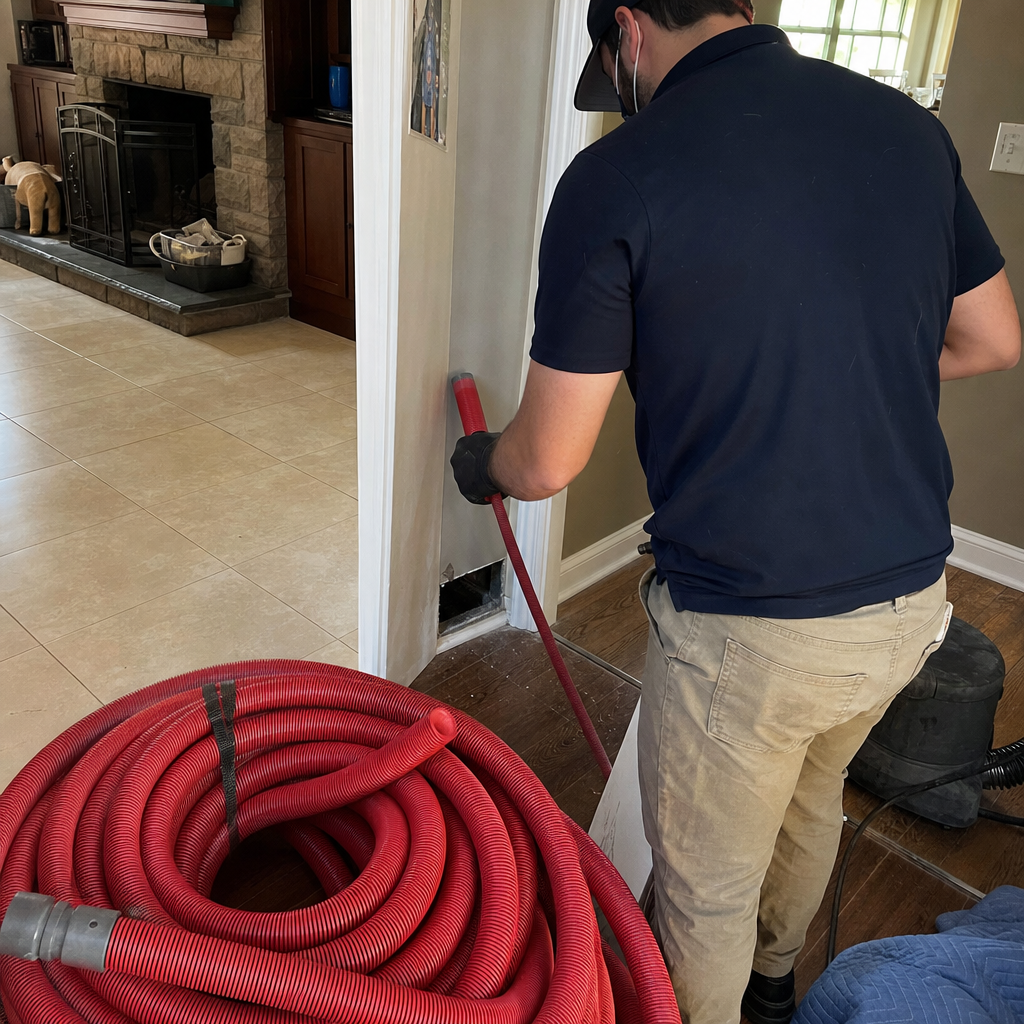
- Negative-pressure cleaning — Rotobrush brush-agitation systems and Nikro HEPA-rated vacuums remove debris from the duct walls. On mid-century sheet metal systems common in Lawrenceville and Bloomfield row homes, this takes more passes than newer flex duct — the seams and corners hold more material.
- Post-cleaning inspection — We verify duct material condition. Rusted-through sections, separated flex duct, or collapsed insulation get repaired or flagged before sealing begins.
- Sealing application — Mastic on accessible joints; aerosol touch-up for buried sections. Abatement Technologies containment tools keep sealant particulate from entering your living space during application — a step most duct-sealing pages don’t mention because most contractors don’t bother.
- Post-seal verification — We re-pressurize and confirm leakage reduction, typically targeting under 10% total system leakage for supply and return combined.
A company that only cleans will tell you cleaning is enough. A company that only seals will seal over whatever’s already in there. We do both in one visit because that’s what the housing stock here actually needs. If I wouldn’t run it in my own house, I won’t recommend it in yours.
What Our Pre-Sealing Inspection Actually Looks At
Before we quote a firm price, Jeffrey Morgan assesses five specific factors that drive cost and method selection:
Duct material and age. Galvanized steel from the 1960s seals beautifully with mastic but may need rust treatment first. Flex duct from a 1990s addition often has torn inner liners that need repair before sealing is worthwhile. We’ve abandoned sealing quotes on ductwork that was too far gone — honesty on this saves everyone money and frustration.
Existing tape condition. Cloth duct tape that’s turned to powder tells us how long the system has been leaking. The worse the tape, the more extensive the underlying gap pattern.
Pressure imbalance symptoms. Rooms that are hard to heat or cool, doors that slam when the HVAC runs, or whistling from registers — these indicate where leakage is concentrated. A bedroom that’s always cold in winter often has a supply duct leaking into an attic or wall cavity before the air ever reaches the vent.
Basement and crawlspace conditions. Standing water, active mold, or radon mitigation systems in place change our recommendations. Sealing ducts in a wet basement without addressing moisture is a temporary fix at best.
System accessibility. Finished ceilings, built-in storage, or tight crawlspaces in older Pennsylvania homes limit mastic application and push us toward aerosol methods or strategic access panel creation.
Key Takeaways: What Duct Sealing Costs and Delivers in Pennsylvania
- Expect $850–$2,400 for professional sealing; method and home configuration matter more than square footage alone
- Mastic application suits accessible ductwork; aerosol sealing catches leaks in finished or buried sections
- Pennsylvania’s humid summers and basement-centric housing make sealing an indoor-air-quality investment, not just an energy upgrade
- Cleaning before sealing is non-negotiable for proper adhesion and to avoid trapping contamination
- Over 1,100 verified customers have reviewed this work — our 4.8-star average reflects repeatability, not cherry-picked testimonials
FAQs
Most Pennsylvania homeowners pay between $850 and $2,400 for professional duct sealing, with mastic application on accessible runs at the lower end and aerosol whole-system sealing at the higher end. Call (844) 951-3591 for a free estimate — we price same-day after inspection.
Sealing and spot repair typically costs 60–75% less than full duct replacement, which runs $3,500–$7,500+ in Pennsylvania. We only recommend replacement when ductwork is rusted through, extensively collapsed, or made of obsolete asbestos-containing material. Most 1960s–1990s systems we encounter are structurally sound but poorly sealed — ideal candidates for Duct Repair & Sealing. Call (844) 951-3591 and we’ll assess whether your system qualifies.
Yes — the Department of Energy estimates typical duct leakage wastes 20–30% of conditioned air, and sealing can recover much of that. In Pennsylvania’s climate, we see the most dramatic savings in homes with attic duct runs (extreme temperature swings) or basements that stay humid all summer. But we emphasize the indoor-air-quality benefit because it’s immediate and measurable: less basement air, fewer allergens, reduced radon pathways. Energy savings accrue over years; air quality improves the day we finish.
Visible gaps at joints, rooms that never reach set temperature, excessive dust after cleaning, or musty odors when the HVAC runs all indicate leakage beyond what cleaning alone can fix. During our inspection, we pressurize the system and show you exactly where air is escaping — you’ll see smoke get sucked into gaps you didn’t know existed. Most Pennsylvania homes we inspect need both: cleaning to remove accumulated contamination, then sealing to stop reinfiltration. Call (844) 951-3591 to schedule an assessment.
Ready to Stop Your Basement Air from Circulating Through Every Room?
Fourteen years focused on one trade has taught us that duct sealing in Pennsylvania is rarely just about the money you’ll save on utilities. It’s about what you’re not breathing. Jeffrey Morgan — owner and lead technician — handles every estimate and every job personally, with Rotobrush and Nikro equipment built for this specific job, not a shop vac. We’ll inspect your system, show you exactly where it’s leaking, and quote a firm price before any work begins. Call (844) 951-3591 for your free estimate.
Written by Jeffrey Morgan, Owner & Lead Technician at Bluepeak Air Duct & Vent Cleaning Pennsylvania, serving Pennsylvania, PA.