
Honeywell Air Duct Cleaning in Philadelphia: A Homeowner’s Guide
Honeywell air filtration and UV systems installed in Philadelphia homes need clean ductwork to function properly — a Honeywell F300 electronic air cleaner or UV treatment lamp connected to a contaminated duct system will clog faster, work harder, and fail to deliver the air quality improvement you paid for. In our 14 years cleaning ducts across Philadelphia, we’ve found that homeowners who pair Honeywell IAQ upgrades with professional duct cleaning see measurably better equipment performance and longer filter life. If you’re considering Honeywell whole-home air quality equipment or already have it installed, call (844) 951-3591 for a free duct assessment — we’ll show you exactly what’s in your system before you spend another dollar on filters.
Here’s a mistake we see weekly: a homeowner in Fishtown or South Philly installs a $1,200 Honeywell F300 electronic air cleaner into a 1940s rowhouse duct system that’s never been cleaned. Six months later, the “Clean Cell” light is blinking, the fan is screaming, and the air smells worse than before. That filter isn’t broken — it’s doing exactly what it was designed to do, which is capture particles. But it’s capturing years of accumulated dust, construction debris, and in some of these older Philadelphia neighborhoods, remnants from coal-era heating conversions that are still shedding sediment. The filter becomes the victim of the ductwork, not the hero.
Why Honeywell Equipment Needs Clean Ducts to Work
Honeywell’s whole-home air quality lineup — electronic air cleaners like the F300, media filters, bypass humidifiers, and UV treatment systems — all share one dependency: they’re installed inside your existing ductwork. That seems obvious, but most homeowners don’t realize that these devices treat the air passing through them, not the duct surfaces surrounding them.
Here’s what happens when Honeywell equipment meets dirty ducts in a Philadelphia home:
- The F300’s electrostatic cells attract charged particles, but heavy debris loads cause premature saturation — instead of 6-month cleaning intervals, you’re cleaning cells every 6 weeks
- Media filters (MERV 11-16) face higher static pressure as ducts shed accumulated dust, forcing the HVAC blower to work harder and increasing energy costs
- UV lamps positioned in contaminated plenums can’t penetrate debris layers to reach biological growth — the organisms are literally shielded by the dirt
In neighborhoods like Germantown and Mount Airy, where many homes still have original galvanized ductwork from the 1950s-70s, we’ve measured debris accumulation of 3-8 pounds per system. That’s not a filter problem. That’s a duct problem that no Honeywell device can solve from the inside.
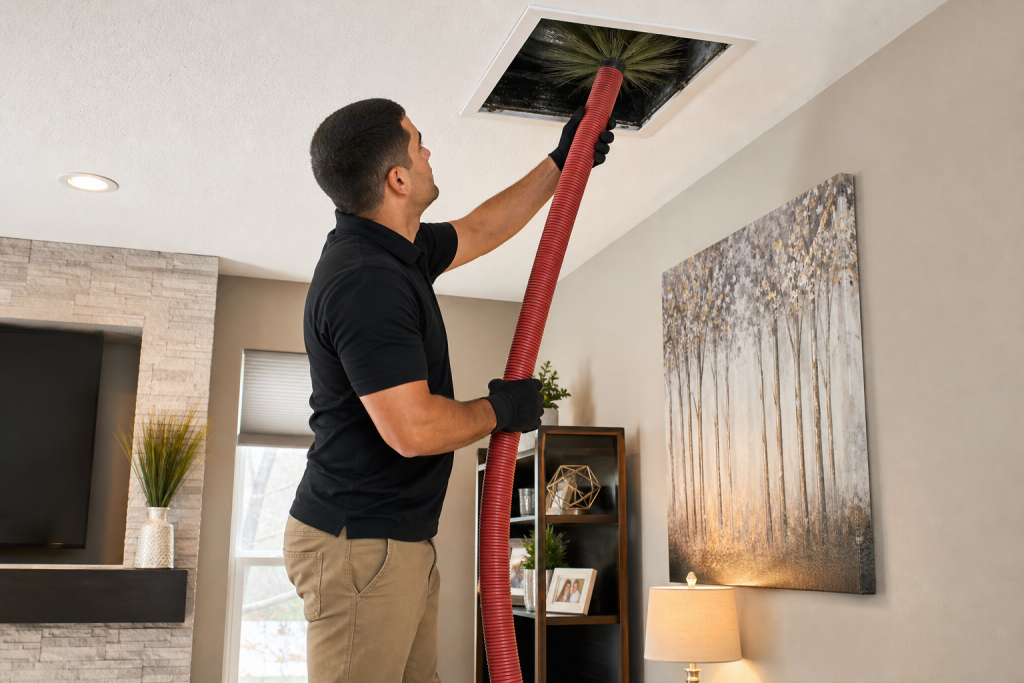
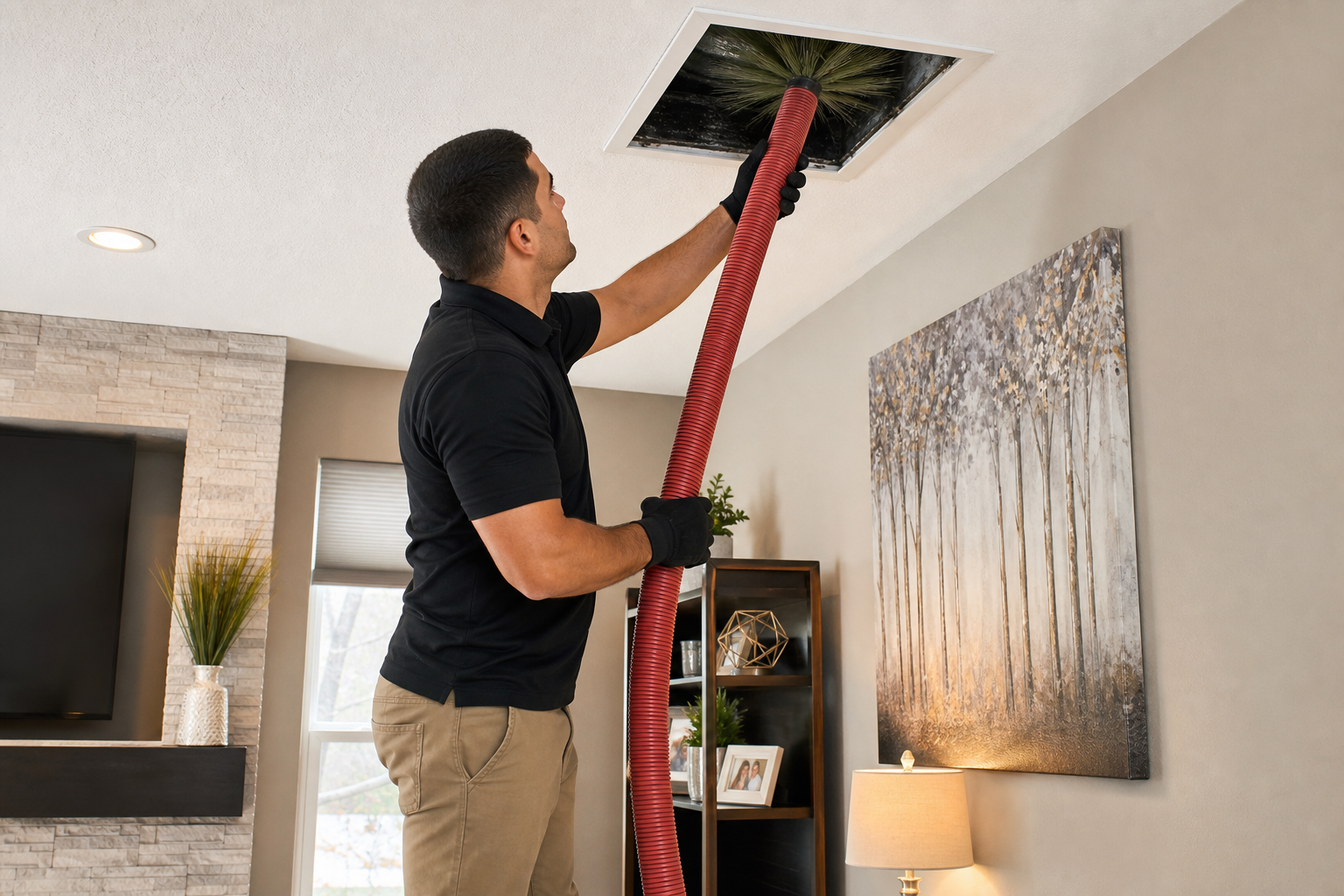
We cleaned a system in West Philadelphia last month where the homeowner had replaced their F300 cells twice in one year, convinced the unit was defective. The cells weren’t defective — they were doing the job of a duct cleaning service. Once we pulled the Rotobrush through that supply trunk and extracted what came out, their replacement interval stretched back to the manufacturer’s recommendation. The equipment was fine; the environment was wrong.
The Bypass Humidifier Problem Most Inspectors Miss
Honeywell’s HE-series bypass humidifiers are workhorses in Philadelphia’s dry winter heating season, but their duct connections create a specific vulnerability that general HVAC technicians often overlook during routine maintenance.
The bypass duct that diverts warm air through the humidifier pad and back into the return creates a small, moist cavity where supply and return trunks meet. In our experience across Philadelphia — particularly in homes near the Schuylkill and Delaware rivers where ambient humidity already runs higher — this junction becomes a mold and mildew entry point within 2-3 seasons if the surrounding ductwork isn’t clean and sealed.
Here’s our inspection protocol when we encounter a Honeywell bypass humidifier during a Bluepeak Air Duct & Vent Cleaning Pennsylvania home service call:
- Remove and inspect the humidifier pad for biofilm — slimy discoloration indicates upstream contamination
- Brush-agitate the bypass duct run with Rotobrush equipment, since the 6-inch round connection traps debris that standard vacuuming won’t dislodge
- Check the return-side connection with a borescope for mold staining at the humidifier penetration point
- Verify that the damper operates freely — stuck dampers force moist air into stagnant duct sections
We found active mold growth in a Chestnut Hill home’s bypass connection last winter. The homeowner had been treating “allergy season” symptoms for two years. The Honeywell humidifier was doing its job perfectly; the dirty, poorly sealed duct around it was incubating what her immune system was fighting.
If your home has a Honeywell bypass humidifier and you can’t remember when the surrounding ducts were last cleaned, that’s your sign. The humidifier pad gets changed annually, but the ductwork it’s connected to often goes decades.
UV Systems: What Honeywell Doesn’t Tell You About Duct Debris
Honeywell’s UV air treatment systems — typically installed as UV-C lamps in the supply plenum — are marketed as killing bacteria, viruses, and mold spores. This is true, but with a critical caveat that affects how you maintain them: UV-C light neutralizes biological organisms that it directly illuminates. It does not remove particulate matter, and it cannot penetrate debris layers to reach organisms hiding underneath.
We’ve serviced UV-equipped systems in Center City condos and Northeast Philadelphia bungalows where the lamp was glowing cheerfully behind a mat of dust and pet hair thick enough to read. The lamp was “working” by every electrical measure. It was accomplishing almost nothing for air quality.
The physics are straightforward: UV-C dosage drops exponentially with distance and obstruction. A lamp rated for 99% microbial kill at 12 inches of clear air might achieve 40% at that same distance through a debris field. Organisms sheltered behind duct-lining sediment receive fractional exposure — enough to stress them, sometimes enough to mutate them, not enough to eliminate them.
Our protocol for UV-integrated systems uses Abatement Technologies containment to isolate the plenum during agitation cleaning, followed by lamp inspection and sleeve cleaning. We document lamp intensity with a UV meter where accessible — not because we’re lamp technicians, but because we need to know whether the environment we’re leaving behind will let that investment function.
The honest truth: if your Philadelphia home has a Honeywell UV system installed over dirty ducts, you’re running an expensive nightlight. Clean first, then let the UV do what it’s designed to do.
Maintaining Honeywell Equipment Between Professional Cleanings
Honeywell IAQ equipment requires homeowner maintenance that’s poorly coordinated with duct cleaning schedules. Most homeowners either over-maintain the filter and neglect the ducts, or clean the ducts and forget the equipment. Here’s the maintenance calendar we recommend to our Philadelphia customers, based on 14 years of seeing what actually works:
| Component | Homeowner Task | Frequency | Duct Cleaning Coordination |
|---|---|---|---|
| F300 Electronic Cells | Remove and wash with mild detergent; inspect for corrosion | Every 6 months (or when Clean Cell indicator activates) | Schedule duct cleaning before reinstalling cleaned cells — don’t put clean components into dirty ducts |
| F300 Prefilter | Vacuum or replace disposable media | Every 1-3 months | Replace at duct cleaning appointment for fresh baseline |
| Media Filters (FC100A, etc.) | Replace when pressure drop indicator shows, or seasonally | Every 6-12 months | New filter after duct cleaning prevents immediate loading |
| UV Lamps | Inspect for dust accumulation on quartz sleeve; wipe gently if accessible | Every 3 months | Professional sleeve cleaning and intensity check during duct service |
| Bypass Humidifier | Replace pad, clean drain, verify damper closure for cooling season | Annually (fall) | Duct inspection at pad change — schedule cleaning if bypass connection shows staining |
The filter reset button on Honeywell electronic air cleaners is another point of confusion. Pressing reset without actually cleaning the cell just silences the reminder — it’s the “check engine” light of indoor air quality. We’ve opened F300 housings in Manayunk and East Falls where the cell was caked solid and the indicator had been reset six times. The homeowner thought they were maintaining it. They were just restarting the countdown to failure.
Warranty-Safe Cleaning Around Integrated Honeywell Controls
Modern Honeywell IAQ systems — particularly the newer communicating thermostats and zone panels — integrate directly with HVAC control boards. This creates a technician access issue that matters for duct cleaning: if your cleaning service disturbs wiring, moves sensors, or disconnects communication cables to gain duct access, they can void equipment warranties or corrupt system configuration.
We’ve developed specific protocols for Philadelphia homes with integrated Honeywell controls, based on enough service calls where we arrived after someone else created a $400 control problem trying to solve a $200 cleaning problem:
- Photograph all wire positions before disturbing any component — we document before we touch
- Never disconnect low-voltage communication cables at control boards; instead, remove duct access panels upstream or downstream of integrated components
- Use Nikro HEPA vacuums with soft-bristle attachments near circuit boards rather than compressed air, which can force debris into connector pins
- Verify zone damper operation post-cleaning — agitation can dislodge damper linkages in multi-zone systems
The warranty issue is real. Honeywell’s equipment warranties cover manufacturing defects, not technician-induced communication errors. We’ve been called to troubleshoot “failed” zone panels in Bala Cynwyd and Wynnewood that were actually cleaning-access damage — a $15 wire harness repair that became a $600 replacement because the original technician didn’t document their work.
When you’re hiring duct cleaning in Philadelphia and you have Honeywell-integrated HVAC controls, ask specifically: “How do you protect integrated control wiring during duct access?” If you get a blank look, keep calling.
When to Call a Pro
You can handle filter changes and cell washing. You cannot inspect the full duct run, measure static pressure changes, or safely access plenum interiors. Call (844) 951-3591 when: your Honeywell filter indicator activates more frequently than manufacturer’s spec; you notice musty odors when the humidifier runs; your UV lamp is more than two years old (intensity degrades even when lit); or you’re planning any IAQ equipment upgrade and can’t confirm when ducts were last cleaned.
Related services in Philadelphia: Air Duct Cleaning in Carnegie, Dryer Vent Cleaning in Carnegie, and HVAC Cleaning in Carnegie.
The Bottom Line
Honeywell makes legitimate whole-home air quality equipment, but it’s infrastructure-dependent — the ducts are the environment, and the filter or UV lamp is just a component operating inside that environment. In Philadelphia’s older housing stock, with decades of accumulated debris, seasonal humidity swings, and the particular challenges of rowhouse and twin duct configurations, clean ductwork isn’t an upsell. It’s the precondition that makes every other IAQ investment viable.
We’ve spent 14 years with Rotobrush and Nikro equipment in Philadelphia attics and basements, and the pattern is consistent: homeowners who clean first and upgrade second spend less on filters, replace equipment less often, and actually breathe the air they paid to improve. Those who install first and clean never — or clean as an afterthought — end up fighting their own equipment.
If you’re in Philadelphia and considering Honeywell air quality equipment, or wondering why your existing system isn’t delivering, start with what’s in your ducts. Call (844) 951-3591 for a free estimate. Jeffrey Morgan — owner and lead technician — handles the assessment personally, and we’ll show you exactly what your Honeywell system is working with.
Frequently Asked Questions
Whole-house duct cleaning in Philadelphia typically runs $400–$800 for a standard single-system home, with rowhouses and twins on the lower end and larger Northeast Philadelphia homes with multiple zones toward the higher range. The investment is usually recovered within 12–18 months through extended filter life and reduced HVAC strain. Call (844) 951-3591 for an exact quote — estimates are free.
You can install it, but you shouldn’t expect meaningful results. UV-C light cannot penetrate accumulated debris to reach biological growth underneath, so organisms in dirty ducts remain shielded and active. We recommend professional duct cleaning before UV activation, then annual maintenance to keep the lamp environment clear. Call (844) 951-3591 to schedule both services.
With a properly maintained F300 or similar unit, duct cleaning every 3–5 years is typical for Philadelphia homes. However, if you’re replacing prefilters more than quarterly or washing cells more than twice yearly, your ducts are likely overloaded and need cleaning now. The equipment is telling you the environment exceeds its capacity.
No — properly performed duct cleaning won’t void Honeywell warranties. However, careless access that disturbs integrated control wiring, moves sensors, or damages communication cables can create warranty disputes. We document all wire positions before access and use techniques specifically designed for homes with integrated Honeywell controls. Ask your technician about their integrated-system protocol before hiring.
Written by Jeffrey Morgan, Owner & Lead Technician at Bluepeak Air Duct & Vent Cleaning Pennsylvania, serving Philadelphia since 2012.
Need Air Duct Cleaning Help?
Call Bluepeak Air Duct & Vent Cleaning Pennsylvania — licensed & insured, here with fast after-hours help in Pennsylvania.
(844) 951-3591