
Fast, Reliable Air Quality & Sanitizing Across Reading
Air quality and sanitizing services in Reading, PA typically run $280–$650 for residential duct sanitizing, with mold treatment and UV light installation adding $180–$450 depending on system size and contamination level. Most Reading appointments are scheduled within 48 hours, and our Air Quality & Sanitizing team carries the specialized equipment needed for the city’s unique retrofit-duct housing stock. Call (844) 951-3591 for a free estimate.
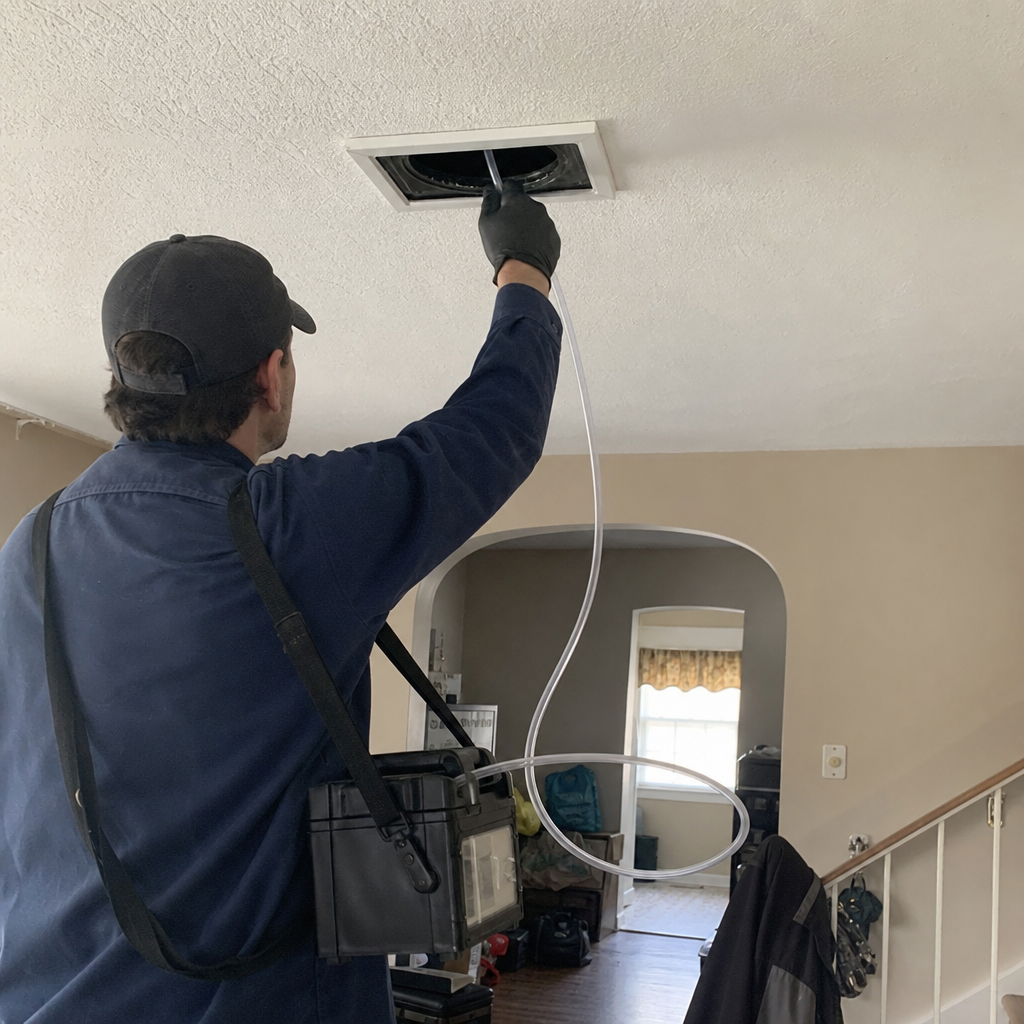
We’ve been driving to Reading for fourteen years — up Route 422 past the Pagoda, through the narrow streets of Centre Park and the 19601 ZIP, out to the ranch homes near Exeter Township in 19606. Jeffrey Morgan — owner and lead technician — handles every job personally, and he’s learned that Reading isn’t like other Pennsylvania cities. The coal-soot residue hiding in century-old plenum chambers, the humid valley air that traps mold spores, the asbestos-wrapped joints in pre-1980 systems — these aren’t hypotheticals here. They’re what we encounter on Cotton Street, on Walnut, in the row homes along the Schuylkill. We show up with Rotobrush rotary whips, Nikro HEPA vacuums, and the patience to do multiple passes when one won’t cut it.
Why Bluepeak Air Duct & Vent Cleaning Pennsylvania Is Reading’s Preferred Air Quality & Sanitizing Company
Over 1,100 verified customers have reviewed this work, and that 4.8-star average reflects something specific: Jeffrey Morgan doesn’t send crews. He’s the one in your basement, adjusting the Rotobrush head for an octopus plenum, checking the Nikro vacuum’s HEPA seal, deciding whether the coal-ash load needs a second pass. In Reading, where the 19602 and 19604 ZIP codes hold some of the densest concentrations of retrofit-duct row homes in Pennsylvania, that personal accountability matters.
Our response time to Reading averages under two hours from initial call to scheduled arrival — faster for the city-core ZIPs we know well. We don’t waste time locating properties or puzzling over basement layouts we’ve seen dozens of times. The narrow chases between 1890s brick walls, the uninsulated basement ceilings where ducts sag, the original coal-furnace cleanouts still visible in foundation walls — these are familiar landmarks to us, not obstacles.
Fourteen years focused on one trade means we’ve developed protocols specifically for Reading’s housing stock. Standard duct sanitizing, the kind that works fine in a 1995 suburban split-level, often fails here. We’ve learned that the hard way, and we’ve adapted.
Our Air Quality & Sanitizing Services in Reading
Mold Treatment
Reading’s bowl-shaped valley geography — trapped between South Mountain and Blue Mountain along the Schuylkill — creates winter temperature inversions that concentrate particulates, but the bigger mold driver is summer humidity. The valley holds moisture, and older row homes in 19601 and 19604 lack vapor barriers in their uninsulated basement ceilings where retrofit ductwork runs. We’ve found active mold colonization inside supply plenums in Centre Park homes where basement humidity stays above 65% from June through September. Our mold treatment protocol starts with mechanical removal using Rotobrush agitation and Nikro HEPA extraction, followed by Abatement Technologies antimicrobial fogging — never chemical-only treatment, which can bind with residual coal soot and create worse problems.
Bacteria Sanitizing
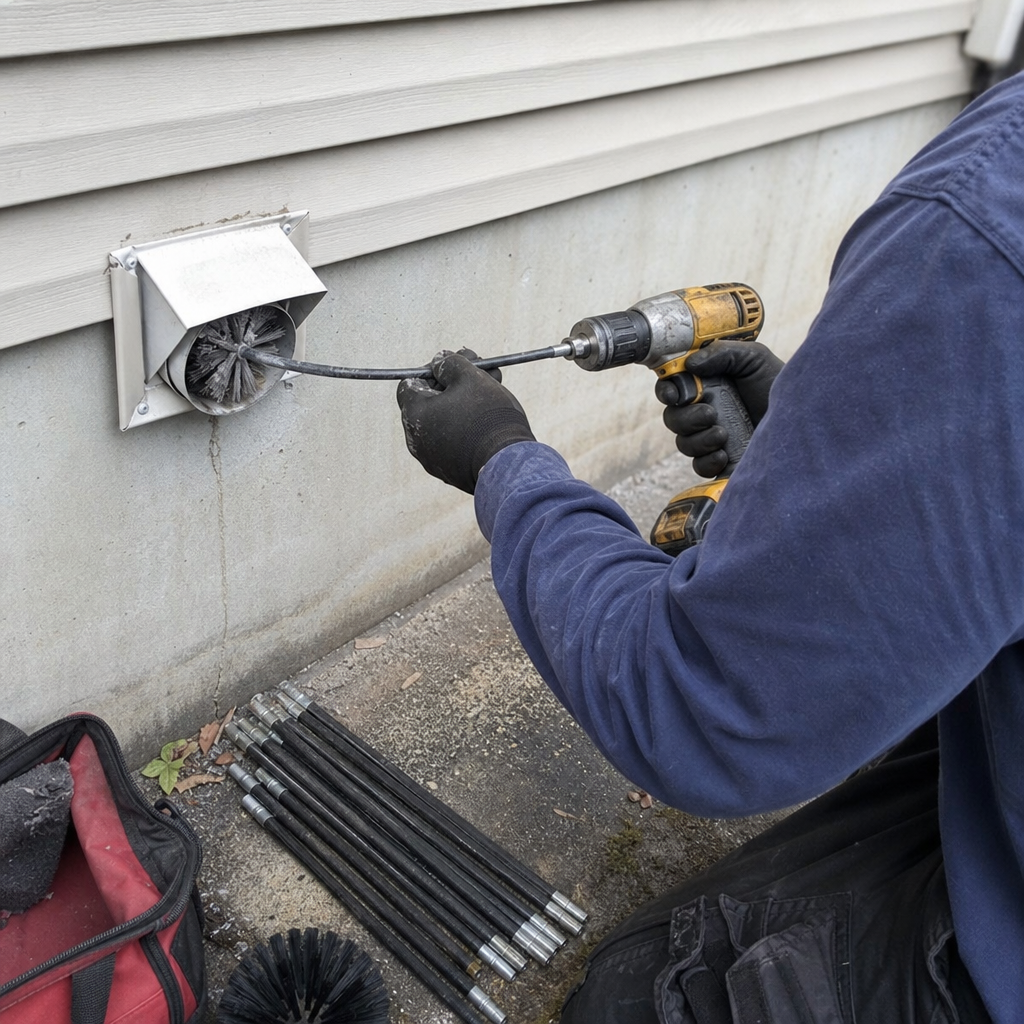
Bacteria sanitizing in Reading requires preconditioning that most companies skip. The decades of fine coal ash coating octopus plenum chambers — we see them hidden behind basement partitions, still feeding downstream contamination — act as a bacterial nutrient source. Fogging over that substrate is temporary at best. We clear first, then sanitize. In a 1924 row house on Cotton Street, we found the original coal-furnace plenum coated in a half-inch of fine black ash. Using a Rotobrush rotary whip with HEPA vacuum and a Nikro compressed-air lance, we cleared the plenum and sanitized the entire duct run with an Abatement Technologies antimicrobial fog, eliminating the musty coal-smoke odor that had lingered for decades. That job took four hours. A standard fogging would have taken one, and failed within weeks.
Odor Removal
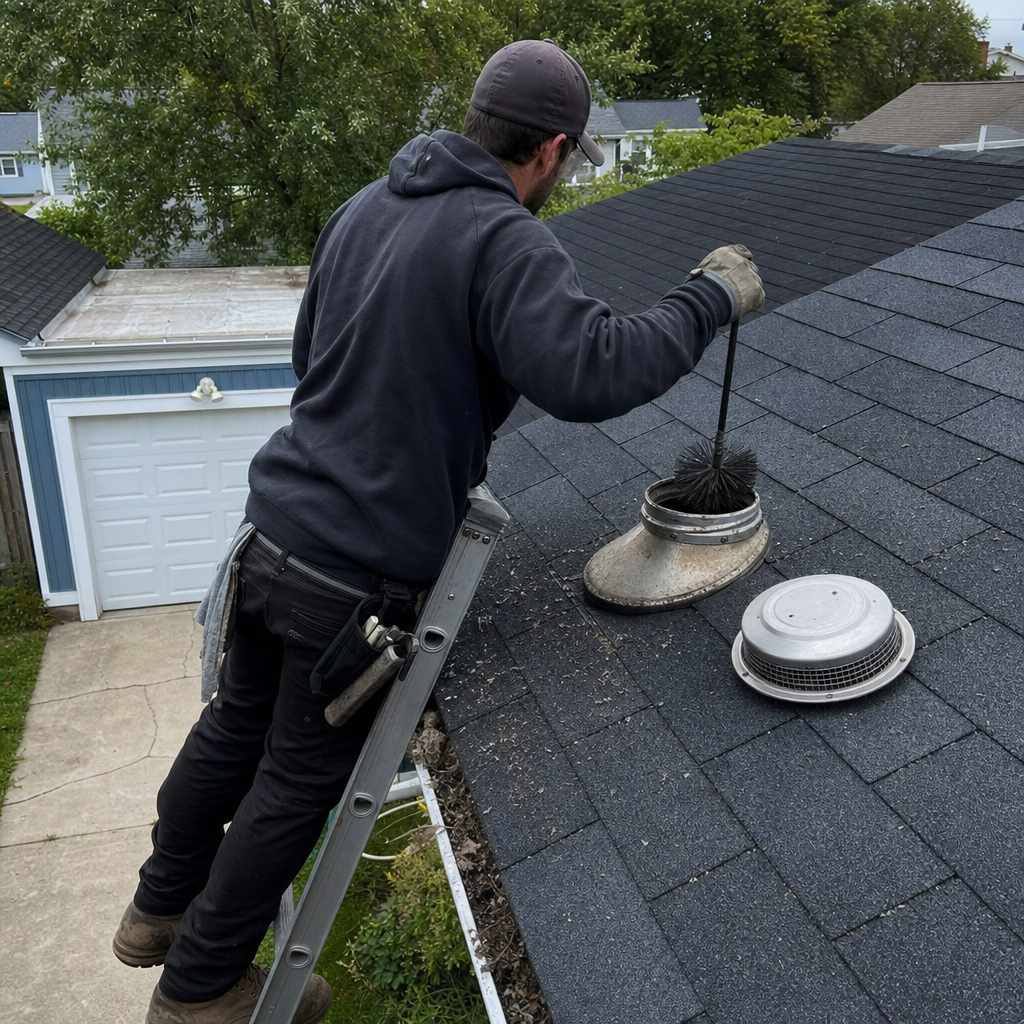
The persistent musty smell in Reading’s older homes isn’t “old house smell” — it’s decades of coal-soot off-gassing from plenum chambers and unsealed duct joints, compounded by humidity-driven microbial growth. We’ve had homeowners in the 19603 ZIP tell us they’ve tried candles, ozone generators, even duct replacement by other companies, and the odor returned. The source is almost always an uncleared plenum or a leaking joint in a wall chase we can access with borescope inspection and targeted sealing. Our odor removal pairs mechanical extraction with source elimination, not masking. For post-renovation odor — common in the converting warehouse lofts near Penn Street — we adapt the protocol for newer contaminants like drywall dust and VOCs.
UV Light Installation
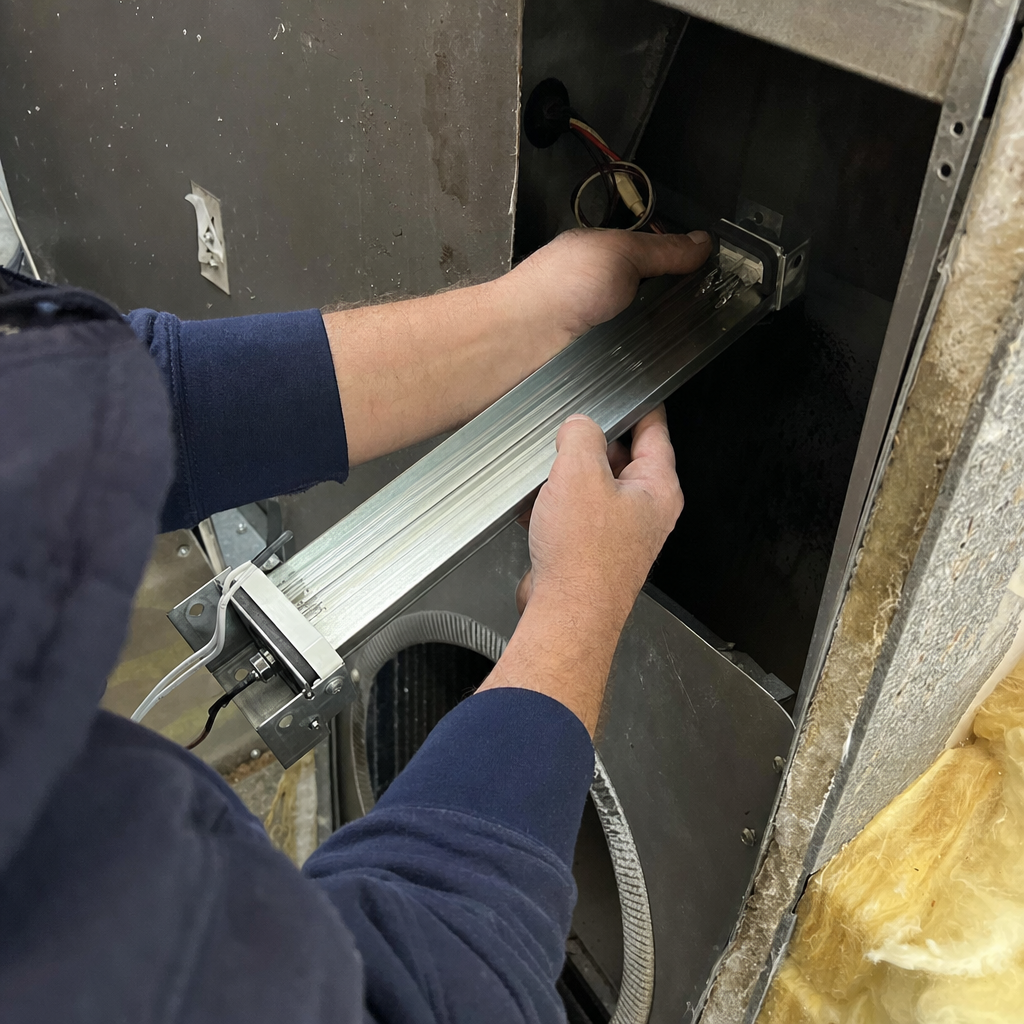
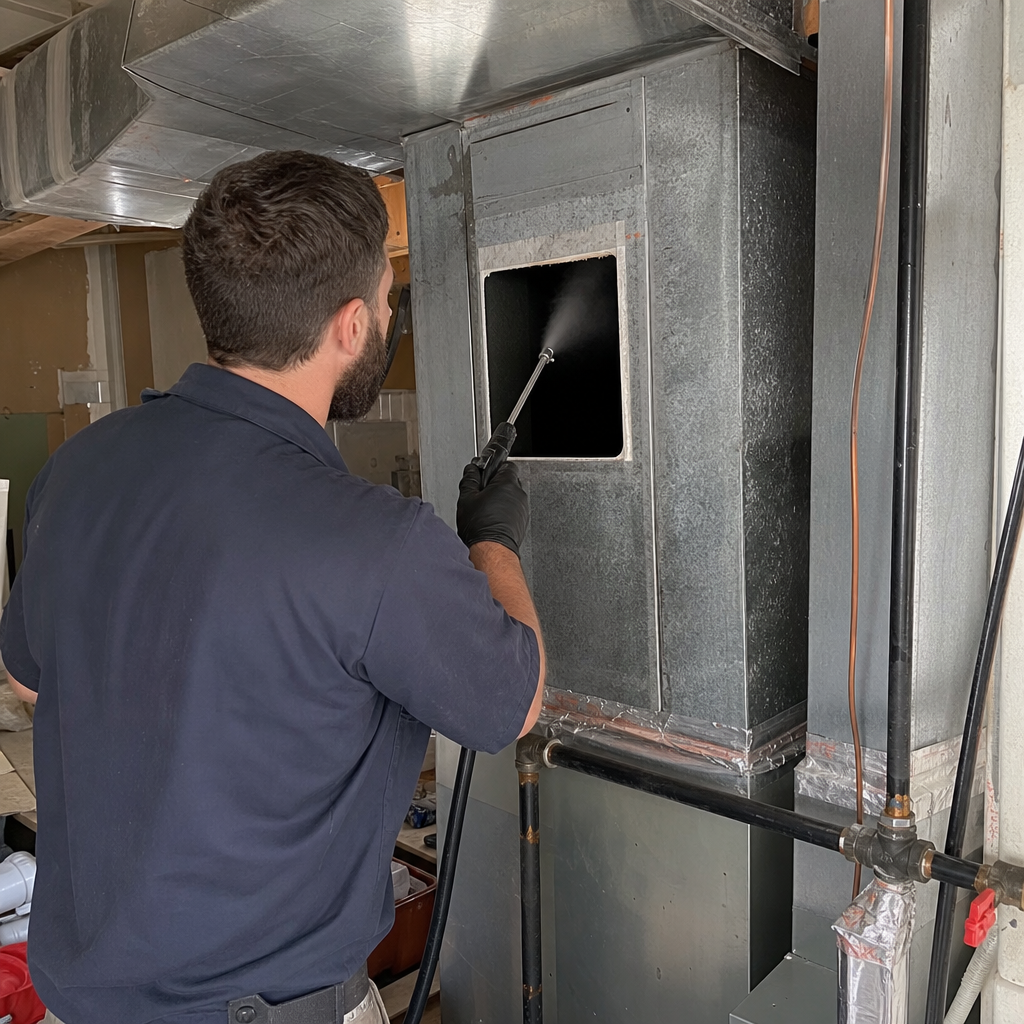
UV-C light installation in Reading presents specific challenges. The narrow uninsulated basement ceilings where retrofit ductwork runs — often with as little as 8 inches of clearance — require low-profile UV fixtures and creative mounting. We’ve installed Honeywell UV systems in ceiling-hung plenums where standard brackets won’t fit, and we’ve learned to position lamps upstream of cooling coils in Reading’s humid climate, where condensate pans breed mold that standard filters miss. For row homes with octopus plenums, we sometimes recommend dual-lamp configurations treating both the plenum chamber and the main trunk. The 19605 suburban ranches have more standard installations, but even there, Jeffrey Morgan measures actual duct dimensions rather than guessing from floor plans.
What happens when you call
- 1
A real person answersNo phone trees — you reach a local pro.
- 2
You get an upfront price rangeHonest numbers before anyone is dispatched.
- 3
A background-checked tech heads outLicensed & insured, dispatched right away.
- 4
You approve before work beginsNothing starts until you say go.
Trusted Brands We Service in Reading
We deploy Rotobrush brush-agitation systems for mechanical cleaning in Reading’s tight chases and oversized plenums — the rotary whip reaches where straight vacuums can’t. Nikro HEPA-rated vacuums contain extracted coal ash and mold spores without exhausting them back into your living space. For sanitizing, we use Abatement Technologies containment and fogging equipment, the same gear restoration contractors use after water damage. We stock Honeywell and Aprilaire UV and filtration products for Reading customers who want ongoing air-quality improvement after the initial service. Parts and replacement lamps are available without the two-week wait you’d face ordering direct — we keep common sizes on the truck.
Common Air Quality & Sanitizing Problems We See in Reading Homes
- Uncleared octopus plenums recontaminating downstream vents. The massive sheet-metal chambers from original coal gravity furnaces, still present in 19601 and 19602 row homes, hold decades of fine ash. Standard sanitizing that skips these plenums leaves a reservoir that re-contaminates the entire duct system within weeks.
- Chemical sanitizers binding with coal soot to form cement-like residue. When companies fog antimicrobial agents over unextracted coal ash, the treatment polymerizes with the carbon particulate, creating a hardened layer that permanently reduces duct airflow and becomes impossible to remove without mechanical abrasion.
- Unsealed duct joints in narrow wall chases leaking treatment into cavities. The retrofit ductwork shoehorned into Reading’s 1890s brick walls has poorly mated joints. Fogging pressurizes these leaks, driving moisture and chemicals into wall cavities where hidden mold colonizes on plaster lath.
- Humidity-driven mold in uninsulated basement ceiling plenums. Reading’s valley topography traps summer moisture, and the lack of vapor barriers in pre-1980 construction means basement humidity migrates directly into ductwork. UV installation without humidity control often fails here.
Pricing for Air Quality & Sanitizing in Reading, PA
| Service | Typical Range in Reading |
|---|---|
| Standard duct sanitizing (single system) | $280–$420 |
| Mold treatment (mechanical + antimicrobial) | $380–$650 |
| Odor removal with source extraction | $320–$520 |
| UV light installation (single lamp) | $280–$450 |
| UV light installation (dual lamp / complex mount) | $420–$680 |
| Coal-soot plenum remediation (add-on) | $180–$340 |
What moves you within these ranges: system size (row home versus ranch), accessibility (finished basement ceilings we must cut versus open joists), contamination level (visible mold versus preventive treatment), and whether we’re dealing with an uncleared octopus plenum that needs extraction before sanitizing can work. We inspect first, quote exact, and don’t start work until you approve the number. Estimates are free — call (844) 951-3591.
We Also Serve Cities Near Reading
Our service radius covers Wyomissing’s mid-century developments, Shillington’s mixed housing stock, Blandon’s rural properties with longer drives we factor into scheduling, and Birdsboro’s river-valley homes facing similar humidity challenges. Each gets Jeffrey Morgan’s direct attention, not a rotating crew.
Serving Reading, PA — Our Local Coverage Area
We’re based in the Reading area and know this community well. Use the map below to see our service coverage — if you’re nearby, we can almost certainly help.
FAQs — Air Quality & Sanitizing in Reading
Yes — we specialize in first-time cleaning of Reading’s coal-era plenum systems, and they’re often the ones that need it most. We use Rotobrush rotary whips with extended reach and Nikro compressed-air lances to break loose decades of compacted ash, then extract with HEPA vacuum in multiple passes. Call (844) 951-3591 — we’ll inspect the plenum access and give you an exact quote, no charge for the estimate.
We do not perform asbestos testing or abatement; if we suspect asbestos-wrapped duct connections during our inspection, we stop work and refer you to a Pennsylvania-certified abatement contractor. Once abatement is complete, we return to clean and sanitize the exposed ductwork. This protects you legally and protects our technicians — it’s the only responsible approach. Call (844) 951-3591 to schedule an inspection.
Yes, though it requires low-profile fixtures and sometimes custom mounting brackets — we’ve installed Honeywell UV systems in ceilings with as little as 8 inches of clearance. Jeffrey Morgan measures your actual duct dimensions and clearance during the free estimate, then specifies the right lamp configuration. For octopus plenum systems, we often recommend treating both the plenum chamber and the main trunk line. Call (844) 951-3591 to check your specific layout.
We extract before we treat — fogging over uncleared coal soot is why odors return in Reading’s row homes. Our protocol includes mechanical removal of ash and debris from plenum chambers and duct runs, then targeted antimicrobial application to clean substrate. The fogging is the final step, not the whole job. For a permanent fix, we also seal leaking joints we find during cleaning. Call (844) 951-3591 for an inspection and exact quote.
No — we adapt the protocol to the house. A 1975 ranch in 19607 gets standard Rotobrush cleaning with HEPA extraction and standard sanitizing, which is usually sufficient. A 1920 row home in 19601 gets plenum-specific extraction, possible multiple passes, borescope inspection of wall chases, and adapted UV mounting if requested. Jeffrey Morgan assesses each system individually rather than running the same program everywhere. Call (844) 951-3591 to discuss your home’s specific needs.
Ready to breathe cleaner air in your Reading home? Jeffrey Morgan — owner and lead technician — will inspect your system personally, explain what we’re dealing with, and quote exact before any work begins. No crew rotations, no surprises. Call (844) 951-3591 for your free estimate.
Written by Jeffrey Morgan, Owner at Bluepeak Air Duct & Vent Cleaning Pennsylvania, serving Reading since 2011.