
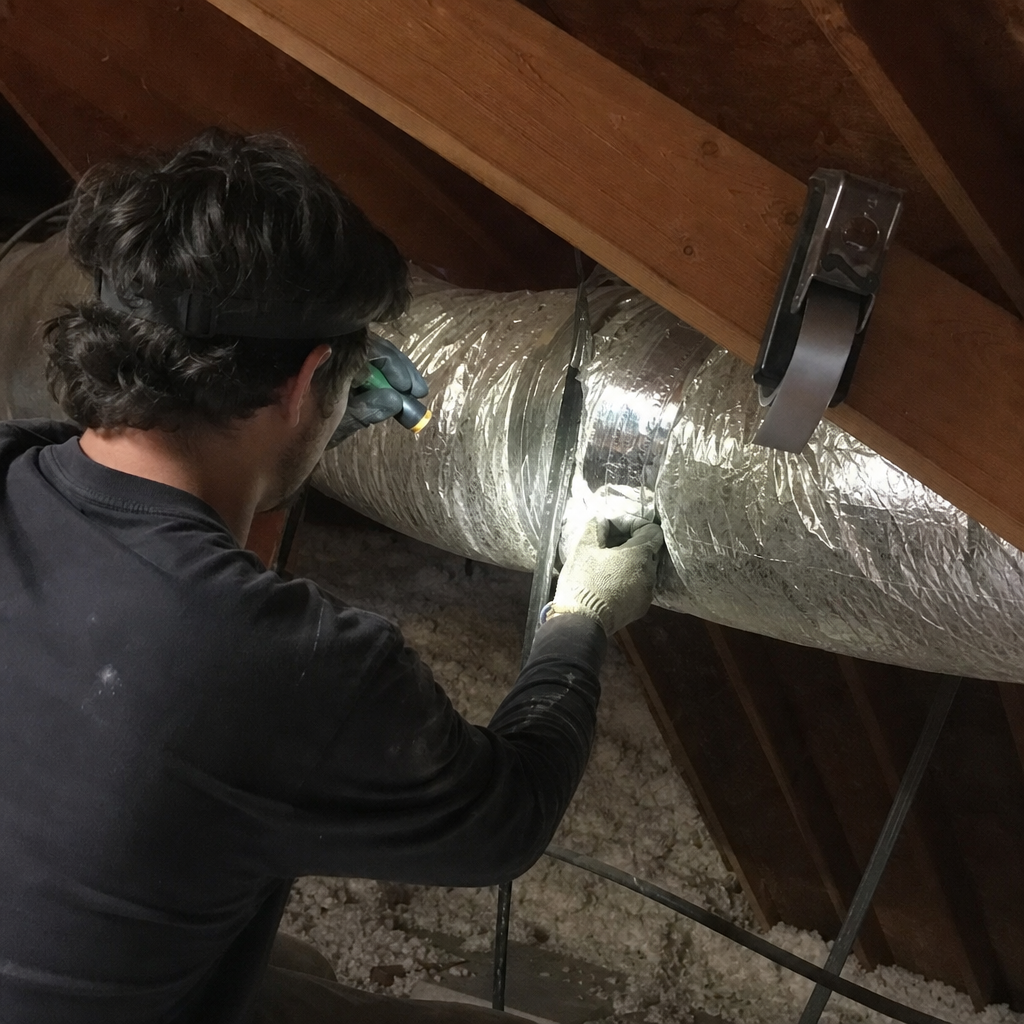
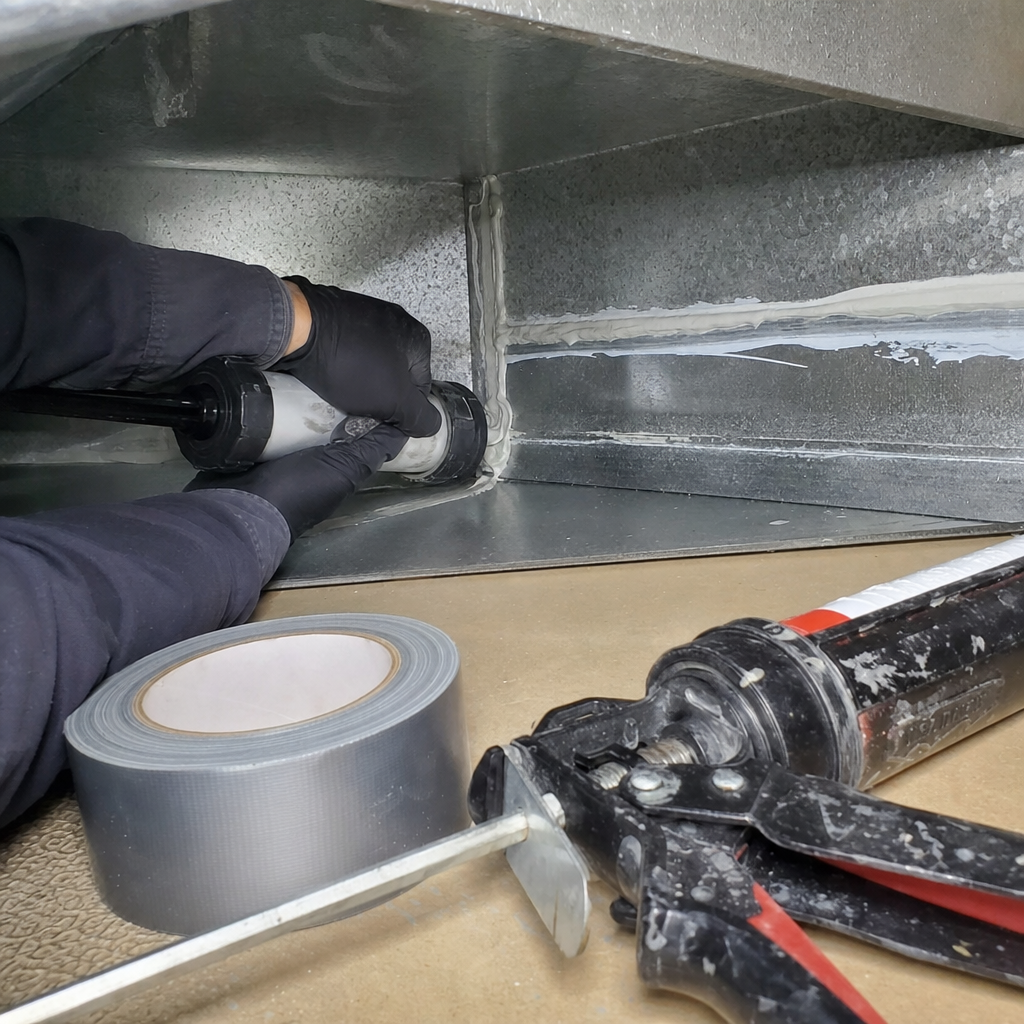
Fast, Reliable Duct Repair & Sealing Across Reading
Duct repair and sealing in Reading, PA typically costs $180–$650 depending on whether you’re sealing accessible joints in a basement or addressing compromised plenum connections in a century-old row home, and most jobs are completed in a single visit. If you’re noticing whistling from vents, uneven heating between rooms, or that persistent coal-dust odor in a home near Centre Avenue or North 11th Street, the problem usually traces back to failed seals in retrofit ductwork that was never designed for forced air. We’re Bluepeak Air Duct & Vent Cleaning Pennsylvania, and our Duct Repair & Sealing team has been driving out to Reading from our Philadelphia base for 14 years — we know the 19601 and 19602 ZIPs well, and we carry the mastic, fiberglass mesh, and specialized access tools needed for these older homes. Call (844) 951-3591 for a free estimate, or read on to understand what your particular Reading home likely needs.
Why Bluepeak Air Duct & Vent Cleaning Pennsylvania Is Reading’s Preferred Duct Repair & Sealing Company
Over 1,100 verified customers have reviewed this work, and that 4.8-star average reflects something we don’t take lightly: Jeffrey Morgan — owner and lead technician — handles your job personally. When we get a call from Reading, Jeffrey loads the Rotobrush and Nikro equipment himself and drives west on the Schuylkill Expressway, usually arriving within 90 minutes to homes in Wyomissing or the city core. We’ve earned reviews specifically from Reading homeowners who were relieved to find someone who understood their octopus plenum systems rather than treating them like standard suburban ductwork.
Our response time to Reading matters because duct leaks don’t wait. In winter, when temperature inversions trap cold air in the Schuylkill Valley, a leaking return duct can pull unconditioned basement air straight into your living space. In summer, that same leak becomes a condensation point. We schedule Reading jobs with buffer time built in — these homes often reveal surprises behind access panels, and we don’t book back-to-back calls that would rush us past proper sealing work.
Fourteen years focused on one trade means we’ve seen Reading’s housing stock evolve in our client base. Early on, we mostly serviced the 19605–19610 suburban ranches and split-levels. Now, as more homeowners invest in the city-core row homes near the GoggleWorks corridor or the 500 block of Washington Street, we’re regularly adapting our techniques for retrofit ductwork that predates modern building codes.
Our Duct Repair & Sealing Services in Reading
Duct Sealing
Duct sealing in Reading’s row homes demands a different approach than in post-1980 construction. The original coal-fired gravity furnaces in these homes used massive sheet-metal plenum chambers — “octopus” systems — that distributed heat by convection alone. When forced-air blowers were retrofit into these plenums in the 1950s–70s, contractors often sealed the new trunk connections with basic tape or thin mastic that couldn’t handle the vibration and thermal cycling. We remove failed sealant, clean the mating surfaces of accumulated coal soot (which prevents adhesion), and apply fresh mastic rated for metal-to-metal joints in unconditioned spaces. In Reading’s humid summers, proper sealing also blocks moisture infiltration that can colonize mold inside otherwise clean ducts.
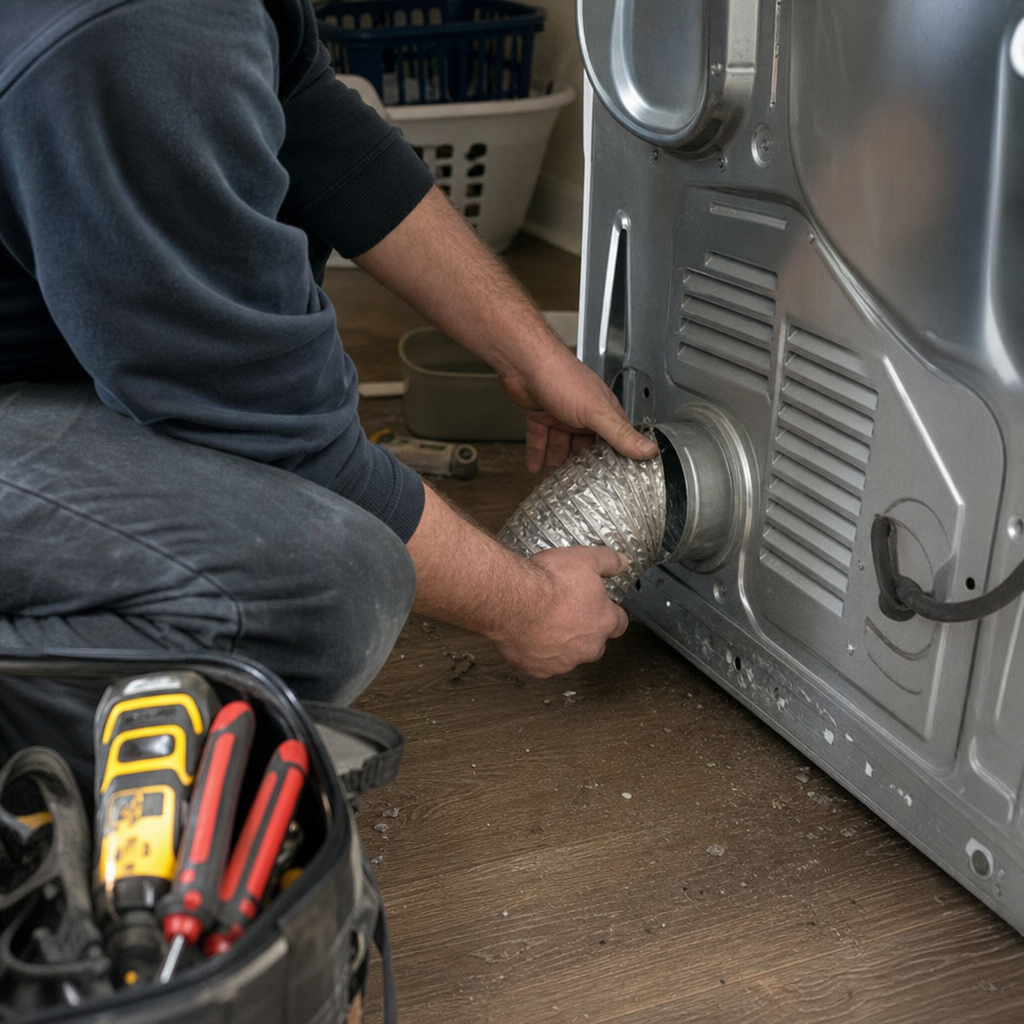
Mastic Sealant Application
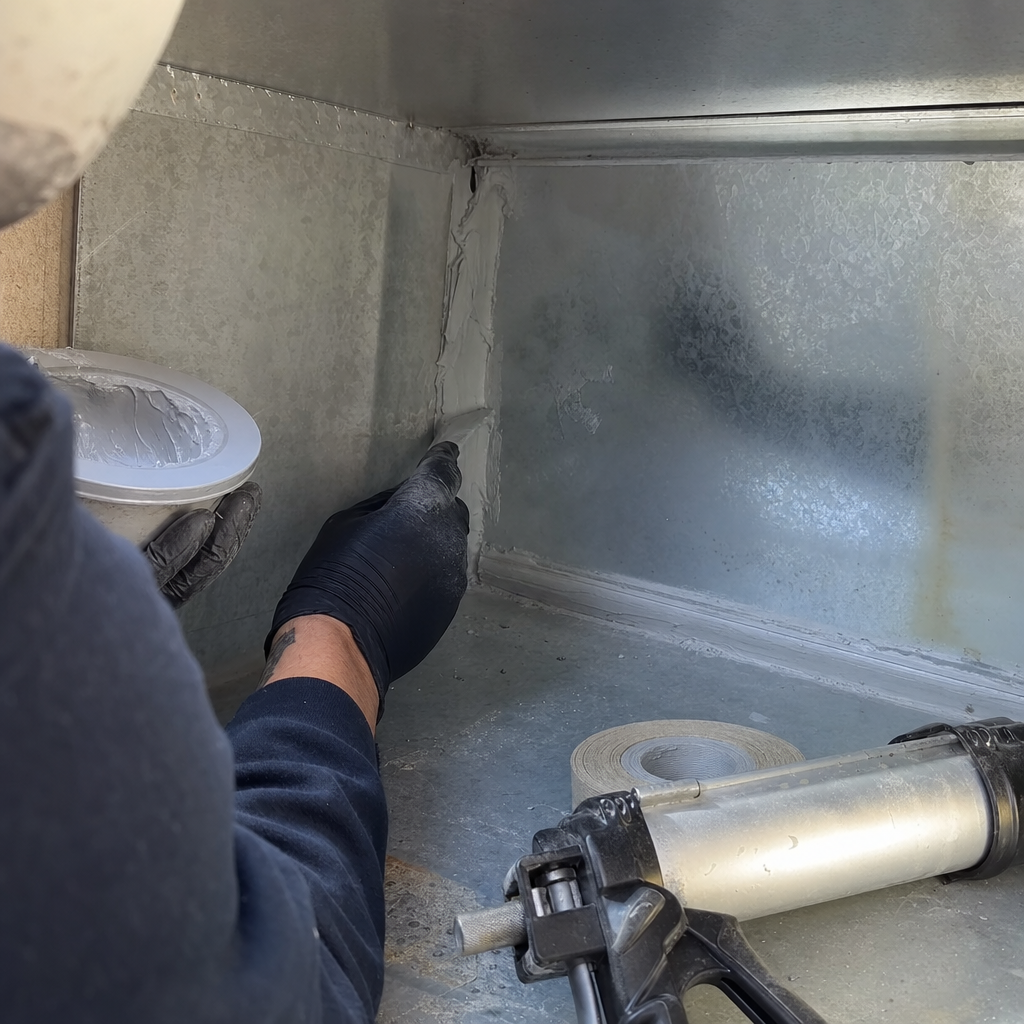
We use mastic — a thick, fiber-reinforced paste — rather than foil tape for most Reading repairs. Tape fails. In the field vignette that sticks with us: we recently repaired a leaking duct joint in a row home on North 11th Street in the 19601 ZIP, where the original 1920s octopus plenum had been adapted into a 1970s forced-air system. The mastic sealant had failed where the metal trunk narrowed to fit a tight chase, and we had to cut an access panel to re-seal the seam with mastic and fiberglass mesh tape, restoring airflow and eliminating a whistling leak. That mesh reinforcement is critical in Reading; the thermal expansion differential between a hot plenum and cold basement air will crack unreinforced sealant within two heating seasons.
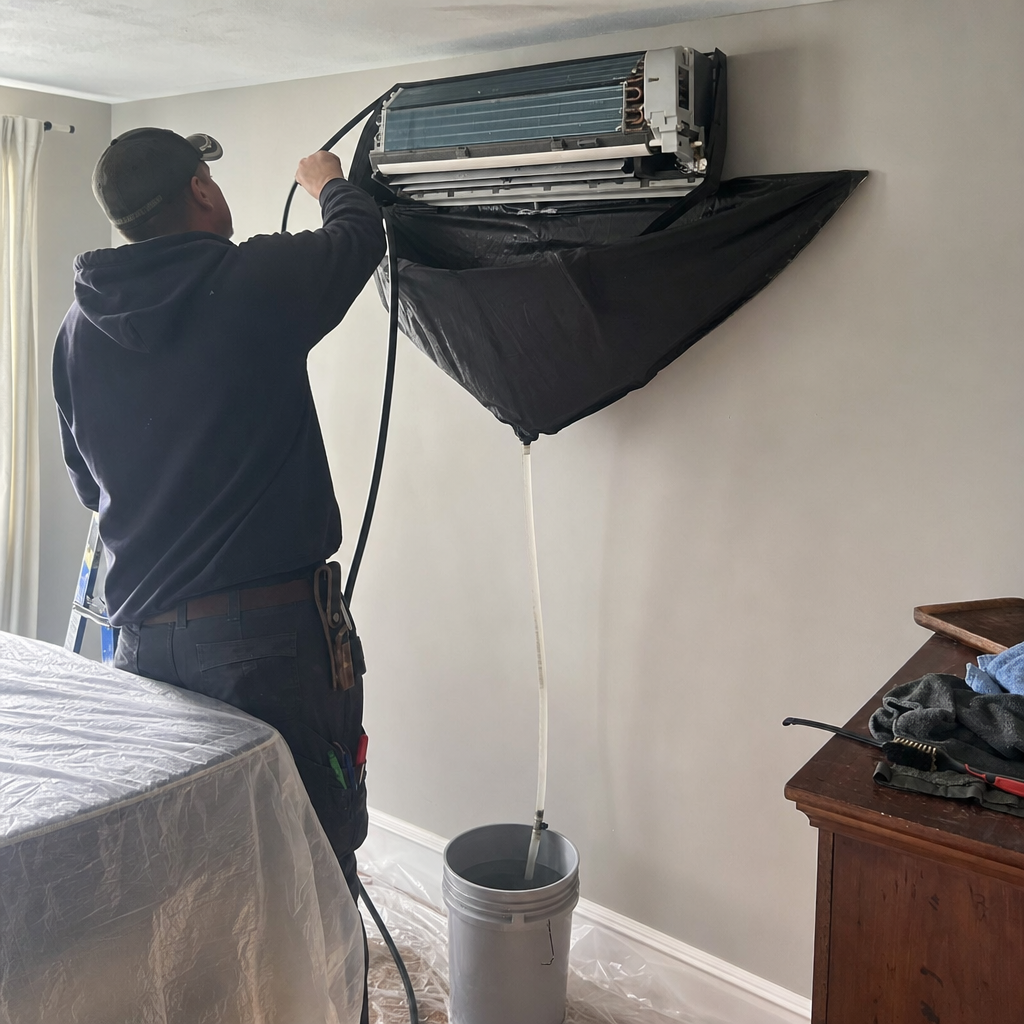
Air Leak Repair
Air leak repair in Reading often means finding leaks that previous contractors missed because they didn’t understand the original system layout. In a standard ranch home, supply trunks run straight from the plenum to wall stacks. In Reading’s row homes, you might find a trunk that drops from a second-floor closet chase, turns 90 degrees through a former chimney void, then splits asymmetrically to serve four rooms. We pressurize the system and use smoke pencils to trace leaks at joints, seams, and — commonly — where previous owners drilled through ducts to run electrical or plumbing. Every repair gets documented with before-and-after airflow measurements.
Flex Duct Repair
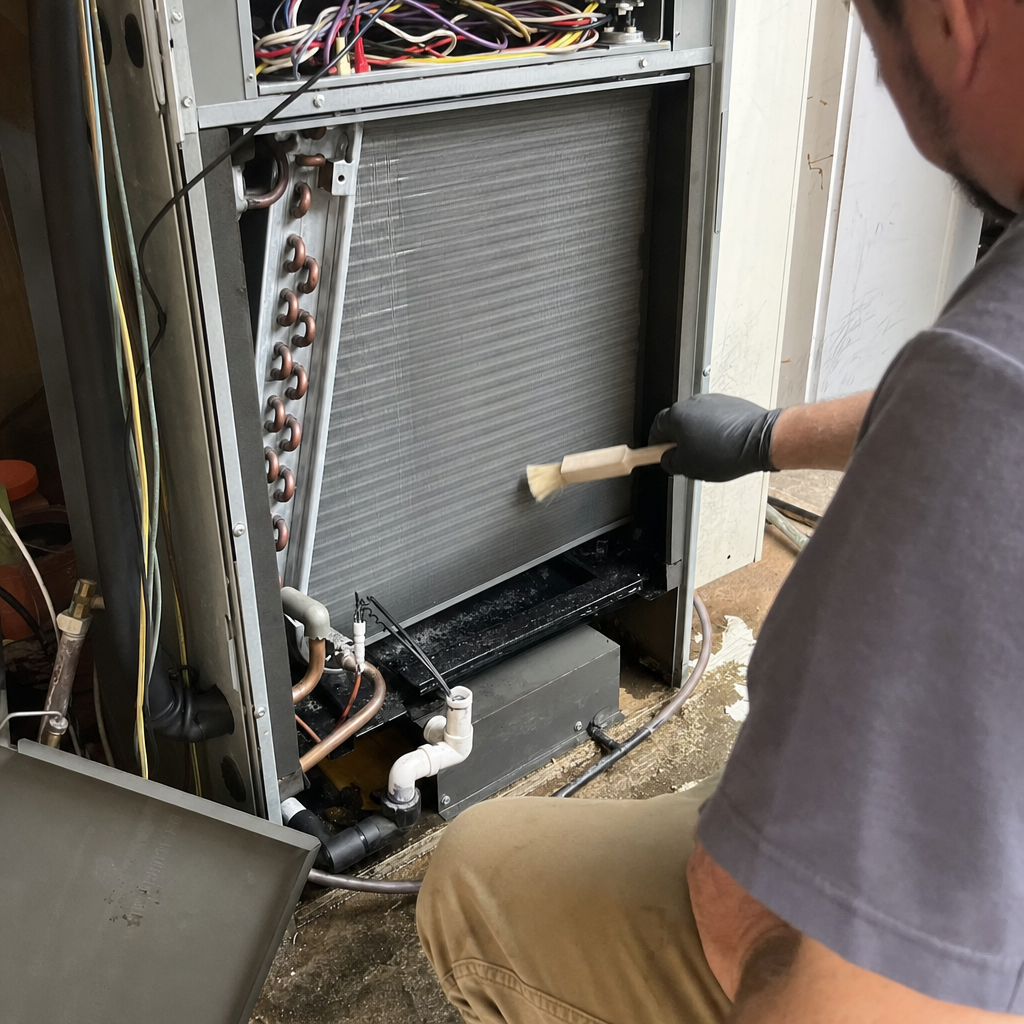
Flex duct in Reading is usually a later addition — bathroom exhaust extensions, attic additions, or basement finishing projects from the 1980s–90s. The problem we see: flex connections in tight chases where the duct was compressed to fit, reducing diameter and creating turbulence that pulls the inner liner away from the collar. We replace damaged flex with properly sized runs, support it to prevent sagging, and seal collars with mastic and mechanical fasteners. In Reading’s older homes, we also check whether the flex run was installed through an uninsulated exterior wall chase, which can create condensation problems in winter.
Metal Duct Repair
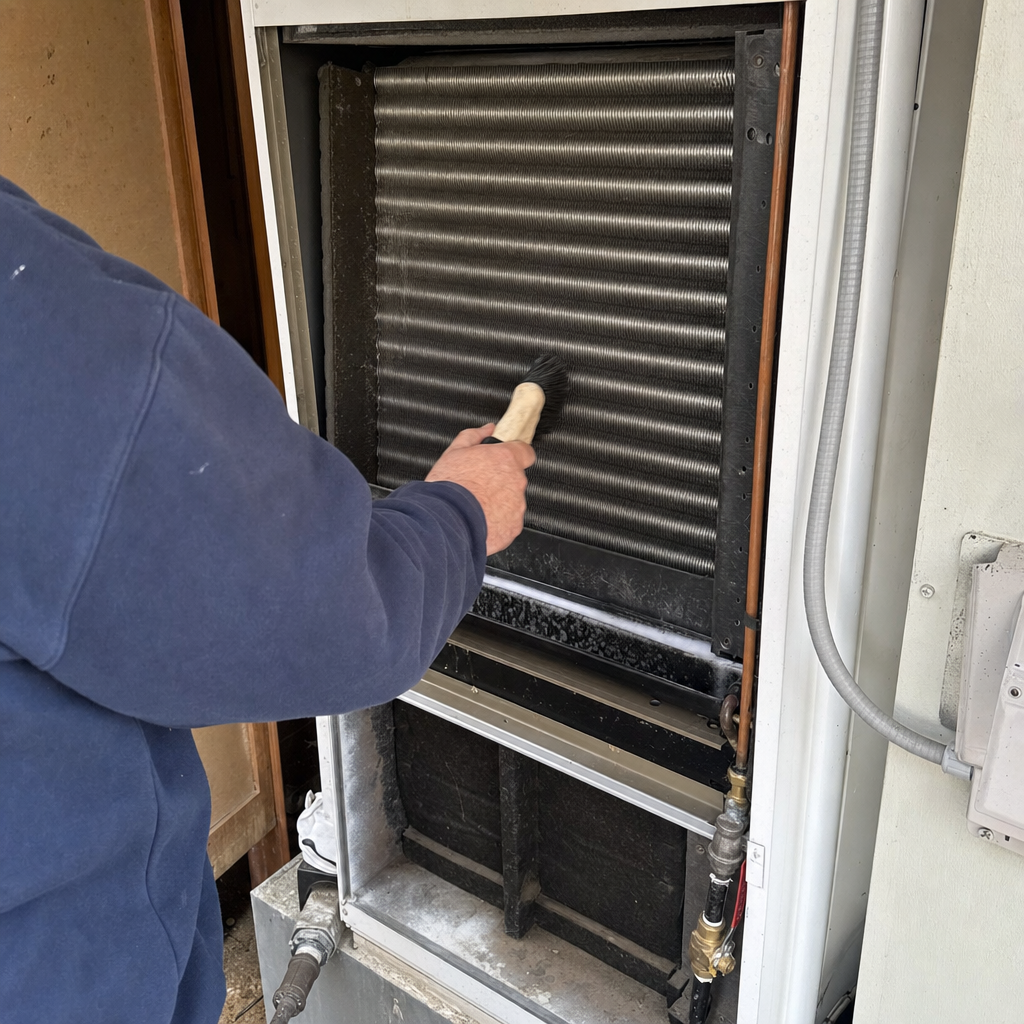
Metal duct repair in Reading sometimes means saving original galvanized trunk lines that are worth preserving. We’ve found 1950s-era spiral duct in Mount Penn area homes that’s thicker-gauge than anything manufactured today. When these develop seam separations or corrosion holes, we don’t automatically recommend replacement. We can patch with matching metal, seal with mastic, and reinforce with strapping. The decision point comes when the original duct is so coated with coal soot that cleaning would damage the metal — then we discuss replacement options with the homeowner.
Duct Insulation
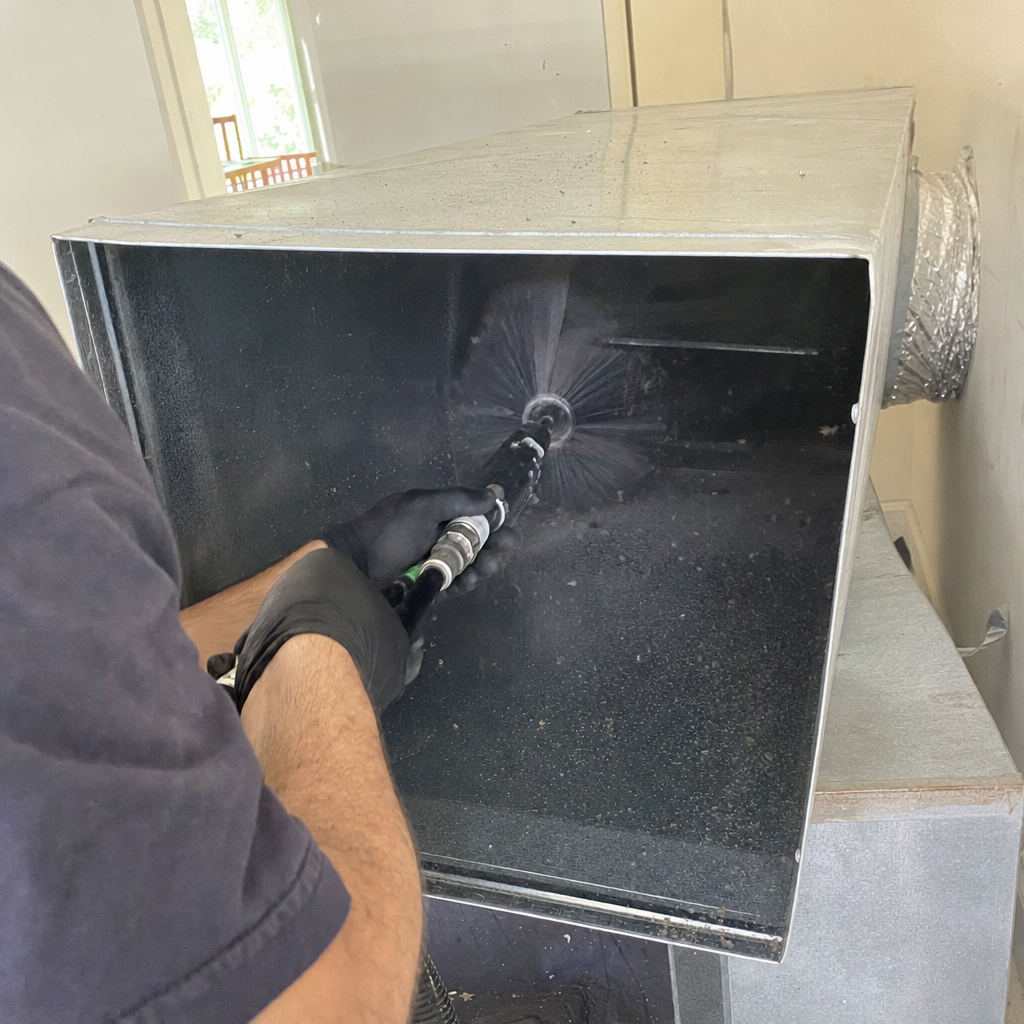
Duct insulation in Reading addresses a specific problem: unconditioned basement and crawlspace runs that sweat in summer and lose heat in winter. The Schuylkill Valley’s humidity makes this worse than in drier parts of Pennsylvania. We install foil-faced fiberglass insulation with sealed vapor barriers, or — where space is tight — closed-cell spray foam applied to exterior duct surfaces. In row homes with basement ceilings below 7 feet, we often use duct board with pre-applied insulation to maintain headroom while improving efficiency.
What happens when you call
- 1
A real person answersNo phone trees — you reach a local pro.
- 2
You get an upfront price rangeHonest numbers before anyone is dispatched.
- 3
A background-checked tech heads outLicensed & insured, dispatched right away.
- 4
You approve before work beginsNothing starts until you say go.
Trusted Brands We Service in Reading
Our equipment comes from manufacturers who build for this specific job — not a shop vac. We run Rotobrush brush-agitation systems for mechanical cleaning of duct interiors, Nikro HEPA-rated vacuums for debris containment, and stock Guardsman sealants and tapes for repairs that need to hold. For Reading homeowners adding air-quality improvements after sealing, we carry Honeywell and Aprilaire filtration and humidification products. We don’t claim exclusive partnerships with these brands; we use them because they’ve proven reliable in 14 years of field work, including the tight access conditions common in Reading’s older housing stock. Parts availability means we can often complete a repair same-day rather than ordering specialized mastic or collar fittings that would delay the job.
Common Duct Repair & Sealing Problems We See in Reading Homes
- Mastic sealant failure on retrofitted plenum-to-duct transitions. Thermal cycling in uninsulated basements common in Reading’s older row homes cracks sealant that was never reinforced with fiberglass mesh. We remove the old material, clean coal-soot residue with solvent prep, and reapply with proper reinforcement.
- Improper sealing of flex duct connections in tight chases. Air loss and condensation issues follow, especially in humid Schuylkill Valley summers where the temperature differential between conditioned air and chase air hits 30+ degrees. We rebuild connections with proper collars and mechanical support.
- Asbestos-wrapped duct joints disturbed during previous cleaning attempts. This requires specialized sealing procedures to avoid fiber release. We identify suspect wrapping by visual inspection and texture, then seal with encapsulant rather than disturbing the material — following EPA guidance for friable asbestos in residential HVAC systems.
- Coal dust re-entrainment from oversized plenum chambers. Even after cleaning, residual fine ash in octopus plenums can migrate through poorly sealed joints. We seal plenum access panels with gasketted covers and apply mastic to all penetrations, stopping the migration path.
Pricing for Duct Repair & Sealing in Reading, PA
Here’s what duct repair and sealing costs in Reading’s market, based on jobs we’ve completed in the 19601, 19602, 19611, and 19612 ZIPs:
| Service | Typical Range in Reading |
|---|---|
| Basic duct sealing (accessible basement joints, 1–2 hours) | $180–$280 |
| Moderate repair (plenum re-sealing, access panel cutting, mastic + mesh) | $320–$480 |
| Complex retrofit sealing (octopus plenum adaptation, asbestos-aware procedures, multiple access points) | $450–$650 |
| Flex duct replacement (per run, including collar and support) | $150–$260 |
| Duct insulation (per linear foot of trunk line) | $8–$14 |
What moves you up or down within these ranges: accessibility (can we reach the joint without cutting drywall?), the condition of existing sealant (scraping failed mastic takes time), and whether we encounter asbestos-wrapped connections requiring encapsulant rather than mechanical disturbance. We don’t charge for the estimate, and we’ll show you exactly what we found with a camera inspection before any work begins. Call (844) 951-3591 for an exact quote — estimates are free.
We Also Serve Cities Near Reading
Our service radius extends throughout Berks County and into adjacent communities. We regularly complete duct repair and sealing jobs in Wyomissing (where mid-century homes present different challenges than Reading’s row houses), Shillington, Blandon, and Birdsboro. Each of these towns has its own housing stock character — Wyomissing’s 1950s ranches with original sheet-metal trunks, Birdsboro’s mixed-era construction along the Hay Creek valley — and we adjust our techniques accordingly. If you’re in any of these communities and seeing the same symptoms — uneven heating, whistling vents, or that persistent old-system odor — the same Reading-area team will respond.
Serving Reading, PA — Our Local Coverage Area
We’re based in the Reading area and know this community well. Use the map below to see our service coverage — if you’re nearby, we can almost certainly help.
FAQs — Duct Repair & Sealing in Reading
Foil tape adhesive fails within 1–3 years on metal surfaces that cycle between 140°F plenum temperature and 45°F basement air, which is exactly the environment in Reading’s uninsulated basement ceilings. We use water-based mastic with fiberglass mesh reinforcement because it remains flexible, fills irregular gaps from retrofit installations, and bonds through thin coal-soot films that tape can’t adhere to. Call (844) 951-3591 for an exact quote — estimates are free.
Look for white or gray corrugated paper wrapping on duct joints and trunk lines, particularly on pre-1980 installations in the 19601 and 19602 ZIPs — this was standard practice in Reading’s coal-to-gas conversion era. We inspect visually before any disturbance; if we find suspect material, we seal it in place with EPA-registered encapsulant rather than removing it, which would require abatement contractors. Call (844) 951-3591 for an exact quote — estimates are free.
Yes, though tight chases in row homes near Centre Avenue or Washington Street often require us to cut temporary access panels in drywall or plaster, then repair and seal those openings afterward. We carry compact tools specifically for headroom below 7 feet, and we’ve developed techniques for sealing from inside the duct using extension applicators when exterior access is impossible. Call (844) 951-3591 for an exact quote — estimates are free.
Sealing alone won’t eliminate odor if residual coal soot remains inside the plenum, but it will stop the re-entrainment that’s carrying that odor into living spaces through leaky joints. We typically recommend sealing plus targeted cleaning of accessible plenum surfaces — the combination removes the source and blocks the migration path. In homes where the octopus plenum was never properly cleaned during the coal-to-gas conversion, this is often the first real improvement owners have seen in decades. Call (844) 951-3591 for an exact quote — estimates are free.
Most Reading duct sealing jobs fall between $180 and $480, with simpler basement joint work at the lower end and complex plenum re-sealing in 19601/19602 row homes at the upper end. The 19611 and 19612 suburban ZIPs tend toward the middle range — better access, fewer retrofit complications, but sometimes larger systems. We provide exact pricing after inspection, with no obligation. Call (844) 951-3591 for an exact quote — estimates are free.
Written by Jeffrey Morgan, Owner at Bluepeak Air Duct & Vent Cleaning Pennsylvania, serving Reading since 2010.