
Last updated July 11, 2026
The Complete Guide to Air Duct Cleaning in Philadelphia
Here’s something most Philadelphia homeowners don’t realize: the majority of rowhouses in our city were built before modern HVAC standards existed, meaning their duct systems were often retrofitted into spaces never designed for airflow. That geometry alone accelerates debris accumulation in ways newer construction simply doesn’t. Over 14 years crawling through Philadelphia attics and crawlspaces, we’ve pulled everything from century-old plaster dust to post-renovation drywall compound out of ducts in neighborhoods from Fishtown to West Philly. In this guide, you’ll learn how our city’s unique housing stock creates contamination patterns that generic national advice completely misses, what legitimate duct cleaning actually involves, and how to avoid the shop-vac operators who’ve flooded our market.
Quick Answer
Professional air duct cleaning in Philadelphia typically costs $400–$900 for a standard rowhouse or twin, depending on system accessibility and contamination level. The process should use negative-pressure containment with HEPA-rated equipment, take 3–5 hours for a thorough job, and include a pre-cleaning inspection with photo documentation. In Philadelphia’s pre-1970 housing stock, expect to find debris concentrations in dead-leg duct runs that newer cities simply don’t have.
Table of Contents
- Why Philadelphia Ducts Get Dirtier Than Suburban Systems
- What Professional Duct Cleaning Actually Involves
- Air Duct Cleaning Costs in Philadelphia
- How Often Should Philadelphia Homes Clean Their Ducts
- How to Read a Pre-Cleaning Inspection Report
- The Shop-Vac Warning: What Legitimate Containment Looks Like
- Humidity, Mold, and Philadelphia’s Seasonal Swings
- Choosing a Duct Cleaning Company in Philadelphia
Why Philadelphia Ducts Get Dirtier Than Suburban Systems
Philadelphia’s housing stock isn’t just old—it’s architecturally stubborn. The typical 1920s rowhouse or converted North Philly duplex wasn’t designed around central air. Ductwork got threaded through walls, floors, and ceiling cavities never intended to carry it. That creates what we call dead-leg runs: sections of duct with poor airflow velocity where debris settles and compacts over decades.
In South Philadelphia, we’ve opened ducts where the original 1950s galvanized supply line had sagged between joists, creating a low point packed solid with dust, pet dander, and fragments of deteriorated duct liner. In Germantown Victorian twins, we’ve found supply boots buried in plaster lath with no proper seal—meaning the system was pulling attic insulation and rodent droppings directly into living spaces for years.
Three Philadelphia-specific contamination drivers:
- Retrofit geometry: Ducts with sharp turns, excessive flex runs, and sagging sections create turbulence that drops debris out of airflow
- Shared wall cavities: In rowhouses, gaps between original plaster and retrofit ducts pull in century-old wall debris—plaster dust, coal soot residue, even lead paint fragments in pre-1978 homes
- Basement return pathways: Many Philadelphia systems use basement air returns with minimal filtration, pulling in everything from dryer lint to basement moisture and must
We’ve also noticed that homes near major corridors—Roosevelt Boulevard, Broad Street, I-95—show elevated particulate loading from decades of traffic-related fine dust infiltration through aging window and wall seals. That’s not speculation; it’s what we document during pre-cleaning camera inspections.
What Professional Duct Cleaning Actually Involves
Legitimate duct cleaning is a contained, negative-pressure operation—not a glorified vacuuming. Here’s what happens when we arrive at a Philadelphia home:
- System inspection and documentation: We run a camera through accessible duct runs, photograph contamination levels, and identify access points. In Philadelphia rowhouses, this often means finding the single removable supply boot in a finished basement ceiling or negotiating a cramped third-floor crawlspace in a Manayunk trinity.
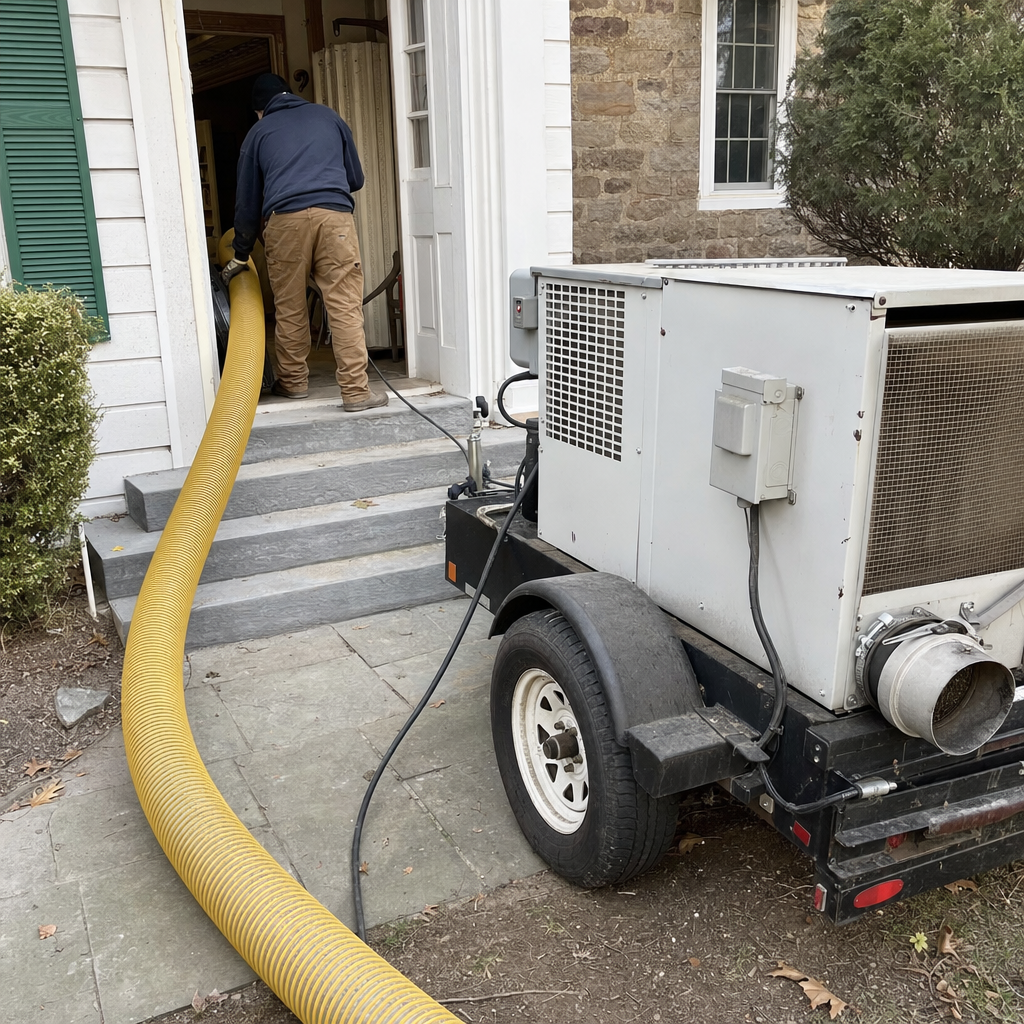
- Containment setup: We seal the HVAC unit and establish negative pressure using a Nikro HEPA-rated vacuum collection system. This prevents dislodged debris from escaping into your home during cleaning—critical in attached housing where airborne particles can migrate through shared walls.
- Agitation and extraction: We use Rotobrush brush-agitation systems sized to the duct diameter, combined with compressed air whips for stubborn compaction. In Philadelphia’s older systems with original cast-iron boots or asbestos-wrapped plenums, we adjust technique to avoid damage.
- Post-cleaning verification: We re-camera critical runs and provide before/after documentation. If we find damage, disconnected joints, or deteriorated liner, we flag it for repair or sealing.
- Sanitizing (when indicated): For homes with musty odors or visible microbial growth, we apply EPA-registered sanitizers using Abatement Technologies fogging equipment—not the consumer-grade sprayers some operators use.
The entire process typically takes 3–5 hours for a standard Philadelphia rowhouse with 8–12 supply registers. Rush jobs in under two hours are a red flag.
Air Duct Cleaning Costs in Philadelphia
Pricing in Philadelphia reflects our market’s specific challenges: tight access, older materials requiring gentler handling, and the prevalence of attached housing demanding proper containment. Here’s what we’ve observed across the metro area:
| Service Scope | Typical Price Range | What Affects Cost |
|---|---|---|
| Standard rowhouse (8–12 supplies, 1 return) | $400–$650 | Basement accessibility, number of floor levels, contamination severity |
| Larger twin or single-family (12–20 supplies) | $600–$900 | System zoning, presence of ductboard plenums, repair needs |
| Multi-unit converted building | $800–$1,400+ | Number of separate systems, shared ductwork complexity, code compliance |
| Dryer vent cleaning (add-on) | $120–$200 | Run length, number of turns, roof termination access |
| Duct repair/sealing (per project) | $200–$800 | Accessibility, materials needed, extent of damage |
Be wary of Philadelphia-area advertisements at $199 or below. At that price point, operators typically skip containment, use inadequate equipment, or upsell aggressively once inside. We’ve been called to remediate jobs where a “cheap” cleaning actually distributed mold spores through a Rittenhouse Square condo because the operator never established negative pressure.
Jeffrey Morgan — owner and lead technician — handles your job personally and provides upfront pricing before any work begins. Call (844) 951-3591 for a free estimate.
How Often Should Philadelphia Homes Clean Their Ducts
The national “every 3–5 years” rule doesn’t account for Philadelphia’s specific variables. We tie cleaning frequency to actual events and conditions, not calendar intervals:
- After any renovation: Drywall dust, sawdust, and insulation particles overwhelm filters and embed in duct liner. In Philadelphia’s active renovation market—Passyunk, Point Breeze, Brewerytown—we’ve seen systems clogged within months of contractor work.
- After HVAC replacement: New equipment with higher airflow can dislodge decades of accumulated debris from existing ductwork. We recommend cleaning 2–4 weeks after a new system startup.
- Visible mold or persistent musty odors: Philadelphia’s humidity swings create condensation in uninsulated basement ducts, especially in spring and fall when systems cycle between heating and cooling.
- Allergy symptoms that worsen indoors: Particularly relevant in Philadelphia’s high-pollen seasons when open windows and aging window seals compound the problem.
- Recent pest activity: Rodent pathways in rowhouse basements and attached-wall cavities are common; their debris and pheromones persist in ductwork.
- New home purchase: Especially for pre-1970 Philadelphia homes where decades of previous owner debris, pet dander, and deteriorated materials accumulate unseen.
For homes with no recent triggers and good filtration, 5–7 years is often adequate. But we’ve never inspected a 20-year-old Philadelphia system and found it clean.
How to Read a Pre-Cleaning Inspection Report
A legitimate inspection gives you decision-making power, not just scare tactics. Here’s what to look for:
Photo documentation of specific findings: General statements like “ducts are dirty” mean nothing. You should see timestamped images of register interiors, boot connections, and main trunk lines. In Philadelphia, we specifically document:
- Debris depth at low points in sagging flex runs
- Condition of original cast-iron boots (common in pre-1950 homes)
- Evidence of wall-cavity infiltration—plaster fragments, insulation fibers
- Moisture staining or microbial growth on duct liner
- Disconnected or damaged joints in basement trunk lines
Findings that should change your scope of work:
- Deteriorated flex duct liner: If the internal liner is breaking down, cleaning alone won’t help—it needs replacement or sealing.
- Disconnected supply boots: Common in Philadelphia where vibration and thermal cycling loosen connections. You’re heating your basement, not your bedroom.
- Asbestos-wrapped plenums or boots: Pre-1980 homes may have asbestos-containing materials. Disturbing them requires abatement protocol, not standard cleaning.
- Standing water or active leaks: Indicates HVAC or plumbing issues that must be resolved before cleaning is worthwhile.
- Evidence of pest nesting: Requires pest remediation first, then thorough cleaning and sanitizing.
We provide a written report with findings and prioritized recommendations before any cleaning begins. No surprises, no pressure.
The Shop-Vac Warning: What Legitimate Containment Looks Like
Philadelphia’s attached housing makes proper containment non-negotiable. When your neighbor’s bedroom is six inches of brick away from your ductwork, airborne debris doesn’t just stay in your unit.
Legitimate negative-pressure containment includes:
- A HEPA-rated vacuum collection unit (Nikro and similar) capable of maintaining 2,000+ CFM negative pressure at the duct opening
- Sealed access points around the collection hose to prevent bypass air
- Portable HEPA air scrubbers in the work area as secondary containment
- Protective sheeting on floors and furnishings in the immediate work zone
- Technicians in appropriate respiratory protection—not just dust masks
Shop-vac operations we encounter: A single wet/dry vacuum with a brush attachment, no containment, no HEPA filtration exhausting directly into your basement or living space. These operators often finish in 90 minutes and leave you with settled dust for months. In rowhouse conditions, they may also disturb debris that migrates through shared structural cavities.
The equipment difference isn’t cosmetic. Rotobrush and Nikro systems are built specifically for duct cleaning—brush diameter matched to duct size, torque calibrated to dislodge without damaging, vacuum capacity to capture rather than redistribute. A shop vac is designed for garage floors.
Over 1,100 verified customers have reviewed this work, and consistent feedback mentions the thoroughness that proper equipment and time investment produce.
Humidity, Mold, and Philadelphia’s Seasonal Swings
Philadelphia’s climate is ductwork’s hidden enemy. Our summers average 65–70% relative humidity, while forced-air winter heating drops indoor humidity to 20–25%. That swing creates distinct problems:
Summer conditions: Uninsulated basement ducts sweat against humid air, creating moisture films that support mold and bacterial growth. We’ve found active growth on galvanized trunk lines in Center City basements where dehumidification was absent. The musty smell many Philadelphia homeowners associate with “old basement” is often microbial activity in the duct system itself.
Winter conditions: Dry heated air hardens dust and debris into compacted layers that standard airflow won’t dislodge. We frequently find supply registers in Philadelphia’s older homes with debris cakes that haven’t moved in years—until a brush system breaks them loose.
The spring/fall transition periods: When Philadelphia’s temperature swings force HVAC systems to cycle between heating and cooling within days, condensation forms repeatedly in ducts that haven’t fully dried. This is when we see the most rapid microbial proliferation.
For homes with persistent humidity issues, we often recommend Aprilaire whole-home dehumidification products as part of a comprehensive approach—cleaning addresses what’s there, but humidity control prevents recurrence.
Choosing a Duct Cleaning Company in Philadelphia
Philadelphia’s market has attracted national franchise operations, generalist cleaners adding duct work, and legitimate specialists. Here’s how to distinguish them:
Ask specifically about equipment: Can they name their vacuum and agitation systems? “Professional equipment” means nothing—Rotobrush, Nikro, and Abatement Technologies are specific brands built for this trade. If they can’t name their tools, they’re probably not serious about the work.
Verify who’s doing the work: Many companies send rotating crews or subcontractors. Jeffrey Morgan — owner and lead technician — handles your job personally. That accountability structure is rare in this industry and means the person with the business’s reputation at stake is the same person on-site.
Request a written scope: A legitimate company specifies registers to be cleaned, access points, containment method, estimated duration, and post-cleaning verification. Vague promises of “complete cleaning” without specifics invite corner-cutting.
Check review volume and consistency: A handful of perfect reviews is less meaningful than hundreds of detailed accounts. Our 1,144 reviews at 4.8 stars reflect years of documented outcomes, not a curated selection.
Confirm they handle the full scope: Cleaning is step one — we also repair, seal, and sanitize so the problem doesn’t come back. Calling a second company for related work means coordination failures and blame-shifting.
For homeowners in Carnegie and surrounding areas, we also offer Air Duct Cleaning in Carnegie, Dryer Vent Cleaning in Carnegie, and HVAC Cleaning in Carnegie with the same direct-technician approach.
Common Mistakes to Avoid
- Choosing by price alone: In Philadelphia’s competitive market, the lowest bid almost always means skipped steps, inadequate equipment, or hidden upsells. We’ve remediated jobs where “cheap” cleaning damaged duct liner or distributed contamination.
- Ignoring access limitations: Some Philadelphia rowhouses have no basement access to the main trunk line. A company that doesn’t identify this upfront can’t deliver a thorough job. We assess access during our initial estimate and discuss alternatives when needed.
- Cleaning without inspecting first: Camera inspection reveals whether cleaning will actually solve your problem or if repairs, sealing, or sanitizing are needed. Skipping this step wastes money.
- Treating all duct materials the same: Original cast-iron boots, asbestos-wrapped plenums, and deteriorated flex liner each require different handling. Aggressive brushing on fragile materials causes damage that requires expensive repair.
- Neglecting the dryer vent: Philadelphia’s older buildings often have long, convoluted dryer vent runs with multiple turns. Lint accumulation here is a genuine fire hazard and restricts airflow that your HVAC system depends on.
- Expecting cleaning to fix underlying HVAC problems: Undersized returns, blocked vents, or failing equipment won’t be solved by clean ducts. We flag these issues during inspection so you address root causes.
- Waiting for visible dust at registers: By the time you see debris at supply registers, the system is heavily loaded. Proactive inspection catches problems before they affect air quality or system efficiency.
When to Call a Professional
Call for an inspection when you notice persistent musty odors, visible mold near registers, allergy symptoms that improve outdoors, or after any renovation or HVAC replacement. In Philadelphia’s housing stock, we also recommend inspection before listing a home for sale—buyers increasingly request duct condition documentation, and pre-emptive cleaning avoids negotiation friction.
If your system hasn’t been inspected in five years or more, you’re likely operating with accumulated debris that affects both air quality and energy efficiency. In attached housing, you also have neighbor-adjacency considerations that make proper containment essential.
Bluepeak Air Duct & Vent Cleaning Pennsylvania offers free estimates in Philadelphia — call (844) 951-3591 to schedule. Jeffrey Morgan will assess your system personally and provide upfront pricing with no obligation.
Frequently Asked Questions
Standard rowhouse duct cleaning in Philadelphia typically runs $400–$650, with larger twins and single-families ranging $600–$900. Multi-unit converted buildings with multiple systems cost more due to complexity. Call (844) 951-3591 for an exact quote — estimates are free.
A thorough job on a typical Philadelphia rowhouse takes 3–5 hours. Rushed jobs under two hours usually skip critical steps like proper containment, register-by-register brushing, or post-cleaning verification. 14 years focused on one trade has taught us that shortcuts show up in results.
It can help significantly if your ducts contain accumulated allergens—dust mites, pet dander, pollen, mold spores—that recirculate with each system cycle. We see the clearest improvement in Philadelphia homes with pets, recent renovations, or no cleaning history. However, duct cleaning alone won’t help if your primary triggers are outdoor pollen or non-HVAC indoor sources.
Safe when done with appropriate technique and equipment. We adjust brush aggression for fragile materials, identify asbestos-containing components before disturbance, and use gentle compressed-air methods where brushing risks damage. Our pre-cleaning inspection specifically flags systems requiring modified approaches.
Ask them to name their vacuum and agitation systems. Legitimate operators use specific brands like Rotobrush and Nikro built for duct cleaning. Ask about their containment protocol—how they prevent debris from escaping into your home. Vague answers or references to “professional-grade tools” without specifics suggest inadequate equipment.
After, typically 2–4 weeks after startup. New equipment’s higher airflow can dislodge debris from existing ductwork, and you don’t want to contaminate a new system immediately. In Philadelphia’s market, where original ductwork often remains during equipment replacement, this timing prevents rapid recontamination of your investment.
The Bottom Line
Philadelphia’s unique housing stock—retrofitted ductwork in pre-1970 rowhouses, humidity-driven seasonal contamination, and attached-housing containment requirements—demands a specialist approach that generic guides can’t provide. Effective duct cleaning here requires understanding dead-leg geometry, recognizing original materials that need gentle handling, and using equipment that captures rather than redistributes debris. Frequency should follow actual events and conditions, not arbitrary calendars. Most importantly, the technician’s expertise matters more than the company’s marketing budget.
Ready to find out what’s actually in your ducts? Call (844) 951-3591 for a free estimate from Bluepeak Air Duct & Vent Cleaning Pennsylvania home. Jeffrey Morgan will inspect your system personally, explain what we find, and provide upfront pricing with no pressure. We’ve spent 14 years building our reputation on thoroughness and honesty—let us show you what that looks like in your home.
Written by Jeffrey Morgan, Owner & Lead Technician at Bluepeak Air Duct & Vent Cleaning Pennsylvania, serving Philadelphia since 2012.