
Trane Air Duct Cleaning in Washington, PA | Bluepeak Air Duct & Vent Cleaning Pennsylvania
Trane air duct cleaning in Washington, PA typically runs $350–$650 for a complete system, and we’re usually able to schedule Trane service in Phillipsburg within 48 hours. What sets our Trane work apart here is the dual debris profile we encounter: 1920s coal-heat retrofits with baked-in anthracite soot alongside 2010s Marcellus-era builds packed with construction dust—two entirely different cleaning protocols on the same equipment. We’re an independent Trane service provider, not manufacturer-authorized, and Jeffrey Morgan — owner and lead technician — handles every job personally with Rotobrush and Nikro equipment. Call (844) 951-3591 for a free estimate.
Why Washington Residents Choose Us for Trane Service
We’ve been inside enough Washington duct systems to know the difference between a coal-era retrofit on West Chestnut Street and a gas-boom build off Maiden Street Extension. That distinction matters because your Trane equipment faces entirely different contamination depending on which era your house came from.
Jeffrey Morgan grew up in Lawrenceville, trained at Community College of Allegheny County, and has spent 14 years focused exclusively on air ducts and vents — no seasonal pivots, no side businesses. He shows up with the equipment, not a subcontractor you’ve never met. Over 1,100 verified customers have reviewed this work, and the feedback pattern we see most often from Washington homeowners is relief that someone actually looked at the whole system instead of vacuuming the registers and leaving.
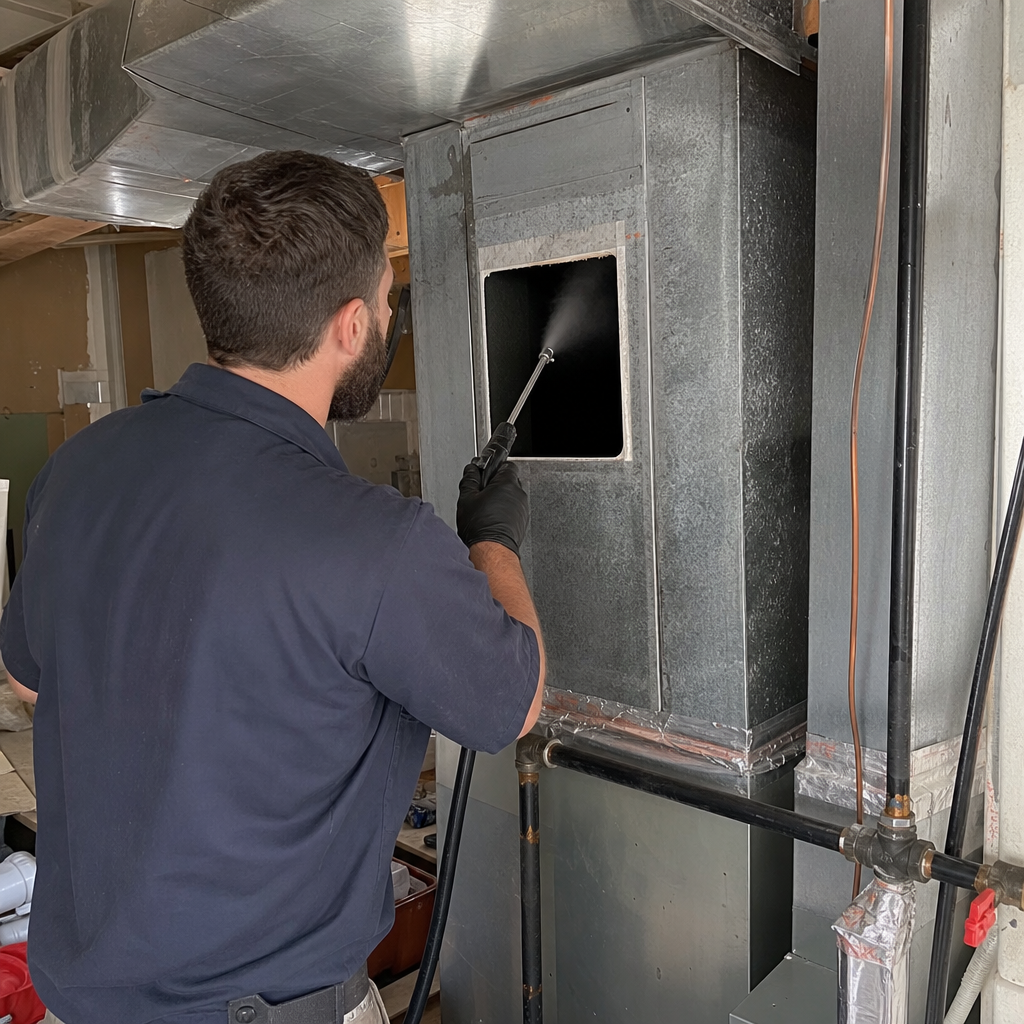
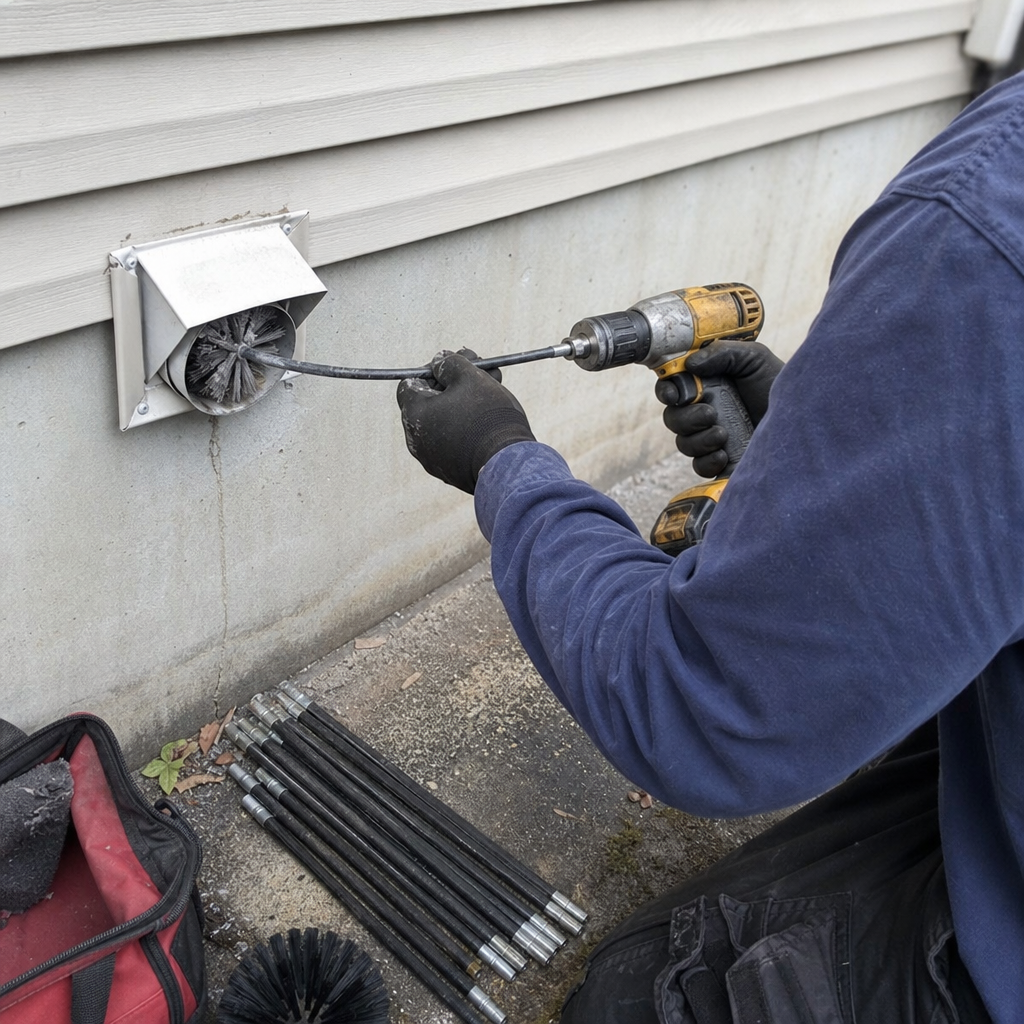
We carry OEM-compatible Trane filters and blower motors for warranty preservation, but we’re independent — no dealer markup, no factory-mandated service packages. Our Nikro HEPA vacuums and Rotobrush agitation systems are the same tools commercial restoration contractors use, not shop vacs with extra hoses. If I wouldn’t run it in my own house, I won’t recommend it in yours.
Common Trane Air Duct Cleaning Problems We Solve in Washington
- Coal grit pitting the Trane S9V2 blower wheel. In 1950s retrofits, the S9V2 draws return air through unlined brick coal chutes. After 10+ years, anthracite grit acts like sandpaper on the blower wheel, throwing it out of balance and spiking amp draw. We rotary-brush the wheel in place and seal the chute opening with mastic-sealed duct board.
- XV20i evaporator coils choked with silica dust. Trane XV20i units in 2010s boom homes have coils caked with frack-site silica that migrated through intake vents during construction. SEER drops roughly 15% before most owners notice. We brush-agitate the coil surface and verify airflow recovery with digital manometers.
- XB13 rust perforation at supply riser bases. Washington’s humid continental climate and uninsulated stone foundations wick condensation into vertical supply trunks. The XB13’s sheet metal plenum rusts through at the base where it meets damp basement air. We catch this on video inspection and recommend plenum replacement over repeated patching.
- TAM9 flex ducts clogged with joint compound. Post-construction flex in TAM9 zoned systems traps drywall dust that migrates to the TXV screen. We’ve replaced that screen after camera inspection revealed packed compound layers the homeowner didn’t know existed.
- Musty odor from coal-era ductwork after humid summers. The 1920s–1950s housing stock common in Washington’s worker neighborhoods has uninsulated duct runs through stone-foundation crawl spaces. Summer humidity promotes mold colonization on residual coal soot. We sanitize after mechanical cleaning, not before — killing mold on top of debris leaves the debris.
Trane Service in Washington: What Local Conditions Mean for Your Equipment
Washington’s 2010s gas-boom subdivisions—like those off Maiden Street Extension—were built during winter, and many had furnace runs before the drywall was finished. Trane systems in those homes contain packed layers of joint compound dust that require multiple brush-and-vacuum passes. This isn’t the fine, loose coal ash we find in pre-1960 retrofits; it’s hardened gypsum that binds to flex duct lining and packs into TAM9 zone dampers. The cleaning protocol differs entirely. Where coal ash responds to negative-pressure vacuum with light agitation, construction dust needs sustained Rotobrush contact and progressive HEPA extraction. We’ve learned to stage the work: first pass loosens surface material, second pass breaks bonded layers, third pass verifies clear airflow. Homeowners who’ve had “cleanings” elsewhere and still smell drywall dust usually had single-pass work on a three-pass problem.
Trane Models & Products We Service in Washington
We regularly clean duct systems connected to Trane XB Series air handlers (XB13, XB14), the S9V2 gas furnace with variable-speed blower, the XV20i variable-speed heat pump, and TAM9 air handlers for zoned systems. For warranty preservation, we source OEM Trane filters and blower motors when replacement is needed. For post-cleaning maintenance, we typically recommend high-MERV aftermarket media that captures Washington’s specific debris profile without the OEM price premium. We don’t stock every Trane part in our van, but our Washington-area supplier relationships mean most replacements arrive next-day. Video inspection, evaporator coil cleaning, and duct sealing are our emphasized sub-services on Trane systems — the inspection tells us what we’re dealing with, the coil cleaning addresses the component most affected by local dust, and the sealing prevents recontamination from the same access points that let coal grit or construction dust enter.
Trane Service Pricing in Washington
| Service | Price Range |
|---|---|
| Standard Trane air duct cleaning (single system) | $350 – $550 |
| Trane system with video inspection | $400 – $600 |
| Evaporator coil cleaning (add-on) | $125 – $225 |
| Duct sealing (per linear foot) | $4 – $8 |
| Complete Trane system: cleaning + coil + sealing | $550 – $850 |
What drives cost: system accessibility (crawl space vs. basement), contamination severity (coal soot vs. construction dust vs. both), and whether we find disconnected joints or corrosion requiring repair before cleaning. Our free estimate includes a walk-through with Jeffrey Morgan, digital airflow measurement, and camera inspection of at least two trunk lines — no charge, no obligation. Call (844) 951-3591 to schedule.
Serving Washington, PA — Our Local Coverage Area
We’re based in the Washington area and know this community well, and we also provide Trane repair in Bangor. Use the map below to see our service coverage — if you’re nearby, we can almost certainly help.
FAQs — Trane Air Duct Cleaning in Washington
Yes. Joint compound dust hardens in flex duct and can migrate to the TXV screen or blower motor. We’ve replaced both in 2018-era Trane systems where cleaning was delayed three-plus years. The dust doesn’t just sit there — it moves with airflow and abrades moving parts. Call (844) 951-3591 for a free inspection; we’ll scope the system and tell you exactly what we’re seeing.
Almost certainly. The XB13’s return path likely pulls through a former coal chute or uninsulated cavity where humidity has promoted mold growth on residual soot. The smell peaks in fall when you first fire the heat because the blower disturbs dormant spores. We see this pattern in Washington’s pre-1960 housing stock regularly. The fix is mechanical cleaning followed by sanitizing — not the reverse. Call (844) 951-3591 and we’ll confirm with a camera.
Rarely. We access most coal-chute ductwork through existing register openings and the furnace plenum. If we need an additional access point, we cut into the duct itself — typically in a basement or closet — never finished wall surfaces. The chute cavity is already a duct; we’re cleaning and sealing it, not creating new pathways. Jeffrey Morgan will show you the access plan before starting any work.
Every 3–5 years for most Washington homes, but 2–3 years if you’re in a 2010s build with known construction debris or a pre-1960 home with coal-era ductwork. The dual contamination here accelerates buildup compared to newer Pittsburgh suburbs that never had coal heat. We check airflow and contamination levels during service and give you a specific recleaning timeline based on what we find.
Yes, with proper containment. We use Abatement Technologies negative-air machines to isolate the work zone and prevent debris migration into occupied spaces. Shared commercial-residential systems in Washington’s downtown core are common, and we’ve cleaned many without disrupting neighboring tenants. We’ll coordinate timing with your property manager and post containment barriers as needed. Call (844) 951-3591 to discuss scheduling.
Service Areas Near Washington
We travel to Trane systems throughout Washington County and into Allegheny County, including Pittsburgh neighborhoods, Carnegie, and points north toward Trane in Easton and Center City connections. Most Washington appointments are same-day or next-day depending on inspection complexity.
Book Your Trane Service in Washington Today
Jeffrey Morgan, one of our Trane specialists, handles every Trane duct cleaning personally — from the phone call to the final airflow check. We’ve got 14 years of Washington-specific experience with coal retrofits and Marcellus-era builds, and we carry the equipment to match the job. Same-day appointments often available. Call (844) 951-3591 for your free estimate.
Written by Jeffrey Morgan, Owner at Bluepeak Air Duct & Vent Cleaning Pennsylvania, serving Washington and southwestern Pennsylvania since 2010.