
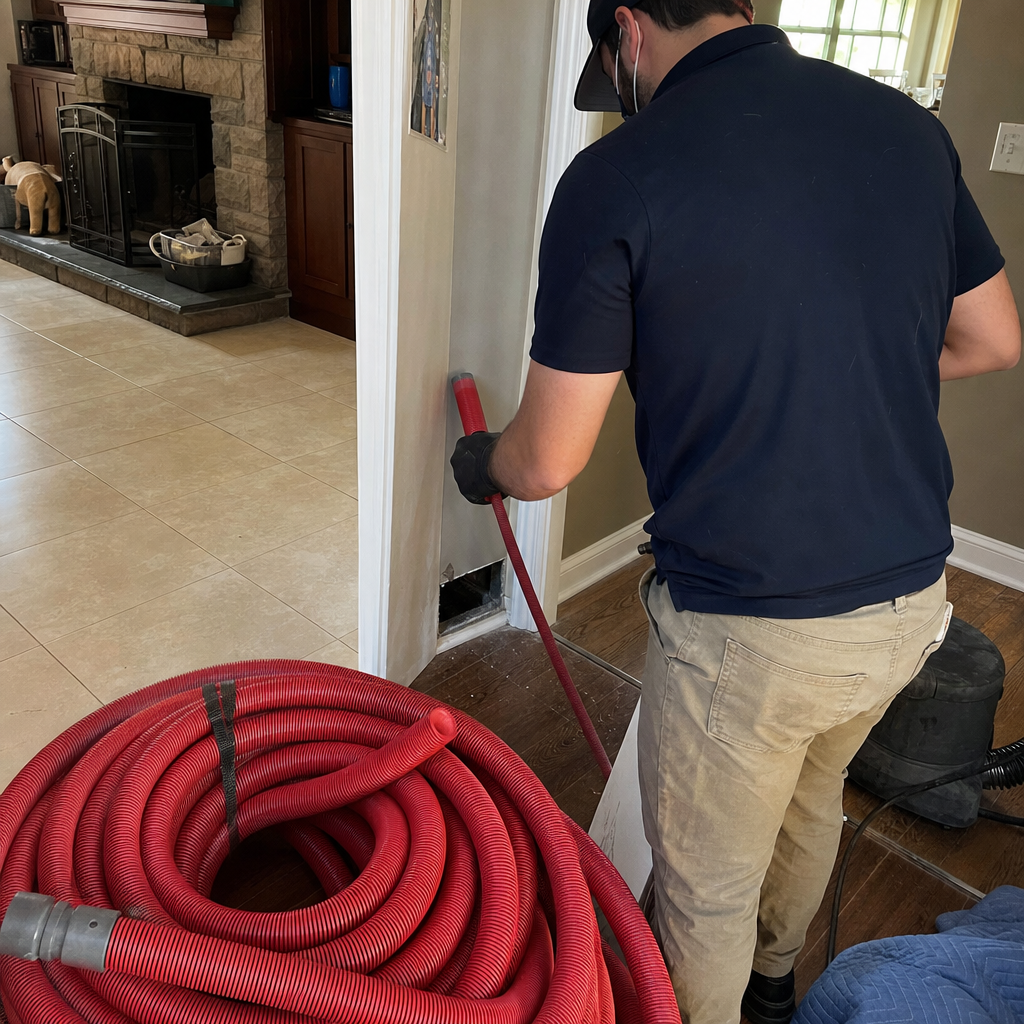
Whole House Air Duct Cleaning Cost in Pennsylvania: What Actually Drives the Price
Whole house air duct cleaning in Pennsylvania typically runs $450–$950 for a thorough, legitimate job on a standard residential system, with most Pennsylvania homeowners landing in the $550–$750 range. Call (844) 951-3591 for a free, walkthrough-based estimate that accounts for your actual duct configuration — not just vent count or square footage. At Bluepeak Air Duct & Vent Cleaning Pennsylvania, we’ve learned that two homes with identical square footage can differ by 40% in cleaning time based on zoning complexity alone, which is why we don’t quote blind over the phone.
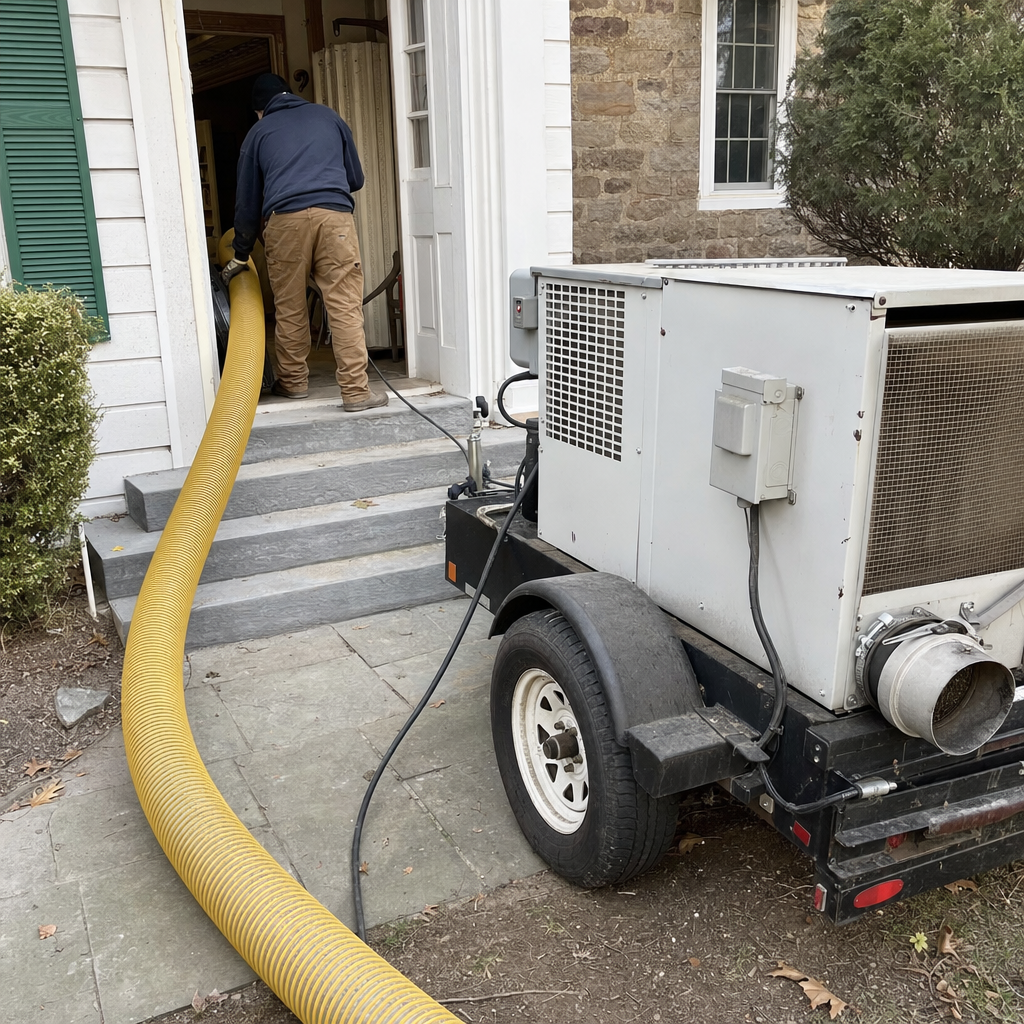
Pennsylvania’s housing stock tells a more complicated story than the national averages suggest. From the mid-century sheet metal trunk systems in Pittsburgh row homes to the multi-zone flex-duct networks in newer Philadelphia suburbs, the “whole house” label gets applied to wildly different scopes of work. We’re going to walk through what actually determines cost here — and why the cheapest quote often means the least complete job.
Why Pennsylvania’s Housing Mix Breaks Standard Pricing Models
Most online cost guides assume a simple ranch or colonial with one HVAC zone and straightforward access. That’s not what we encounter when homeowners search for air duct cleaning near me in Pennsylvania, PA.
Take the split-level — maybe the most common post-war housing type in the Pittsburgh and Allentown metro areas. A 2,400 square foot split-level typically runs two or three distinct duct zones, with returns often concentrated in a central stairwell and supply branches running under multiple floor levels. The duct material mix matters too: galvanized steel trunk lines from the 1960s and 70s, patched with flex-duct additions from later renovations, creating access points that need individual assessment. We’ve cleaned split-levels in Penn Hills and McCandless that took nearly five hours of active cleaning time, while a same-square-footage single-story ranch in a newer Cranberry Township development wrapped in under three.
The colonial revival and center-hall colonial styles common in Main Line suburbs and older Harrisburg neighborhoods present their own complexity — frequently two separate HVAC systems (one for each floor or wing), each with its own blower, plenum, and trunk network. A “whole house” quote that doesn’t account for dual systems isn’t whole house at all.
Then there’s the Pittsburgh-specific factor: older sheet metal in row homes and duplexes. These systems, common in Lawrenceville, Bloomfield, and Polish Hill, weren’t designed for modern air sealing or easy access. The rectangular trunk lines run through finished basement ceilings or boxed soffits, and the register drops are often embedded in plaster walls. Cleaning them thoroughly requires more patience and specialized tooling than a quick Rotobrush pass through accessible flex duct.
Key Takeaways: What Actually Affects Your Quote
- Zone count matters more than square footage — each zone adds trunk line, plenum, and return cleaning time
- Duct material mix (metal trunk vs. flex branch vs. rigid fiberglass board) determines tooling and access approach
- System age and renovation history create hidden complexity: patched zones, added returns, modified trunks
- Number of HVAC units — dual-system homes need essentially two complete cleaning sequences
- Register and grille accessibility — painted-over screws, embedded frames, or custom covers add labor
What “Whole House” Actually Means (And What It Should Cost)
Here’s where we see the biggest gap between quoted price and delivered value. A legitimate whole house duct cleaning in Pennsylvania should include:
Every supply run from the main trunk to the register, with agitation and negative-pressure extraction. Every return run from the grille back to the plenum — often the dirtiest part of the system, and the most commonly skipped. The main supply trunk and return trunk. The plenum (the distribution box directly above or below your air handler). Accessible flex branches and connection points. All registers and grilles removed, cleaned, and reinstalled. And critically, the blower compartment and evaporator coil area inspected for debris that would immediately recontaminate clean ducts.
We’ve been called in after “$299 whole house” specials that literally only cleaned visible supply registers with a vacuum hose — no trunk access, no return cleaning, no register removal. The homeowner paid for a photo of a clean register and a system that was still circulating attic dust through the returns.
Bluepeak’s Cost-by-Configuration Framework
After 14 years and over 1,100 verified jobs, here’s how we estimate time and pricing based on actual system architecture — not just vent count:
| Home Configuration | Typical Cleaning Time | Price Range |
|---|---|---|
| Single-zone ranch or cape (1 system, metal or flex, accessible basement/crawl) | 2.5–3.5 hours | $450–$650 |
| Dual-zone split-level or bi-level (1 system, mixed materials, stairwell returns) | 3.5–5 hours | $600–$850 |
| Multi-system colonial or large contemporary (2+ HVAC systems, complex trunk layout) | 5–7 hours | $800–$1,200 |
| Historic row home or duplex (older metal, limited access, embedded registers) | 4–6 hours | $700–$950 |
These ranges assume standard residential systems up to about 3,500 square feet. Commercial properties, homes with more than three zones, or systems requiring significant access modification (register relocation, panel cutting for trunk access) fall outside these brackets and need on-site assessment.
The equipment matters for these time estimates. We run Rotobrush brush-agitation systems for mechanical dislodging of adhered debris, paired with Nikro HEPA-rated negative pressure vacuums that maintain containment during cleaning. For older metal systems with significant buildup, or jobs where we need to isolate zones to prevent cross-contamination, we deploy Abatement Technologies containment tools — the same equipment used in commercial and restoration environments. A shop vac with a brush attachment won’t hit these timeframes because it can’t achieve the same debris removal in a single pass, which is why cut-rate operators often skip the hard-to-reach sections entirely.
How We Quote: Jeffrey Morgan’s Pre-Job Walkthrough
Here’s what separates our estimates from phone quotes based on “how many vents do you have?”
Jeffrey Morgan — owner and lead technician — handles the pre-job assessment personally. Before any pricing is finalized, we walk the property to map:
- Zone configuration: How many distinct supply/return networks, where they split, where returns are located
- Duct material and condition: Metal, flex, fiberglass board, or mixed; visible damage, previous patching, sagging flex
- System count and location: Single air handler or multiple; attic, basement, closet, or crawlspace placement
- Access realities: Finished basement ceilings, built-in cabinetry blocking registers, painted-over hardware
- Contamination indicators: Visible mold-like staining, pest evidence, excessive debris at returns, recent renovation dust
This walkthrough typically takes 15–20 minutes. The estimate you receive reflects actual cleaning time, not a per-vent formula that assumes every home is identical. Over 1,144 verified customers have reviewed this work, and the 4.8-star average reflects something we take seriously: the final invoice matches the estimate. No vent-count surprises, no “we found extra returns” upcharges, no bait-and-switch at the door.
We also use this assessment to flag when Air Duct Cleaning in Pennsylvania alone won’t solve the problem. Ducts with significant leakage, disconnected branches, or deteriorated flex need Air Duct Cleaning plus repair and sealing to prevent immediate recontamination. Cleaning is step one — we also repair, seal, and sanitize so the problem doesn’t come back.
What Low-Cost Operators Skip (And Why You’ll Pay Twice)
The Pennsylvania market, especially around Philadelphia and Pittsburgh, sees a lot of itinerant duct cleaning operations — companies that appear for six months, blanket an area with $199 whole-house offers, then vanish. Here’s what their “whole house” scope typically omits:
Return-side cleaning entirely. Returns pull air back to the system; they’re where the most concentrated dust, dander, and debris collects. Skipping them means circulating dirty air through your newly cleaned supply runs within days.
Trunk line access. The main supply and return trunks are where bulk debris settles, especially in horizontal runs with low airflow velocity. Without trunk access — which requires cutting and properly resealing access panels — you’re cleaning branches while leaving the reservoir untouched.
Register removal and hand-cleaning. Many low-cost operators vacuum around installed registers, missing the grime layer on the backside and the frame gap where air bypasses the duct entirely.
Negative pressure containment. Without proper vacuum extraction during agitation, cleaning dislodges debris that then distributes through your home. We use Nikro HEPA systems that maintain continuous negative pressure — debris goes into containment, not your living room.
Blower compartment inspection. The air handler’s blower wheel and housing collect significant debris. If these aren’t addressed, the first system cycle after “cleaning” reintroduces contamination.
We’ve been called to re-clean after these cut-rate jobs more times than we can count. The homeowner’s total spend ends up higher than our original quote would have been, with the added frustration of paying twice for the same service.
When Additional Services Are Worth It (And When They Aren’t)
A thorough cleaning solves the debris problem. Some Pennsylvania homes need more.
Duct repair and sealing becomes relevant when we find disconnected flex branches, deteriorated tape or mastic seals, or significant leakage at plenum connections. In older Pittsburgh-area homes with original metal ductwork, we’ve measured leakage rates exceeding 30% of conditioned air into unconditioned spaces. Sealing with proper materials — not duct tape, which fails in temperature extremes — recovers efficiency and prevents attic or crawlspace contaminants from entering the return stream.
Sanitizing applies an EPA-registered antimicrobial to interior duct surfaces after cleaning. We don’t recommend this universally — “If I wouldn’t run it in my own house, I won’t recommend it in yours.” For homes with confirmed microbial growth, water damage history, or occupants with significant respiratory sensitivity, it can be appropriate. We use Guardsman products applied through mechanical fogging, not the “spray and pray” approach that leaves pooled residue.
Air quality products — Honeywell and Aprilaire whole-home filtration or UV systems — address ongoing contamination sources that cleaning can’t eliminate: outdoor pollen, pet dander generation, volatile compounds from new furnishings. These are discussed post-cleaning based on your specific concerns, not pushed as automatic add-ons.
FAQs
Affordable air duct cleaning in Pennsylvania, PA typically costs between $450 and $950, with most homes falling in the $550–$750 range depending on system complexity. Single-zone ranches run lower; multi-system colonials or historic row homes with limited access run higher. Call (844) 951-3591 for a free walkthrough-based estimate that reflects your actual duct configuration.
Cleaning is almost always the more cost-effective first step — replacement of an entire duct system typically runs $3,000–$7,000 in Pennsylvania, while thorough cleaning addresses debris and airflow issues at a fraction of that cost. We only recommend replacement when ducts are deteriorated beyond sealing (crushed flex, corroded metal with holes, or asbestos-containing materials in pre-1980 homes). During our pre-job assessment, we’ll flag any conditions that suggest replacement is the better long-term investment.
A legitimate whole house duct cleaning takes 2.5 to 7 hours depending on home configuration — single-zone ranches typically 2.5–3.5 hours, dual-zone split-levels 3.5–5 hours, and multi-system homes 5–7 hours. Jobs quoted at “one hour or less” are almost certainly skipping returns, trunks, or proper register removal. Our estimates include realistic timeframes because rushing this work leaves debris behind.
We typically schedule within 2–3 business days for standard appointments, with same-day availability for urgent situations like post-renovation dust or allergy flare-ups requiring immediate attention. Emergency scheduling is limited because Jeffrey Morgan handles each job personally rather than dispatching rotating crews. Call (844) 951-3591 to check current availability — estimates are always free, and we’ll never pressure you to book same-day if your situation allows for standard scheduling.
Ready for an Estimate That Matches Your Actual System?
Stop guessing based on square footage or vent-count formulas that don’t account for Pennsylvania’s real housing stock. At Bluepeak Air Duct & Vent Cleaning Pennsylvania, Jeffrey Morgan conducts every pre-job walkthrough personally, quotes based on actual cleaning time, and stands behind work that’s earned 1,144 verified reviews at a 4.8-star average. No bait-and-switch, no scope shortcuts, no surprises at checkout.
Call (844) 951-3591 today for your free, no-obligation estimate. We’ll walk your system, explain what we find, and give you a price that reflects the work your home actually needs.
Written by Jeffrey Morgan, Owner & Lead Technician at Bluepeak Air Duct & Vent Cleaning Pennsylvania, serving Pennsylvania, PA.