
Fast, Reliable HVAC Cleaning Across Washington
HVAC cleaning in Washington, PA typically costs $280–$650 for a complete system service and is usually completed in a single visit. We’re Bluepeak Air Duct & Vent Cleaning Pennsylvania, and our HVAC Cleaning team has been driving out to Washington from our Philadelphia base for 14 years. Jeffrey Morgan — owner and lead technician — handles these jobs personally, bringing Rotobrush and Nikro equipment built for the specific problems we find in Washington’s older housing stock. Whether you’re in the East Washington Historic District, along Jefferson Avenue, or out near the 15301 zip code perimeter, we know the duct systems we’re walking into. Call (844) 951-3591 for a free estimate and we’ll give you a realistic arrival window.
Why Bluepeak Air Duct & Vent Cleaning Pennsylvania Is Washington’s Preferred HVAC Cleaning Company
Over 1,100 verified customers have reviewed this work, and that 4.8-star average reflects something we take seriously: showing up and doing the job right. In Washington, that means understanding coal-converted ductwork, retrofit trunks, and the tight crawl spaces beneath stone foundations that are standard in pre-1960 homes here.
Jeffrey Morgan — owner and lead technician — handles your job personally. Not a subcontractor. Not a rotating crew. The person accountable for the business is the same person on-site with the brushes and the HEPA vacuum. We’ve learned that Washington homeowners appreciate that direct accountability, especially when they’re inviting someone into a basement full of 80-year-old ductwork.
Our response time to Washington is typically same-day or next-day, depending on route consolidation. We’re not a franchise with a satellite office on every corner; we’re a focused specialist who makes the drive because the job requires it. And after 14 years focused on one trade, we’ve seen enough Washington basements to know what we’re looking at.
Our HVAC Cleaning Services in Washington
Evaporator Coil Cleaning
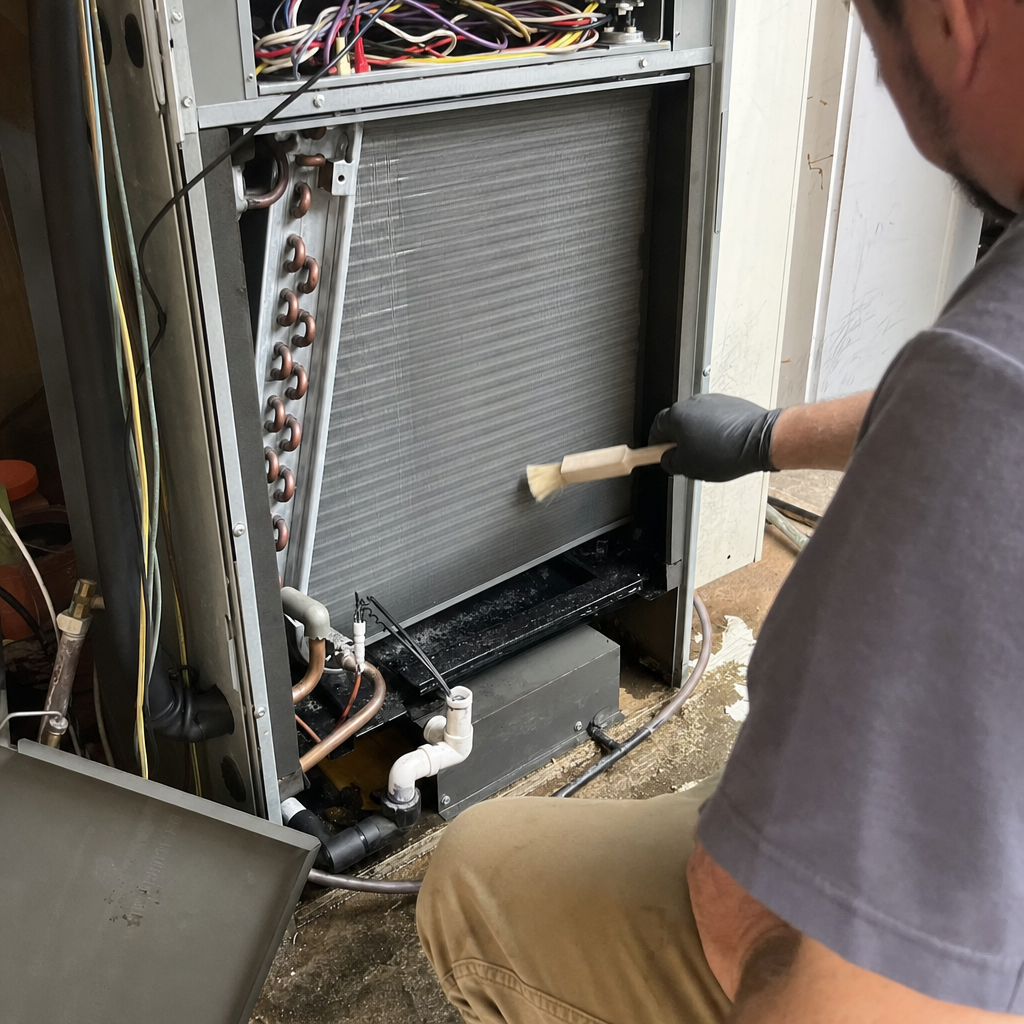
The evaporator coil is where your system generates the cold air, and in Washington, it’s working overtime. Our humid continental climate means that coil stays wet through much of the summer, collecting dust, pollen, and the fine particulate that blows up from coal-country roads and construction sites. A dirty coil can’t transfer heat efficiently — you’ll see it in your electric bill and feel it in rooms that never quite cool down. We use foaming cleaners and low-pressure rinses that won’t bend the delicate aluminum fins, and we inspect the drain pan for the algae and mold that thrive in Washington’s muggy summers.
Blower Cleaning
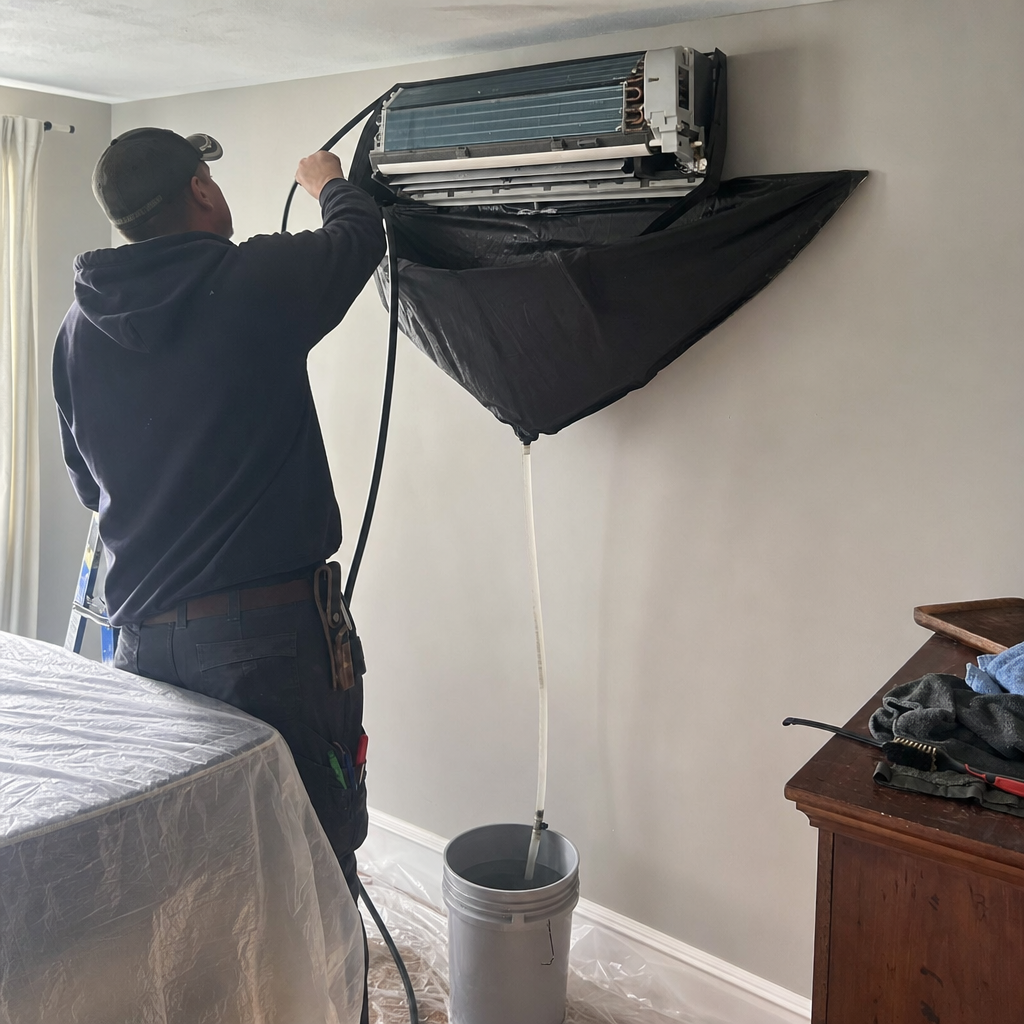
The blower motor and squirrel-cage assembly sits right behind your filter, which means everything that gets past the filter — or around a poorly fitted filter in an old return plenum — ends up caked on the blower blades. In Washington’s pre-1950s homes, we’ve pulled blowers coated in coal soot so thick it’s hardened like scale. That buildup throws the wheel out of balance, strains the motor bearings, and reduces airflow to every room in the house. We remove the assembly, clean it outside the unit, and check the motor amp draw while we’ve got access.
Condenser Cleaning
Your outdoor condenser coil in Washington fights a constant battle with cottonwood fluff in late spring, coal and limestone dust from local haul roads, and the grass clippings that every homeowner inevitably blows against the unit. A blocked condenser can’t reject heat. The pressures climb. The compressor works harder and fails sooner. We fin-comb the coils, wash them with foaming cleaner, and clear the base pan so water drains instead of corroding the cabinet. For homes near active construction or along Route 19, we recommend annual condenser checks.
Air Handler Cleaning
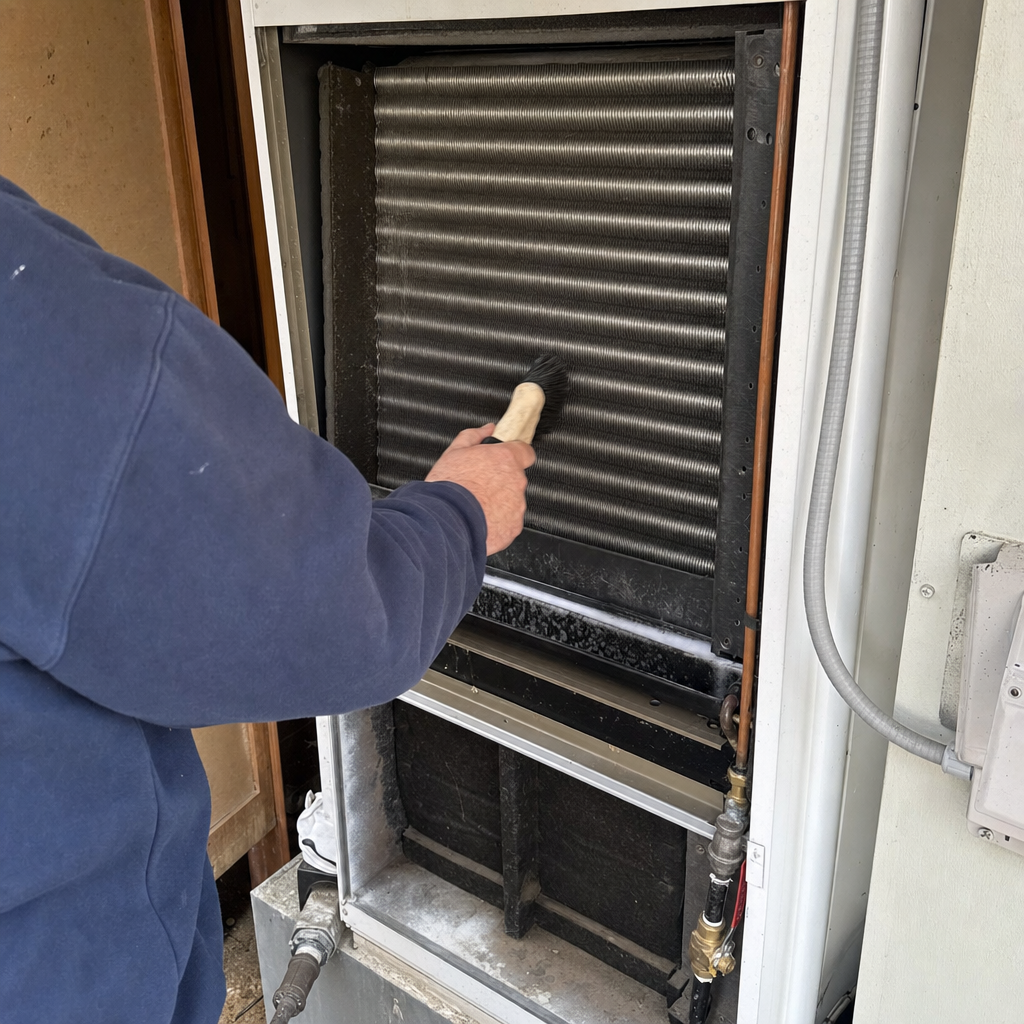
The air handler is the central station — filter, coil, blower, drain, and often the electric heat strips or heat exchanger interface. In Washington’s converted gravity systems, the air handler is frequently a retrofit unit shoehorned into a space never designed for it, with make-up air pulled from a damp basement or crawl space. We clean the full cabinet interior, treat for microbial growth, and inspect the filter rack for bypass air — a common problem when a modern filter is forced into an old return opening. Jeffrey Morgan checks the heat exchanger visually where accessible, looking for the cracks that can develop in units cycling through Washington’s freeze-thaw winters.
Coil Treatment
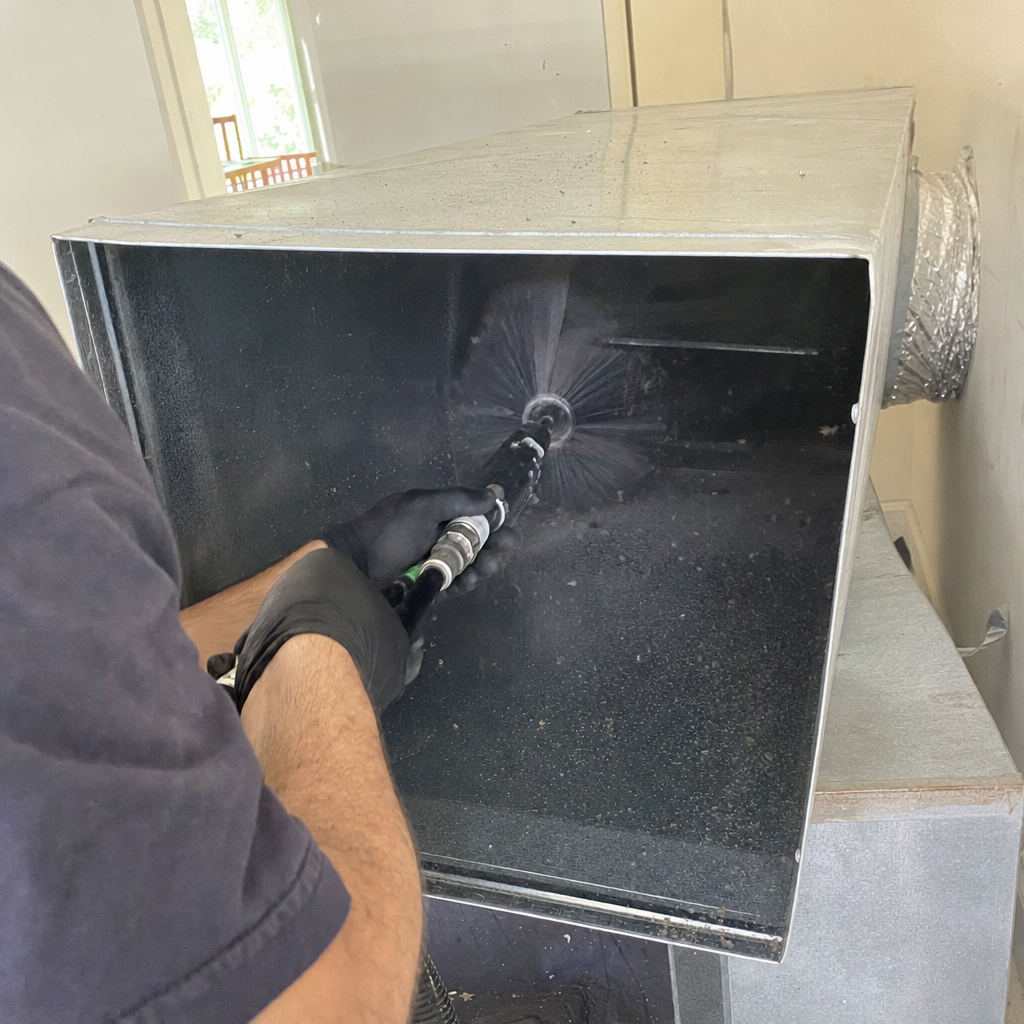
After mechanical cleaning, we apply a protective treatment to the evaporator coil that inhibits mold and bacterial growth for the humid months ahead. This isn’t a substitute for cleaning — it’s a supplement. In Washington, where basements stay damp and ductwork runs through unconditioned spaces, that treatment buys time between services. We use products compatible with the metals in your coil, applied at the correct concentration. No perfume masking. Just a treated surface that stays cleaner longer.
What happens when you call
- 1
A real person answersNo phone trees — you reach a local pro.
- 2
You get an upfront price rangeHonest numbers before anyone is dispatched.
- 3
A background-checked tech heads outLicensed & insured, dispatched right away.
- 4
You approve before work beginsNothing starts until you say go.
Trusted Brands We Service in Washington
We run professional equipment from Rotobrush, Nikro, and Abatement Technologies — the same brands used by commercial restoration contractors. Rotobrush for mechanical agitation in tight, debris-packed ducts. Nikro HEPA-rated vacuums for containment. Abatement Technologies tools when we’re working in occupied spaces and need negative air pressure. For air-quality improvements after cleaning, we stock Honeywell and Aprilaire products. Washington customers get the same equipment inventory as our Philadelphia accounts — we don’t show up with a shop vac and hope for the best.
Common HVAC Cleaning Problems We See in Washington Homes
- Coal soot re-entrainment from undisturbed gravity ducts. The old coal-fired systems were replaced decades ago, but the soot stayed. Every furnace cycle pulls a little more into the air you breathe. We find this in homes from the East Washington Historic District to the row houses along Jefferson Avenue — anywhere pre-1950s construction survives.
- Embedded debris in retrofit ductwork that vacuum-only cleaning misses. The tight bends and framing-cavity runs common in Washington’s converted systems require mechanical brushing. Suction alone won’t dislodge material that’s been baked onto sheet metal for 60 years.
- Mold colonization in uninsulated crawl-space ducts during humid summers. Washington’s stone-foundation crawl spaces stay cool and damp. Warm, humid supply air hits cold duct metal and condenses. Within a season, we’ve found active mold growth on the interior of fiberglass-lined trunks.
- Post-construction debris in 2010s-era Marcellus Shale housing. The boom built fast. Drywall dust, spray-foam overspray, and insulation scraps went straight into duct systems that were never cleaned before occupancy. These newer homes have different problems than the 1920s stock, but they’re problems we solve the same way — with thorough mechanical cleaning and inspection.
Pricing for HVAC Cleaning in Washington, PA
A typical evaporator coil cleaning in Washington runs $180–$280. Blower cleaning: $150–$240. Full air handler service including coil, blower, and cabinet: $320–$480. Condenser cleaning alone: $140–$220. Complete HVAC system cleaning — coil, blower, condenser, and air handler cabinet — typically falls between $480 and $650 for residential systems.
What moves you within those ranges: system accessibility (tight basement vs. open crawl space), contamination level (surface dust vs. embedded coal soot requiring extended agitation), and whether we find disconnected ducts or active mold that needs addressing beyond standard cleaning. We don’t quote over the phone for Washington’s older housing stock without asking the right questions — and we don’t pad the bill once we’re on-site. Call (844) 951-3591 for an exact quote. Estimates are free.
We Also Serve Cities Near Washington
Our route coverage extends to Phillipsburg, Bangor, Easton, and Nazareth — each with its own housing stock and ductwork character, but all within our service radius for HVAC cleaning. If you’re in Washington County or the broader Lehigh Valley area and your system needs attention, we’re the call to make.
Serving Washington, PA — Our Local Coverage Area
We’re based in the Washington area and know this community well. Use the map below to see our service coverage — if you’re nearby, we can almost certainly help.
FAQs — HVAC Cleaning in Washington
Coal soot remains embedded in the original sheet metal of gravity-fed systems that were converted to forced air in the 1950s–1970s, and standard vacuum cleaning doesn’t remove it. In Washington, where industrial-worker housing from the 1920s–1950s dominates neighborhoods like the East Washington Historic District, we’ve cleaned ducts where the soot layer is measurable in fractions of an inch. Our Rotobrush system mechanically agitates that material loose before vacuum extraction. Call (844) 951-3591 if you suspect coal soot in your system — we can assess it during a free estimate.
Washington’s humid continental climate creates persistent condensation inside uninsulated ductwork, which promotes mold growth that compounds existing debris problems. The stone-foundation crawl spaces and unfinished basements common in Washington’s pre-1960 housing stock stay cool and damp year-round, so when warm supply air hits cold metal, moisture forms. We inspect for this condition during every HVAC cleaning and can apply coil treatment and recommend insulation improvements. For a humidity-specific assessment, call (844) 951-3591.
Yes — we regularly clean duct systems in Washington County homes built or renovated during the 2010s shale boom, where construction debris was left in new ductwork. Drywall dust, fiberglass fragments, and spray-foam overspray are common findings in these newer systems, and they reduce airflow and irritate respiratory systems just as older contaminants do. We use the same Rotobrush and Nikro equipment for post-construction cleaning as we do for legacy soot removal. Call (844) 951-3591 to schedule.
The East Washington Historic District, the row house corridors along Jefferson Avenue, and the older sections of the 15301 zip code near the original downtown core contain the highest concentration of pre-1950s homes with converted coal ductwork. These were built for coal, glass, and clay-tile workers, then retrofitted with forced-air gas furnaces decades later. We’ve worked in enough of them to recognize the typical configurations — undersized trunks, cobbled return plenums, and the characteristic soot staining. If your home dates to this era, we know what to look for. Call (844) 951-3591.
Yes — Washington’s row houses, common along Jefferson Avenue and in the historic district, present access challenges but not insurmountable ones. Shared walls mean we can’t always run equipment through every ideal point, but we’ve developed approaches using portable Nikro HEPA vacuums and flexible Rotobrush shafts that navigate tight basement runs and single access points. Jeffrey Morgan assesses each row house individually to determine the cleanest, most effective path. Call (844) 951-3591 and we’ll walk through your specific layout.
Written by Jeffrey Morgan, Owner at Bluepeak Air Duct & Vent Cleaning Pennsylvania, serving Washington and the broader Philadelphia region since 2010.