
Is Air Duct Cleaning Worth It in Pennsylvania, PA? Here’s the Honest Framework
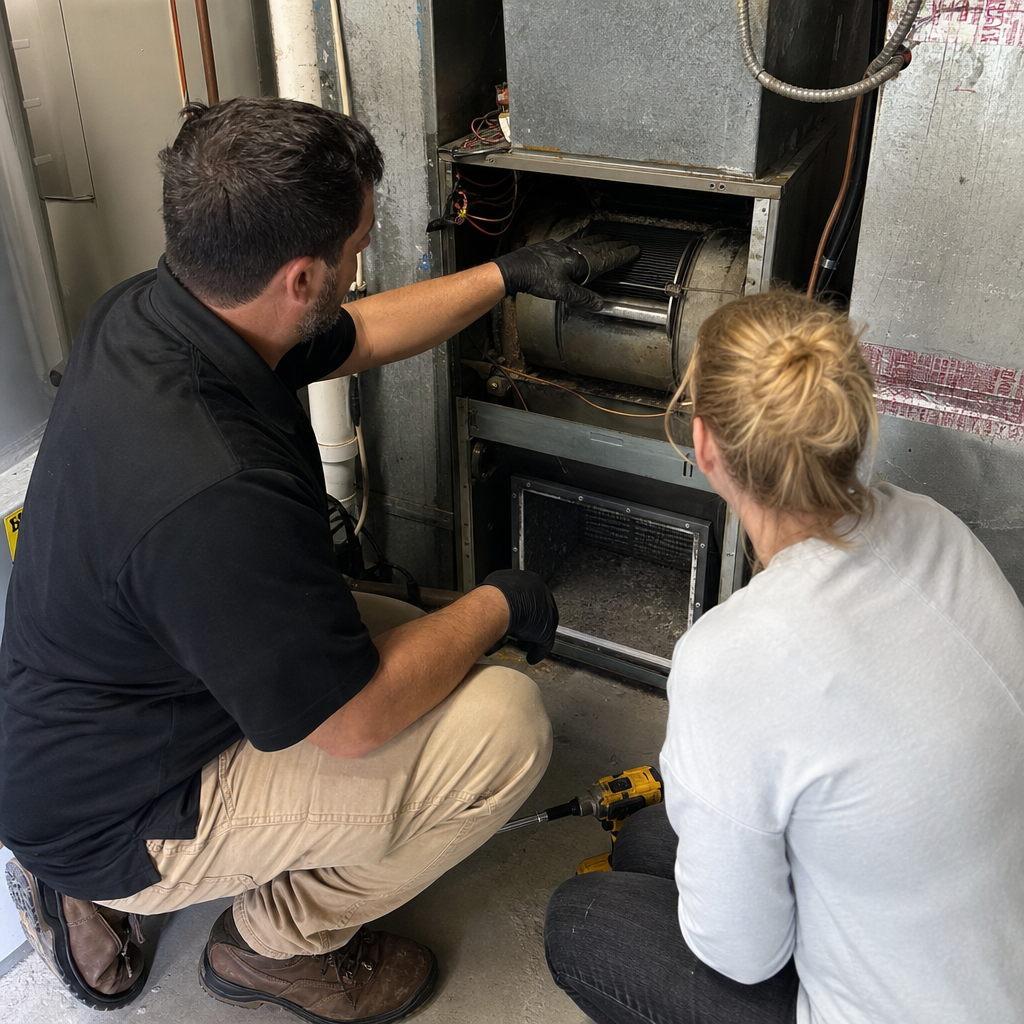
Air duct cleaning is worth it when four specific conditions are present: visible debris at registers, post-renovation dust accumulation, occupant respiratory symptoms that worsen when the HVAC runs, or confirmed microbial growth inside the system. For newer Pennsylvania homes with tight envelopes, no pets, and disciplined filter changes, the benefit is marginal — but for the aging housing stock and moisture-exposed basements common across this state, our Air Duct Cleaning services often produce measurable, documented improvement in airflow and indoor air quality. If you’re weighing the decision for your Pennsylvania home, call Bluepeak Air Duct & Vent Cleaning Pennsylvania at (844) 951-3591 — we’ll assess whether your system actually needs it, no charge.
Why the “Worth It” Question Depends on Where You Live
Pennsylvania’s housing landscape doesn’t lend itself to one-size-fits-all answers. The row homes of Pittsburgh’s Lawrenceville, the mid-century ranches of Levittown, and the stone farmhouses of Lancaster County share one trait: most were built before sealed ductwork standards existed, and many still run original galvanized sheet metal with decades of accumulated buildup.
Jeffrey Morgan — owner and lead technician at Bluepeak — grew up in Lawrenceville and spent his early twenties studying HVAC fundamentals at Community College of Allegheny County before specializing exclusively in duct and vent work. He’s spent 14 years inside Pennsylvania’s actual duct systems, and he’ll tell you straight: if your home is a 2019 build in a dry development with no pets and a MERV-11 filter changed quarterly, duct cleaning might not be urgent. He’ll also tell you that roughly 40% of the Pennsylvania homes he’s entered don’t fit that profile — and for those, the case for cleaning is concrete, not promotional.
The difference comes down to four local factors that increase the probability cleaning delivers real benefit:
- Basement air handlers exposed to seasonal humidity. Pennsylvania’s summer wet-bulb temperatures push relative humidity above 60% in unfinished basements for weeks at a time. Condensation on duct surfaces creates the conditions for particulate adhesion and biological growth that a filter can’t catch.
- Year-round forced-air runtime. Unlike milder climates where heating and cooling seasons are distinct, Pennsylvania systems cycle frequently across shoulder seasons, keeping debris in constant suspension.
- Older ductwork with unsealed joints. Pre-1990s systems often draw return air from wall cavities, basements, and crawlspaces — pulling in fiberglass insulation fragments, rodent debris, and construction dust that bypasses the filter entirely.
- Renovation history without post-construction cleaning. Pennsylvania’s robust older-home renovation market means many systems ran during drywall sanding, hardwood refinishing, or lead-paint abatement without isolation.
What the EPA Actually Says — And What It Means for Your Decision
The EPA’s official position cautions that duct cleaning has never been proven to prevent health problems, and that no evidence suggests it meaningfully reduces particle levels in homes where occupants aren’t experiencing symptoms. That’s accurate, and we don’t dispute it. But the EPA also notes — in the same guidance document — that cleaning is justified when:
- Mold growth is visible inside hard surface ducts or on other components of your heating and cooling system
- Ducts are infested with vermin
- Ducts are clogged with excessive amounts of dust and debris
- Particles are actually released into the home from supply registers
The nuance competitors miss: the EPA isn’t saying “don’t clean.” It’s saying don’t clean indiscriminately. The agency’s research focuses on average homes with average conditions. Pennsylvania’s moisture-exposed basements, century-old construction, and high percentage of homes with unfinished lower levels create conditions that fall outside that “average” — and that’s where the EPA’s conditional justification becomes relevant.
We’ve pulled return-air grilles in Squirrel Hill basements where the cavity behind the register contained two inches of compacted dust mixed with mouse droppings and deteriorated fiberglass. That’s not a hypothetical — it’s a condition the EPA explicitly identifies as warranting professional intervention. The question isn’t whether duct cleaning is universally “worth it.” It’s whether your specific Pennsylvania home’s conditions match the documented exceptions.
Four Conditions Where Cleaning Produces Documented Benefit
After 14 years and over 1,100 verified jobs, we’ve developed a straightforward decision framework. Air Duct Cleaning in Pennsylvania is worth prioritizing when one or more of these conditions exists:
Post-Renovation Debris
Construction dust has a particle size distribution that bypasses standard filters and embeds in duct linings. We regularly find drywall compound, hardwood floor finish overspray, and tile-cutting silica in systems that ran during renovation without temporary filtration. In these cases, debris weight documentation from a proper cleaning typically shows 3–8 pounds of material removed from a 2,000-square-foot home’s supply and return network.
Confirmed Microbial Growth
Musty odor when the system cycles, visible staining on fiberglass duct board, or positive mold swab results from an indoor environmental professional all indicate active biological contamination. Cleaning alone won’t solve underlying moisture problems, but it’s a necessary step before sealing or modifying the system — and it’s the only way to remove established colonies from porous duct surfaces.
Respiratory Symptoms Correlated with HVAC Runtime
When occupants experience symptom patterns that track with system cycles — congestion, coughing, or eye irritation that starts within minutes of the blower engaging — the duct system becomes a logical investigation point. We’ve had Pennsylvania customers report resolution of chronic symptoms after cleaning, particularly in homes with pets, prior water intrusion, or deteriorated flex duct with exposed fiberglass.
Visible Debris at Registers
If you can see dust accumulation on the fins of your supply registers, the interior duct surface holds substantially more. That visible debris represents material that has already separated from the duct wall and traveled to the terminal point — meaning the remaining adhered load is significantly greater.
What Legitimate “Before and After” Documentation Looks Like
The duct cleaning industry has a credibility problem, and it’s not undeserved. We’ve encountered competitors who show customers a vacuum canister of debris collected from multiple jobs, implying it came from that home alone. Others claim “sanitizing” without specifying what agent they use or at what concentration.
At Bluepeak, we document every Pennsylvania job with specifics a homeowner can verify:
- Debris weight: Collected material weighed on a calibrated scale, photographed with timestamp, and recorded on the invoice. A typical residential system yields 2–6 pounds; heavily contaminated systems can exceed 12 pounds.
- HEPA filter condition: The Nikro vacuum’s HEPA cartridge is photographed pre-job (clean) and post-job (loaded), demonstrating that particles were actually captured rather than redistributed.
- Airflow readings: Static pressure and velocity measurements at key registers before and after cleaning, using a digital manometer. Improvement of 15–30% is common in systems with significant buildup.
- Video inspection: Rotobrush camera footage of trunk lines and branch ducts, shown to the customer in real time where accessible.
This isn’t about trust — it’s about verification. Jeffrey Morgan’s name is on the truck and the 1,144 reviews averaging 4.8 stars. There’s no incentive to oversell a job that won’t produce documentable results, because the same customer can leave a verified review either way.
When Cleaning Is Lower Priority — And What to Do Instead
Honest assessment cuts both ways. If your Pennsylvania home matches the profile below, we’d rather tell you to spend your money elsewhere than perform a marginal cleaning:
| Condition | Recommended Action | Typical Cost Range |
|---|---|---|
| New construction (2015+), tight envelope, no pets, MERV-11+ filter changed quarterly | Continue filter discipline; inspect ducts in 5–7 years | $0–$50 (filters only) |
| Single-room odor or airflow issue | Register/damper inspection before full-system cleaning | $0–$150 diagnostic |
| Recent filter neglect (1+ year unchanged) with no other symptoms | Replace filter, run system 2 weeks, reassess | $15–$40 |
| Concern about “dusty house” without HVAC correlation | Evaluate housekeeping practices, entryway sealing, pet grooming | Variable |
“If I wouldn’t run it in my own house, I won’t recommend it in yours.” That applies to unnecessary cleanings too.
How Pennsylvania’s Climate Affects What Builds Up — and What It Costs to Remove
How Much Does Air Duct Cleaning Cost? (2026 Price Guide) — Pennsylvania, PA varies with system complexity, accessibility, and contamination level. Based on our 14 years of local work, here are the ranges we see for honest, thorough service:
| Service Component | Typical Range (Pennsylvania Market) |
|---|---|
| Standard residential air duct cleaning (supply + return, up to 2,000 sq ft) | $450–$750 |
| Larger homes or complex trunk-and-branch systems (2,500–4,000 sq ft) | $700–$1,100 |
| Dryer vent cleaning (add-on or standalone) | $120–$200 |
| Duct repair and sealing (per linear foot of accessible duct) | $8–$15 |
| Air sanitizing with EPA-registered product (post-cleaning application) | $150–$300 |
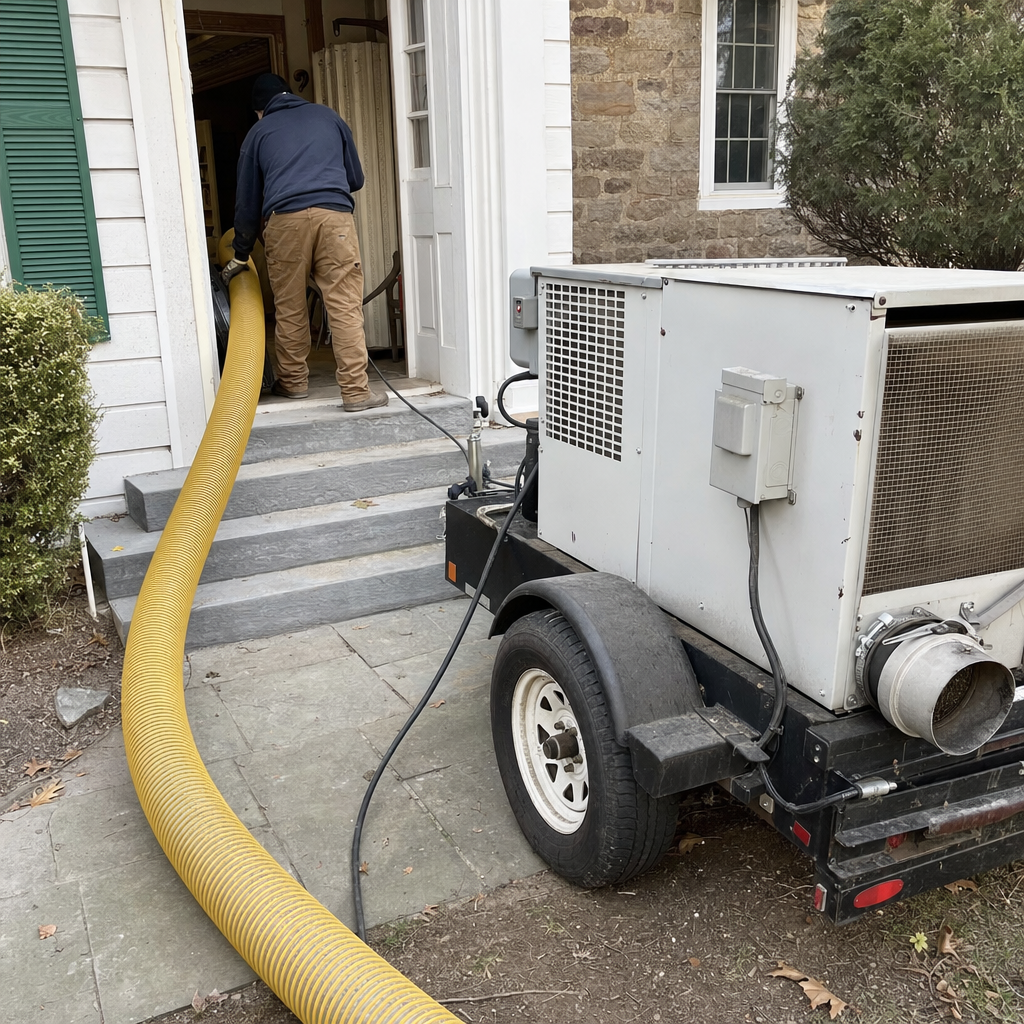
Be wary of Whole House Air Duct Cleaning Cost in Pennsylvania, PA offers below $300 for “whole house” cleaning — that’s typically a shop-vac at the register with no negative-pressure containment, no agitation, and no documentation. Our Rotobrush and Nikro equipment is built for this specific job, not repurposed from carpet cleaning or general maintenance. The Abatement Technologies containment tools we use are the same spec employed by commercial restoration contractors after fire and water damage.
Key Takeaways: Is Air Duct Cleaning Worth It for Your Pennsylvania Home?
- Worth it when: Visible debris, post-renovation dust, respiratory symptoms tied to HVAC runtime, or confirmed microbial growth are present
- Lower priority when: Newer tight-construction home, disciplined filter maintenance, no symptoms, no moisture history
- Pennsylvania-specific risk factors: Basement humidity exposure, older unsealed ductwork, year-round forced-air cycling, renovation without post-construction cleaning
- Demand documentation: Debris weight, HEPA filter condition, airflow readings — not verbal assurances
- Owner-accountable service: Jeffrey Morgan serves as lead technician on every Bluepeak job, with 1,144 verified reviews at 4.8 stars
FAQs
Affordable Air Duct Cleaning in Pennsylvania, PA typically costs $450–$750 for a standard home up to 2,000 square feet, with larger or more complex systems running $700–$1,100. The final price depends on system accessibility, contamination level, and whether additional services like dryer vent cleaning or duct sealing are included. Call Bluepeak Air Duct & Vent Cleaning Pennsylvania at (844) 951-3591 for a free, no-pressure estimate based on your specific system.
The EPA does not recommend routine duct cleaning for all homes, but explicitly supports it when mold growth, vermin infestation, excessive debris, or visible particle release from registers is present. The agency’s caution applies to indiscriminate cleaning in average conditions — not to Pennsylvania homes with moisture-exposed basements, older ductwork, or documented contamination that falls outside the “average” profile. For an honest assessment of whether your home meets the EPA’s justified-cleaning criteria, call (844) 951-3591.
Air duct cleaning can reduce allergy symptoms when the duct system is a documented source of allergen exposure — such as accumulated pet dander, pollen, or dust mite debris that recirculates with each HVAC cycle. It is not a guaranteed solution for all allergy sufferers, particularly if the primary allergen source is outside the duct system (bedding, carpeting, outdoor pollen load). We evaluate symptom patterns against HVAC runtime and inspect for visible contamination before recommending cleaning; call (844) 951-3591 to discuss your specific situation.
A legitimate duct cleaning company provides specific documentation (debris weight, HEPA filter photos, airflow readings), uses professional-grade equipment (Rotobrush, Nikro, or equivalent — not shop vacs), and has verifiable, volume-based reviews rather than a handful of curated testimonials. Be suspicious of whole-house offers below $300, pressure to add sanitizing or sealing without inspection, or refusal to show camera footage of interior duct conditions. Bluepeak Air Duct & Vent Cleaning Pennsylvania has 1,144 verified reviews averaging 4.8 stars, with Jeffrey Morgan as owner and lead technician on every job — call (844) 951-3591 to ask directly about our documentation process.
If you’d rather have your specific system assessed than guess, Bluepeak Air Duct & Vent Cleaning Pennsylvania offers a no-pressure evaluation in Pennsylvania — we’ll inspect your registers, discuss your home’s history, and tell you honestly whether cleaning will produce measurable benefit. Call (844) 951-3591 to schedule.
Written by Jeffrey Morgan, Owner & Lead Technician at Bluepeak Air Duct & Vent Cleaning Pennsylvania, serving Pennsylvania, PA.