
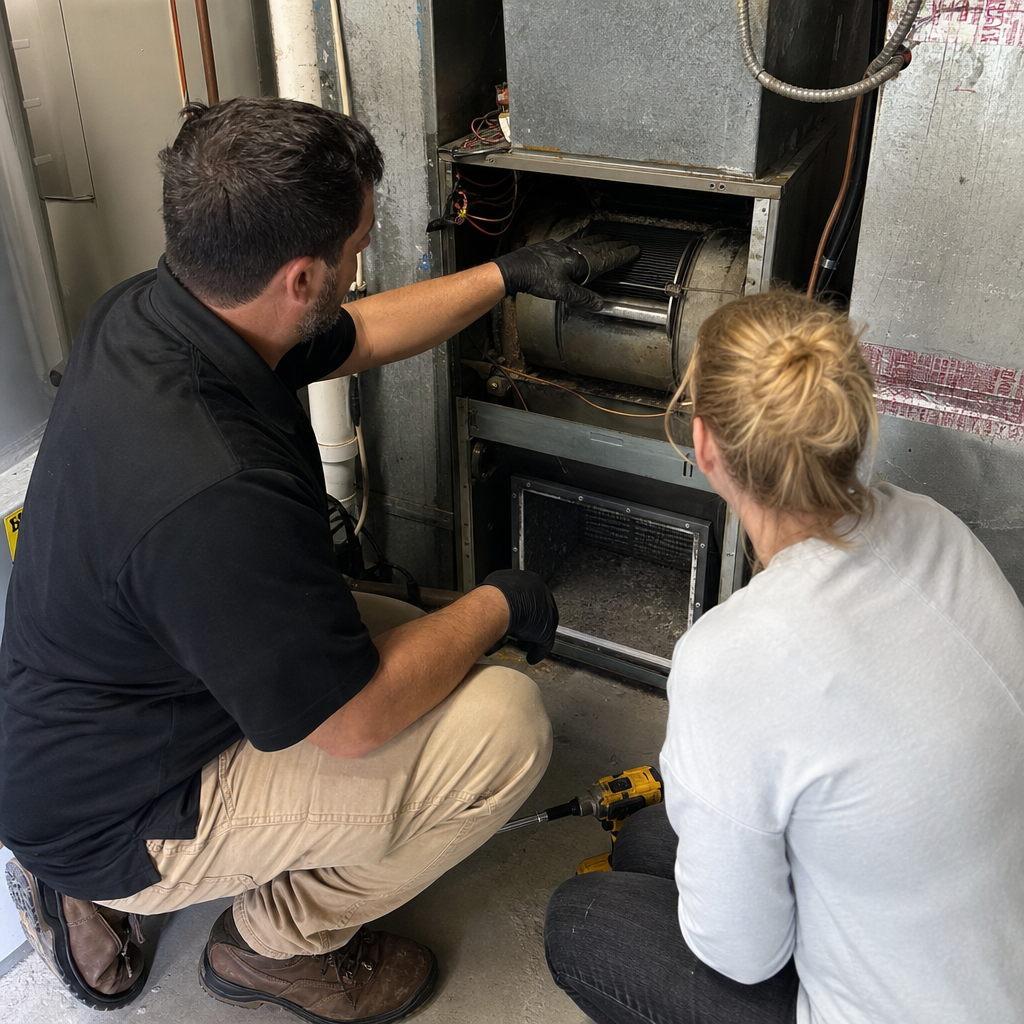
How Often Should You Clean Your Air Ducts in Pennsylvania? It Depends on What Your House Is Actually Doing
Most homes in Pennsylvania need air duct cleaning every 3 to 5 years as a baseline, but the honest answer is that many local homes we’ve inspected should be on a shorter cycle—sometimes as brief as 1 to 2 years—because of factors like older ductwork, wood-burning heat sources, and our extended heating season that pushes far more air volume through the system annually than the national average assumes. If you’re noticing more dust on registers, uneven airflow, or allergy symptoms that spike when the furnace kicks on, your ducts are likely telling you the calendar doesn’t match the condition. Call Bluepeak Air Duct & Vent Cleaning Pennsylvania at (844) 951-3591 for a free, no-pressure assessment—we’ll look at what your system is actually holding, not just how long it’s been.
Why the “3 to 5 Years” Rule Falls Short for Pennsylvania Homes
The 3-to-5-year guideline was written for a hypothetical average home. After 14 years of inspecting systems across Pennsylvania, Jeffrey Morgan can tell you that the average home is less common than you’d think—and the factors that shorten that interval are more prevalent here than many people realize. If you’re wondering Is Air Duct Cleaning Worth It? (Pennsylvania, PA), the local conditions make a compelling case.
Pennsylvania’s housing stock skews older. In Pittsburgh neighborhoods like Lawrenceville, Squirrel Hill, and Bloomfield, we regularly encounter mid-century sheet metal ductwork with unsealed joints and penetrations that pull basement air, crawlspace debris, and wall cavity dust directly into the return side. That isn’t a filtration problem you can solve with a better furnace filter—it’s a negative-pressure issue that loads the system continuously. We’ve opened return plenums in Crafton and Dormont homes where the first foot of duct behind the grille was packed with decades of accumulated plaster dust, coal soot residue, and modern particulate layered on top.
Our climate compounds this. Pennsylvania runs heating systems hard for five to six months annually, often with furnaces cycling air 24/7 during January and February cold snaps. That volume matters: a system in Tampa running mild winters pushes perhaps 40% of the annual air volume through ducts that a Pittsburgh or Scranton system does. More air volume equals more particulate deposition, more filter loading, and more opportunities for debris to settle in low-velocity sections of trunk lines.
Then there’s the wood-burning factor. In rural Pennsylvania counties and even in Pittsburgh’s older neighborhoods, supplemental wood heat remains common. Fine carbon particles from wood smoke are smaller than typical household dust, penetrate standard filters more easily, and deposit as a dark, greasy film inside ductwork that standard vacuuming struggles to remove. We’ve pulled Rotobrush agitation heads caked with this residue from homes in the Laurel Highlands—the kind of buildup that doesn’t happen in homes with clean gas heat alone.
A Condition-Based Interval Framework for Pennsylvania Homes
Calendar-based scheduling ignores what we find when we actually open a system. Here’s how we assess interval needs based on conditions, not clocks:
- 3 to 5 years: Clean baseline for homes with sealed ductwork, no pets, no smokers, MERV 8+ filters changed quarterly, and no recent renovations or water events. These are rarer than you’d expect in our market.
- 2 to 3 years: Homes with one or more of: multiple pets (especially shedding breeds), indoor smoking or vaping, occupancy above two people per 1,000 square feet, or standard 1-inch filters changed irregularly. Most Pennsylvania homes we inspect fall here.
- 1 to 2 years: Post-renovation (especially drywall work, flooring replacement, or any wall demolition), post-water-event even if “minor,” homes with unsealed dirt-floor basements or active crawlspaces, or any system where we’ve previously found significant debris accumulation.
- Immediate inspection: Any confirmed mold growth, rodent or insect activity in ducts, or visible debris blowing from registers. These aren’t cleaning-schedule questions—they’re health and system-damage questions.
Jeffrey Morgan—owner and lead technician—handles the assessment personally on every Bluepeak call. Over 1,100 verified customers have reviewed this work, and the pattern we hear consistently is that homeowners didn’t realize how far past due their system was until they saw the pre-cleaning camera footage. For those concerned about Whole House Air Duct Cleaning Cost in Pennsylvania, PA, we provide transparent quotes after this assessment.
What Jeffrey Morgan Looks for On-Site: Condition Beats Calendar
When we arrive at a Pennsylvania home, the first thing we check isn’t the date of the last cleaning—it’s what the system is currently holding. Here are the specific indicators that tell us whether a 3-year interval is appropriate or whether the homeowner has been running on borrowed time:
Return-air grille loading: The grilles themselves are diagnostic tools. Heavy dust matting on the backside of return grilles, especially in homes with floor-level returns, indicates the filter has been bypassing debris or the ductwork behind the wall is acting as a settling chamber. In Squirrel Hill duplexes with original plaster walls, we’ve seen grilles that haven’t been removed in decades; the dust layer behind them was measured in inches, not millimeters.
Trunk line low-velocity zones: Every duct system has sections where air moves slowly enough for debris to drop out of suspension—typically the far ends of trunk lines, transitions between rectangular and round duct, and any sag in flex duct. We feed our Nikro camera systems into these zones first. If we find significant accumulation in the first 10 feet, the rest of the system is worse.
Filter bypass evidence: A filter installed crookedly, a filter slot too large for the nominal size, or a homeowner habit of running the system without a filter during “just for a few days” periods—all leave telltale dust patterns on the blower wheel and evaporator coil that we can spot immediately. These systems need shorter intervals regardless of what the calendar says.
Odor signatures: Musty, stale, or sharp chemical odors when the system cycles aren’t subjective complaints—they’re volatile organic compounds off-gassing from biological growth or accumulated debris. We note these before we open anything; they’re often confirmed by what the camera reveals.
Humidity staining: Pennsylvania’s summer humidity, especially in homes without adequate dehumidification, leaves water marks and rust streaks inside metal ductwork that indicate past condensation events. Where there’s been moisture, there’s been opportunity for debris to bind and microbial growth to establish.
These assessments are why we don’t quote cleaning blindly over the phone. The condition drives the recommendation, not a schedule printed on a refrigerator magnet.
Between-Cleaning Maintenance That Actually Extends Your Interval
We’re straightforward about this: some maintenance genuinely helps, and some is marginal. Here’s what we’ve observed makes a measurable difference in Pennsylvania homes:
Filter selection and discipline: MERV 11 to 13 pleated filters catch significantly more fine particulate than basic fiberglass, but only if changed on schedule. A loaded MERV 13 becomes a MERV 5 or worse as it fills, and the pressure drop can cause filter bypass or blower strain. For homes with significant dust loading, we often recommend Aprilaire whole-home media air cleaners installed at the air handler—these hold more debris, maintain consistent airflow longer, and don’t depend on homeowner memory. If I wouldn’t run it in my own house, I won’t recommend it in yours.
Return grille hygiene: Vacuuming the visible side of return grilles monthly, and removing and washing the grilles themselves quarterly, prevents the buildup that eventually sloughs off into the ductwork. It’s a 10-minute task that pays disproportionately.
Humidity control: Pennsylvania summers run humid enough that unconditioned basement or crawlspace air will carry moisture into leaky duct systems. Keeping relative humidity below 55% at the air handler location reduces the binding of dust to duct walls and inhibits biological growth. We install Honeywell and Aprilaire humidistats and dehumidification controls for homeowners who want this managed automatically.
Sealing accessible leaks: Not a DIY recommendation for the full system, but homeowner-visible gaps at register boots, especially in homes with settled framing, can be addressed with proper mastic or metal-backed tape. Every cubic foot of basement air that doesn’t enter the return system is debris that doesn’t enter the filter.
What doesn’t help much: register vent filters (they create pressure problems and are rarely changed), ozone generators (EPA guidance is clear on these), or “duct cleaning” powders and sprays sold to homeowners. We’ve cleaned up after enough of these to be skeptical.
Pennsylvania-Specific Factors That Compress Your Cleaning Interval
We’ve already touched on these, but they deserve emphasis because they’re underweighted in generic national guidance:
Unsealed duct penetrations in older homes: Pennsylvania’s housing stock includes significant pre-1950 construction with ductwork installed before modern sealing standards. In Pittsburgh row homes and Philadelphia twins, we find return ducts that draw air directly from wall cavities, basement perimeters, and even exterior soffits. These aren’t minor leaks—they’re continuous debris injection points that no filter can address because the air never passes through the filter.
Wood-burning and solid-fuel supplemental heat: The fine particulate from wood combustion (PM2.5 and smaller) penetrates standard filtration and deposits as a tenacious, carbon-rich film. We’ve cleaned systems in Indiana County and the Poconos where the interior duct coating was visibly blackened. Rotobrush agitation with proper negative-pressure containment is required—surface vacuuming won’t touch it.
Extended heating season and high air volume: A furnace running from October through April, often continuously during cold snaps, moves 50-70% more annual air volume than systems in milder climates. That volume translates directly to more opportunities for deposition, more filter loading cycles, and more wear on the filtration path.
Post-industrial particulate legacy: In older industrial neighborhoods—Lawrenceville, the Mon Valley, parts of Bethlehem and Allentown—soil and settled exterior dust still carry legacy industrial particulate that enters homes through windows, doors, and foundation gaps. It’s not a health panic, but it’s a real contributor to baseline dust loading that newer suburban homes don’t face.
When Products Make Sense: Extending Intervals Through Infrastructure
We’re cautious about product recommendations because too many contractors use them as automatic upsells. But there are cases where the right installation genuinely extends cleaning intervals and improves daily air quality:
Aprilaire whole-home media air cleaners: These bypass-type units mount at the air handler and filter all circulated air, not just the fraction that happens to pass through a 1-inch furnace slot. The media surface area is vastly larger, holding capacity is greater, and pressure drop is lower than trying to achieve the same filtration with a high-MERV disposable. For homes with pets, allergies, or significant dust loading, we’ve seen these extend the visible-clean interval by 30-50%.
Honeywell and Aprilaire humidistats and dehumidification controls: Humidity management isn’t comfort alone—it’s debris management. Keeping the system and home within 30-50% relative humidity reduces the electrostatic and moisture binding that holds dust to duct walls. Automated control beats homeowner vigilance.
UV-C air sanitizing: We offer this as a targeted solution, not a default add-on. In systems with past moisture events or where occupants have significant respiratory sensitivity, properly installed UV-C at the coil and supply plenum can reduce biological loading. It’s not a substitute for cleaning, but it can be a legitimate adjunct.
We install these products where they solve a defined problem, not as package deals. The assessment comes first; the recommendation follows.
What a Proper Cleaning Includes—and Why Equipment Matters
Interval recommendations are meaningless if the cleaning itself is inadequate. We’ve been called to Pennsylvania homes that were “cleaned” six months prior by operators using shop vacuums and compressed air wands—essentially rearranging the debris. Here’s what thorough duct cleaning actually requires:
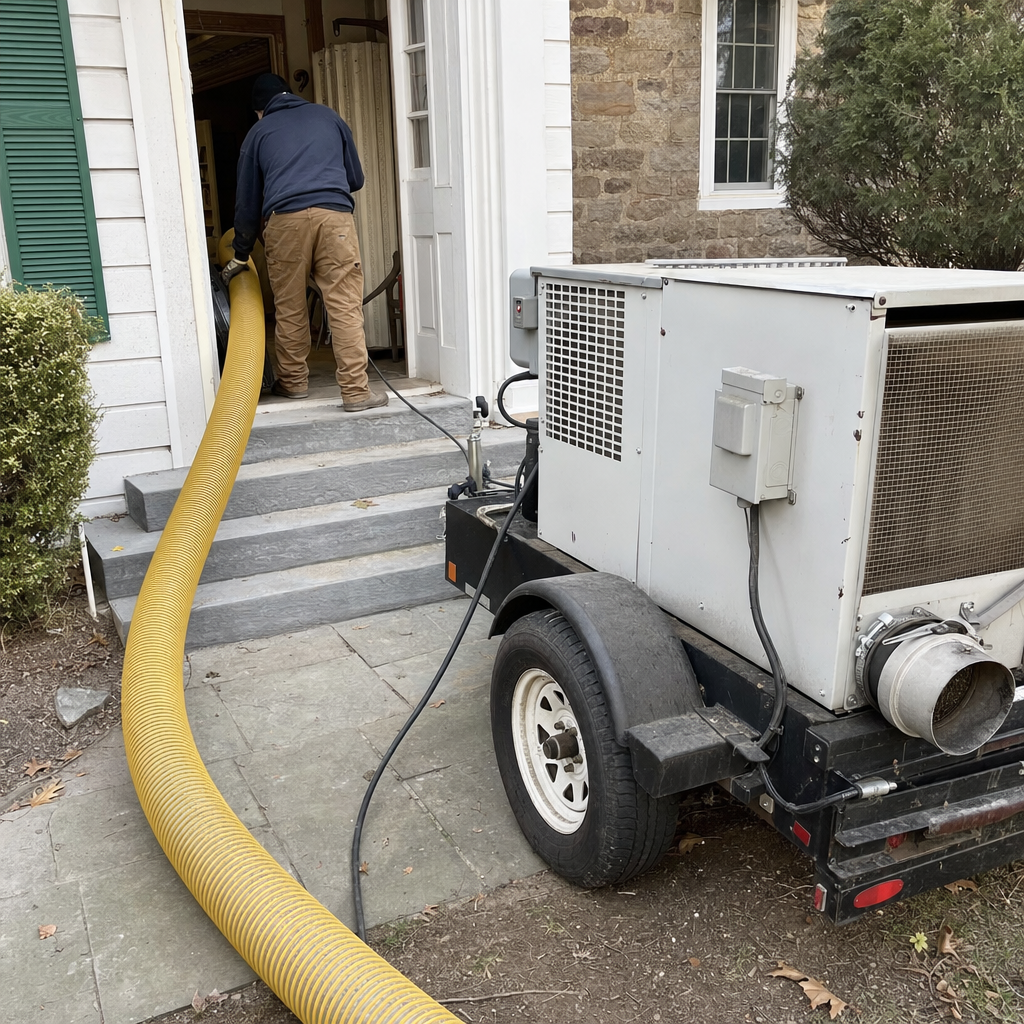
Negative-pressure containment is non-negotiable. Our Nikro HEPA-rated vacuum systems maintain suction at the collection point while Rotobrush mechanical agitation dislodges adhered debris from duct walls. Without both—agitation plus containment—you’re not cleaning, you’re dispersing. Abatement Technologies portable containment units protect occupied spaces during the process, especially important in homes with sensitive occupants.
Access creation matters. Older Pennsylvania ductwork often lacks sufficient service openings. We cut and seal proper access points rather than working through existing registers, which reaches debris in trunk lines and branch takeoffs that register-only cleaning misses.
Post-cleaning verification completes the job. We document with before-and-after camera footage so homeowners see the actual condition change, not just trust a verbal report.
Air Duct Cleaning is our core service, but we also handle the full scope: home systems, HVAC cleaning that addresses the air handler and coil, dryer vent cleaning for fire safety, and Air Duct Cleaning in Pennsylvania specifically tailored to the housing stock and conditions we encounter here.
FAQs
Air duct cleaning for a typical Pennsylvania home runs between $400 and $800 for a complete system, with smaller homes or partial systems sometimes falling below that range and larger homes with complex duct layouts or significant contamination running higher. Factors that push cost up include inaccessible ductwork requiring additional access cuts, heavy debris or soot loading requiring extended agitation time, and homes with multiple HVAC zones or separate attic and basement systems. We provide exact quotes after inspection, not ballpark guesses—call (844) 951-3591 for a free estimate with no pressure to schedule.
Cleaning is almost always far less expensive than replacement—typically 10-20% of the cost of full ductwork replacement—and replacement is only necessary when ducts are structurally damaged, severely corroded, or improperly sized for the system. We’ve inspected Pennsylvania homes where homeowners were quoted replacement for $8,000-$15,000 when thorough cleaning and sealing would have addressed the actual problem. The key is honest assessment: Jeffrey Morgan evaluates whether the issue is debris accumulation, duct leakage, or genuine system failure, and recommends accordingly. If you’re facing a replacement quote, a second opinion from Bluepeak Air Duct & Vent Cleaning Pennsylvania costs nothing—call (844) 951-3591.
We often schedule inspections within 24-48 hours for Pennsylvania homeowners, with cleaning completed same-day or next-day depending on system size and our current queue—we don’t overbook, which means Jeffrey Morgan is the technician who arrives, not a rotating subcontractor. Emergency situations—confirmed mold, rodent activity, or post-event contamination—get priority scheduling. For routine assessments, calling (844) 951-3591 typically gets you on the calendar within a week, sometimes sooner.
The most reliable indicators are visible dust blowing from registers when the system cycles, persistent musty or stale odors, uneven heating or cooling that suggests blockage, and increased dust accumulation on surfaces despite regular cleaning. In Pennsylvania specifically, homes with unsealed basements, wood-burning heat sources, or post-renovation dust exposure should err toward earlier inspection. We offer free visual assessments—Jeffrey Morgan will show you exactly what your system holds, and if it’s not yet due for cleaning, we’ll tell you that directly. Call (844) 951-3591 to schedule.
Ready to Know What Your System Actually Needs?
If you’d rather have it looked at, Bluepeak Air Duct & Vent Cleaning Pennsylvania offers a no-pressure assessment in Pennsylvania—Jeffrey Morgan will inspect your system personally, show you what the camera reveals, and recommend based on condition rather than calendar. Call (844) 951-3591 for a free estimate.
Written by Jeffrey Morgan, Owner & Lead Technician at Bluepeak Air Duct & Vent Cleaning Pennsylvania, serving Pennsylvania, PA.